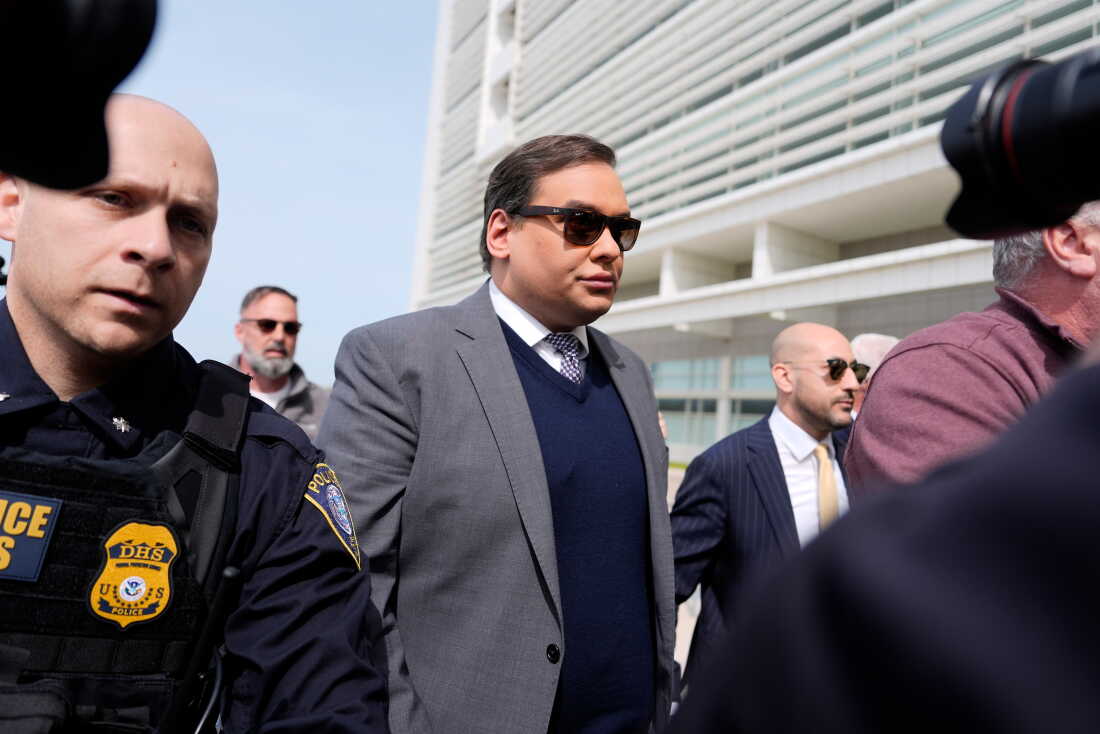
Kalshi, a prediction market platform, permanently banned former Republican Congressman George Santos after accusing him of insider trading. Santos allegedly misled the public about attending President Trump’s State of the Union address to profit on the platform. As a consequence, he was fined $71,356 and forced to return $17,000 in profits. Santos responded publicly, challenging Kalshi’s longevity.
In June, NPR revealed federal investigations on Santos’ transactions related to Kalshi’s betting market. Santos had posted misleading content online regarding his attendance at the State of the Union before later admitting to watching the event remotely. Kalshi, regulated by the Commodity Futures Trading Commission, required Santos to surrender his profits, leading to an additional $17,500 fine.
Santos, formerly representing New York, was expelled from Congress and faced legal issues including a seven-year prison sentence for wire fraud and identity theft. His sentence was shortened by a presidential commutation. After the Kalshi scandal, Santos received threats from him following reports by NPR. He previously promoted Polymarket, a rival to Kalshi, until investigations began.
Kalshi also took action against other political figures on Monday, issuing penalties for similar transgressions. Republican Congressional candidate Laurie Buckhout in North Carolina admitted to betting on her race and was fined and suspended for three years. Stephen Cloobeck, former Diamond Resorts CEO, faced similar sanctions for attempted bids in California’s gubernatorial race, alongside Ben Midgley, who contested for Maine’s governorship.
Former teleprompter operator Gabriel Perez faced penalties after utilizing speeches’ advance notice to profit on Kalshi’s markets. He cooperated with investigatory efforts, refunding over $100,000 and receiving $65,000 in fines.
As prediction markets thrive amidst insufficient federal regulations, platforms self-police with referrals aiding federal investigations. The Commodity Futures Trading Commission pursued states treating prediction market sites akin to gambling entities. Legal debates continue about these markets’ classification, with federal courts divided on their status. A U.S. Court of Appeals ruling against Kalshi labeled Nevada’s ban on the platform as permissible under gambling laws, contrasting with a 3rd Circuit Court favoring Kalshi.
The Supreme Court might soon decide on prediction markets’ legality. Recently, 44 states wrote to the Trump administration condemning prediction market operators for exploiting vulnerable groups, classifying them as gambling entities.
Leave a Reply