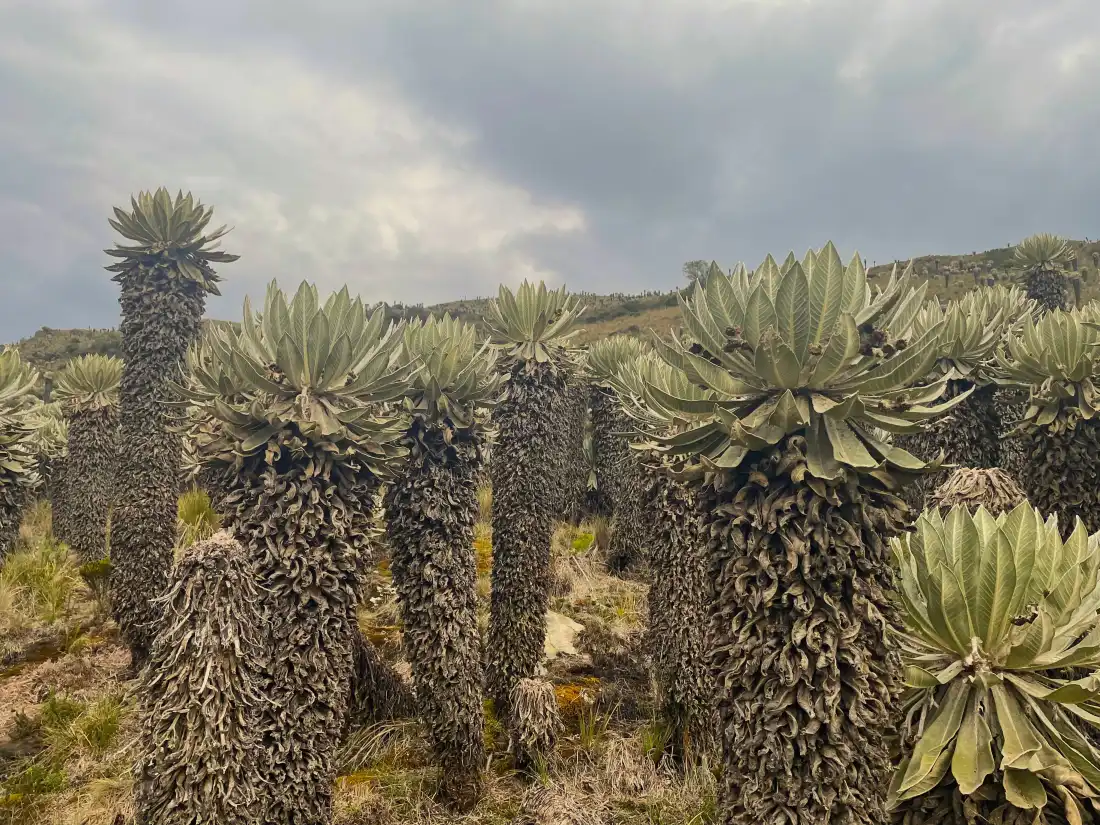
High in the Andes Mountains, at 10,000 feet above sea level, Moisés Moreno tends to fragile seedlings in his greenhouse. These tiny plants have the potential to grow into towering 30-foot frailejons. As visitors admire the greenhouse, Moreno often asks if they know about frailejons. Most do not.
Frailejons, related to sunflowers, are unique to Colombia’s high-altitude wetlands known as páramos. These lush areas are crucial for Colombia’s water supply. The soft fuzz on frailejon leaves helps them endure cold temperatures and absorb moisture from clouds. This water retention supports the páramos, which are the sources of major rivers.
Challenges threaten frailejons and their páramo habitats. Farmers, cattle ranchers, and coal miners are encroaching higher into the Andes. Climate change exacerbates the situation, warming the mountains and allowing invasive species to thrive. This destabilizes the delicate ecosystem.
Currently, of approximately 150 frailejon species, two-thirds face risk, with 17 categorized as endangered. Mauricio Diazgranados, who studies these plants at the New York Botanical Garden, emphasizes their importance in maintaining water production. “They are a keystone species,” he states.
The term “frailejon” translates to “big friar,” inspired by explorers who thought the plants resembled hooded monks. Some species have leaves that point skyward like palm fronds. After leaves die, they form a protective brown shell around the trunk. For the Muisca Indians, frailejons were sacred keepers of water.
Moisés Moreno, 53, who now nurtures these plants, once viewed them as agricultural nuisances. In his youth, he cut them down to create farmland. An accident in a coal mine changed his perspective; he vowed to work outdoors, embracing the páramo. Moreno now leads projects to restore frailejon populations.
Across Colombia, initiatives combat the loss of frailejons, with support from national parks and even the military following widespread fires. Public awareness surged through a popular cartoon character, Ernesto Pérez, who educates on conserving the Andes flora, reminiscent of Smokey Bear in the U.S.
Many Colombians, influenced by the cartoon, volunteer in frailejon planting efforts. Nicolás Coronado, a volunteer, shared that the catchy theme song introduced him to the plant’s significance. As volunteers ascend to 11,000 feet, they traverse varied landscapes, including streams and lagoons, dotted with frailejons.
At the planting site, Moreno’s team demonstrates how to prepare the soil with shredded tobacco as fertilizer. Volunteers carefully place their frailejons, though survival is uncertain due to the harsh climate. Yet, many become attached, even naming their plants. Biologist Julieta Barba names hers “Gerry,” in tribute to her mother, filled with hope for its growth.
Leave a Reply