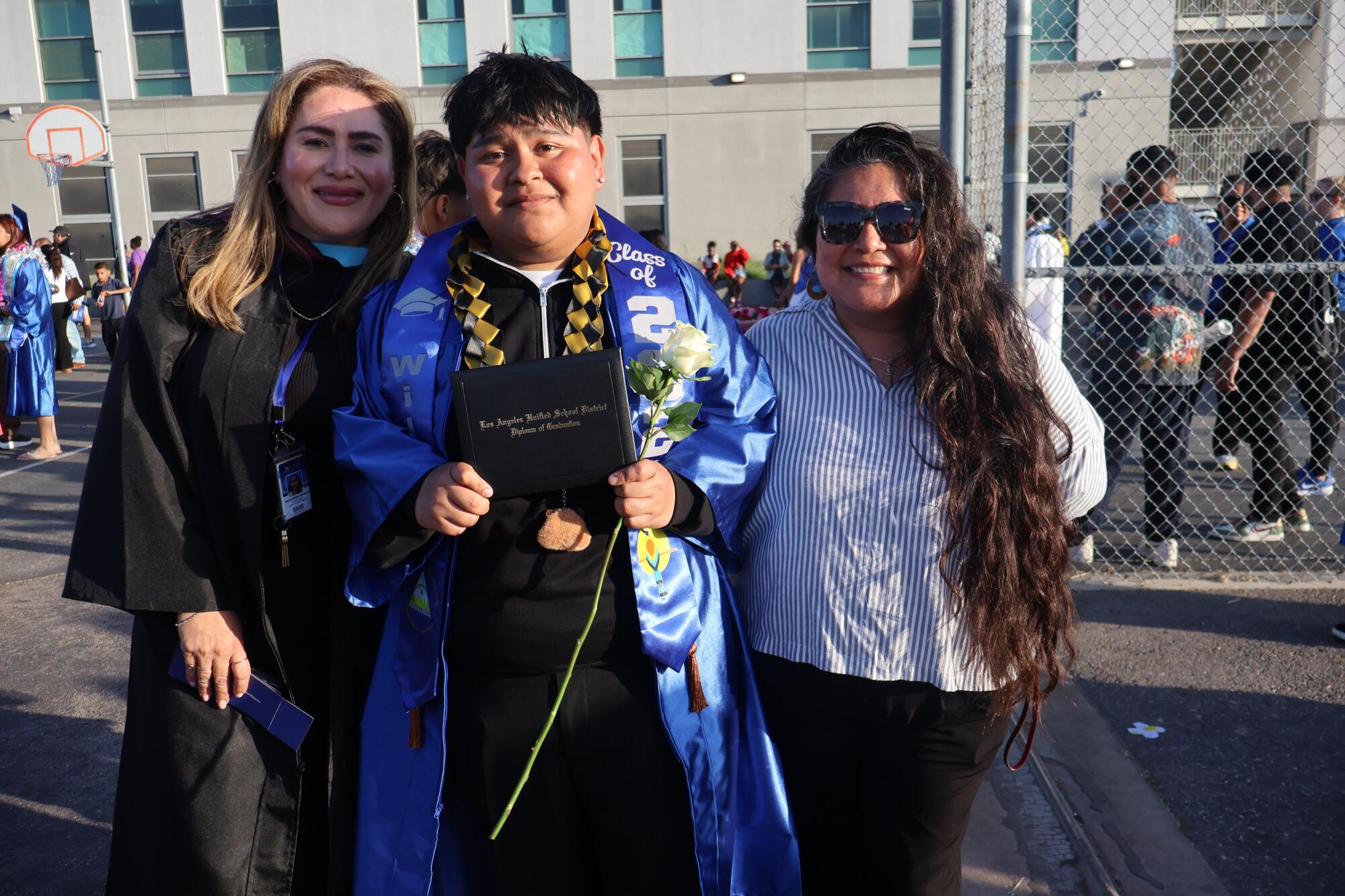
Wilber Urbina Garcia had plans set for the day after his high school graduation. He was the first in his family to graduate high school and wanted a jumpstart on his future.
He aimed to pick up his diploma, return a textbook, and register for classes at El Camino College. However, a check-in with Immigration and Customs Enforcement (ICE) that morning took priority. These appointments had become routine since his family arrived from Nicaragua in late 2022 seeking asylum.
“All he wanted was to learn, but all of his dreams just came crashing down,” said Winston Garcia, Wilber’s older brother. “We don’t know what’s going to happen to him.”
The family of five left home before sunrise, reaching the federal courthouse before their 8 a.m. appointment. That evening, Wilber was detained by immigration agents.
Graduation Day Memories
Despite difficulties, the Garcia family rejoiced as they watched Wilber graduate with high honors. Teachers who knew him described him as a shy but determined student. He achieved leadership roles and expressed himself in English during presentations.
Wilber spent his free time playing vintage video games with his brother and learning baseball. He loved cooking a Nicaraguan breakfast dish for his mother on weekends, always prioritizing his schoolwork.
The family fled political persecution under President Daniel Ortega, granted work permits while seeking asylum. Their attorney, Armineh Ebrahimian, stated they feared retaliation if they elaborated on their situation.
Legal Challenges and Family Impact
Wilber was detained due to the Biden administration’s policy for those without legal status. A Department of Homeland Security spokesperson confirmed this, citing immigration laws.
In Los Angeles, the Garcias found opportunities they lacked in Nicaragua. Yadira Garcia, Wilber’s mother, no longer worried about finances or the safety of her children. The youngest siblings looked forward to educational opportunities.
While the family’s asylum application split into two cases, Wilber was initially a derivative of his mother’s case. An ICE agent later separated him from her application, stating he was now considered an adult.
Legal and Emotional Struggles
Ebrahimian argued that Wilber should remain linked to his mother’s case since he was under 21 when it was filed. Despite this, detention following an immigration check-in is always possible, said lawyer Edgardo Quintanilla.
While seven letters from teachers and counselors were submitted, Ebrahimian expressed disbelief at the situation’s unusual nature. An agent warned Yadira about her daughter, Yuneisi, who would soon turn 18. Concerns for the family’s future grew.
After Wilber’s detention, he was moved to Adelanto ICE Processing Center, where he spends his days upset and surrounded by older detainees. Winston worries about Wilber’s well-being, questioning his living conditions and health.
The family now faces numerous ICE check-ins and hearings. Both Yadira and Wilson wear ankle monitors, and Yadira fears losing her job due to ongoing proceedings. The decorated graduation cap remains a symbol of hope and achievement, inscribed with a thankful message to God.
Leave a Reply