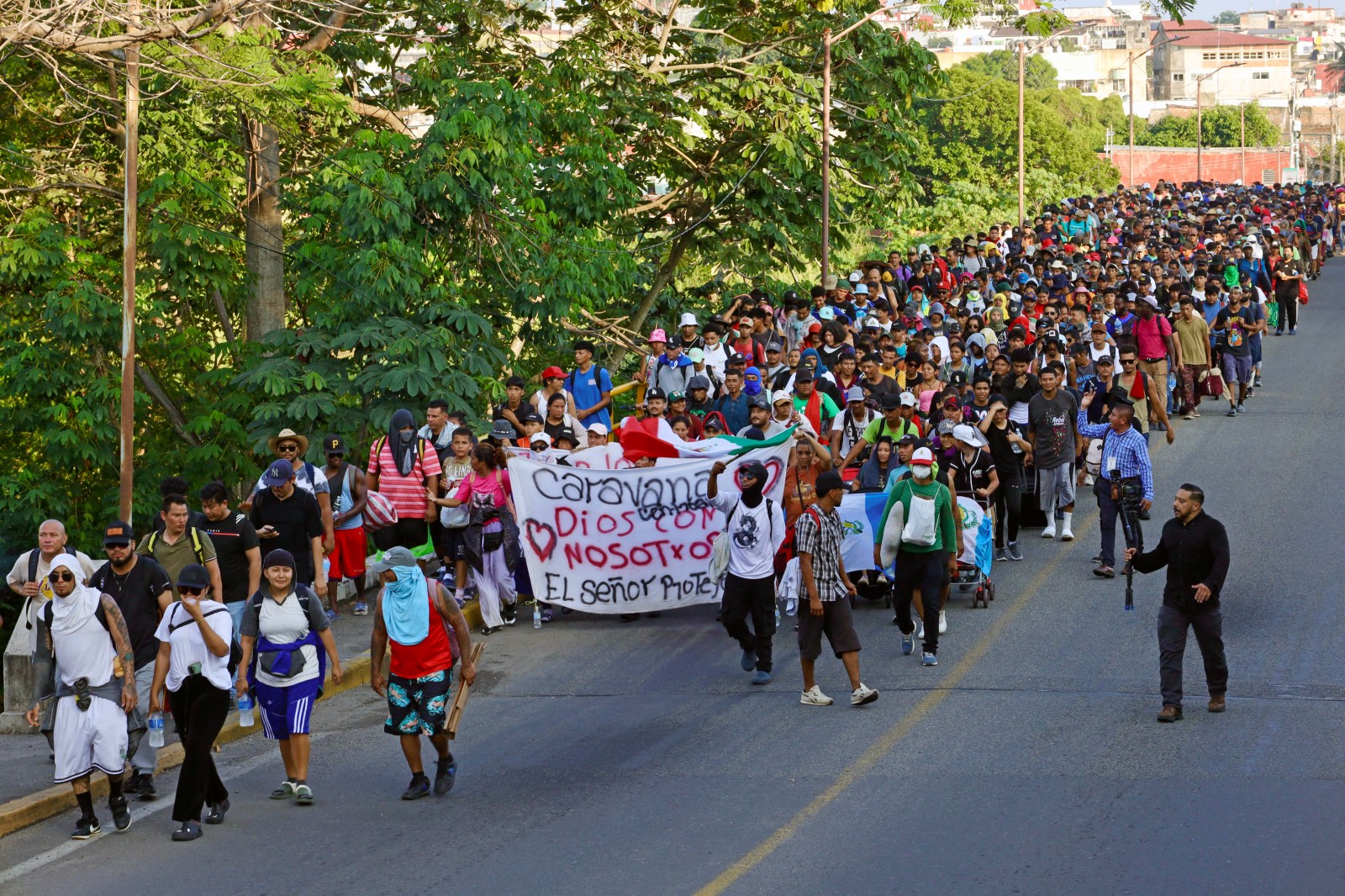
After her significant midterm victory, Gina Hinojosa is set to become the governor of Texas. She will take the oath at noon on January 19. However, she faces some pressing decisions right from the start. Just a week after defeating Greg Abbott, reports emerged of a caravan of up to 2,000 migrants departing from Tapachula, near Mexico’s border with Guatemala. These migrants, coming from Honduras, El Salvador, Guatemala, and Nicaragua, believe changes in U.S. immigration policies under President Donald Trump may open the border post-midterms.
Narciso Aparicio, a 73-year-old migrant, expressed his expectations about changes in border policies following the midterms.
As Hinojosa steps into office, she inherits Abbott’s measures for previous influxes. This includes National Guard deployments and border disaster proclamations renewed or amended numerous times. Hinojosa criticizes Abbott’s Operation Lone Star, a costly initiative aimed at border security, as political performance and plans to reevaluate it.
Migrant caravans face challenges reaching the Texas border due to Mexico’s interventions, yet they persistently make progress. Mexican immigration officers have sometimes allowed travel documents, enabling migrants to continue their journey through the country. A migrant named Álvaro José Vanegas Estrada revealed his plans to work in northern Mexico while awaiting changes in U.S. policies.
The prevailing perception is that the caravans do not threaten Texas because the U.S. border remains sealed. In fiscal 2026, the Border Patrol documented far fewer apprehensions compared to earlier in President Joe Biden’s term. The Department of Homeland Security has not released anyone into the U.S. from the border for over a year. Government officials assure continued deportations, and shifts within Congress do not impact current border control policies.
The issue of funding is central in the debate over Operation Lone Star, especially during a time of economic concern. The Texas government budgeted $3.4 billion for border security. Future funds rely on legislative approval. Hinojosa frames the debate around cost effectiveness rather than border security. She insists Operation Lone Star should aim solely for safety, questioning its existing financial demands and its effectiveness in enhancing security.
Mexican strategies to handle caravans often involve offering migrants transit to Tuxtla Gutiérrez, the state capital. These movements highlight a pattern, as shown by Honduran caravans in recent months that traveled significant distances within Mexico. Some migrants, like Vanegas Estrada, hope for eventual U.S. entry facilitated by the labor demands in sectors like construction and hospitality.
Timing presents a challenge for Hinojosa. If the disaster declaration lapses without Governor Abbott’s renewal, Hinojosa may face a decision early in her term. Democrats are inclined to relinquish the border emergency status, seeing past actions as an abuse of power. The broader political scenario adds pressure. In the recent surge, some Texas border counties swung between parties, with immigration issues influencing voter preferences significantly.
Before Hinojosa takes charge, Customs and Border Protection’s new data will reflect post-election developments. Any increase in numbers or visible presence of migrants could impact her approach to Operation Lone Star, especially with former President Trump ready to intervene if changes occur.
Leave a Reply