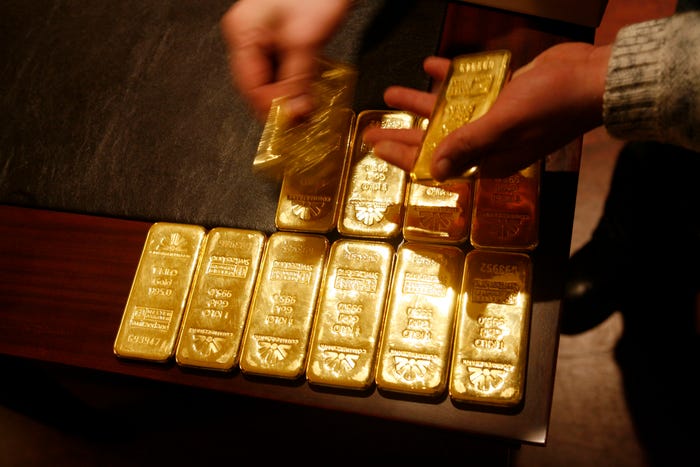
Gold is currently experiencing its most challenging year in over a decade. Although the focus has shifted to the fluctuation in AI stocks, gold prices have also seen a significant downturn this year. The value of gold, once a coveted investment by 2025, has plummeted by about 29% from its January peak, falling below $4,000 per ounce as of Tuesday.
Factors Influencing Gold’s Decline
The plunge is attributed to numerous factors impacting the United States economy and markets, including increased rates and a panicked approach to risk management in stocks. Gold is now down 9% for the year, positioning itself for its worst annual performance in 11 years. Economist David Rosenberg noted that gold saw a decline of over 3% in October, marking its worst October since the Great Financial Crisis.
Traditionally, gold does not decline in parallel with stocks. The metal is considered a stable investment, offering security when stocks fluctuate or when geopolitical events disrupt markets. Additionally, inflation concerns generally boost gold demand, perceived as a safeguard against a devalued currency. However, even with inflationary concerns and rising oil and gas prices due to the Iran conflict, 2026 has not followed this pattern.
Gold is now behaving in too much of a bizarre and unpredictable pattern, and traditional correlations have broken down.– David Rosenberg
Impact of Higher Yields
Rising interest rates have made holding gold less attractive. Higher rate expectations boost Treasury yields and the US dollar, both of which compete with gold for investor interest. Treasury yields reflect ongoing concerns about the US fiscal future and general inflation. For instance, the 10-year US Treasury yield was at approximately 4.91% on Tuesday, an increase of 77 basis points for the year.
Changes in treasury yields and the strengthening US dollar signify a shift in investor focus towards higher interest rates. The US Dollar Index, which measures the dollar’s value against other major currencies, increased to 101, a 3% rise since the beginning of the year.
Higher interest rates have raised the opportunity cost of holding gold. Additionally, a stronger dollar has increased the expense for international buyers to purchase gold.
Although the Federal Reserve paused its rate hikes in their last meeting, investors expect renewed rate tightening as 2027 approaches. Market forecasts suggest a high probability of further rate increases by the Federal Reserve before year-end.
Decreased Demand for Gold
While central banks continue their gold purchases to diversify reserves, demand from other sectors is diminishing. Consumer purchases of physical gold and gold jewelry have significantly decreased according to the World Gold Council, with demand for bars, coins, and jewelry falling 19% and 17% respectively compared to the previous year.
In the United States, revenue from gold jewelry has risen, but unit sales have dropped. Growth is noted at higher price points, while sales of lower-priced items underperform.
The economy’s K-shaped recovery could be affecting gold, with luxury shoppers cutting back as inflation impacts spending. This pattern is evident globally, influencing jewelry and luxury goods markets as consumer spending in the US and China slows.
The jewelry market is increasingly divided by price point.– Tenoris Report
The AI Effect
Investor sentiment gravitates towards risk-averse strategies, prompting some to sell gold and generate more cash reserves. This behavior reflects recent AI trade losses, with Nasdaq 100 showing a correction and a $2 trillion reduction in market cap since early October.
Margin calls on tech stocks may force investors to sell gold to cover potential losses on their stock holdings. FINRA data confirms a near-record high in customer margin accounts in October, highlighting this trend.
Gold’s Technical Patterns
Historically, gold experiences significant upswings followed by stagnant periods. The double-digit increase in 2025 resembles previous rallies, such as the one post-Great Financial Crisis, followed by a decade of minimal gains. Thus, gold may be entering another lengthy period of limited growth.
Investors possibly shift their focus to higher-return investments like stocks and real estate, diminishing the demand for gold.
Leave a Reply