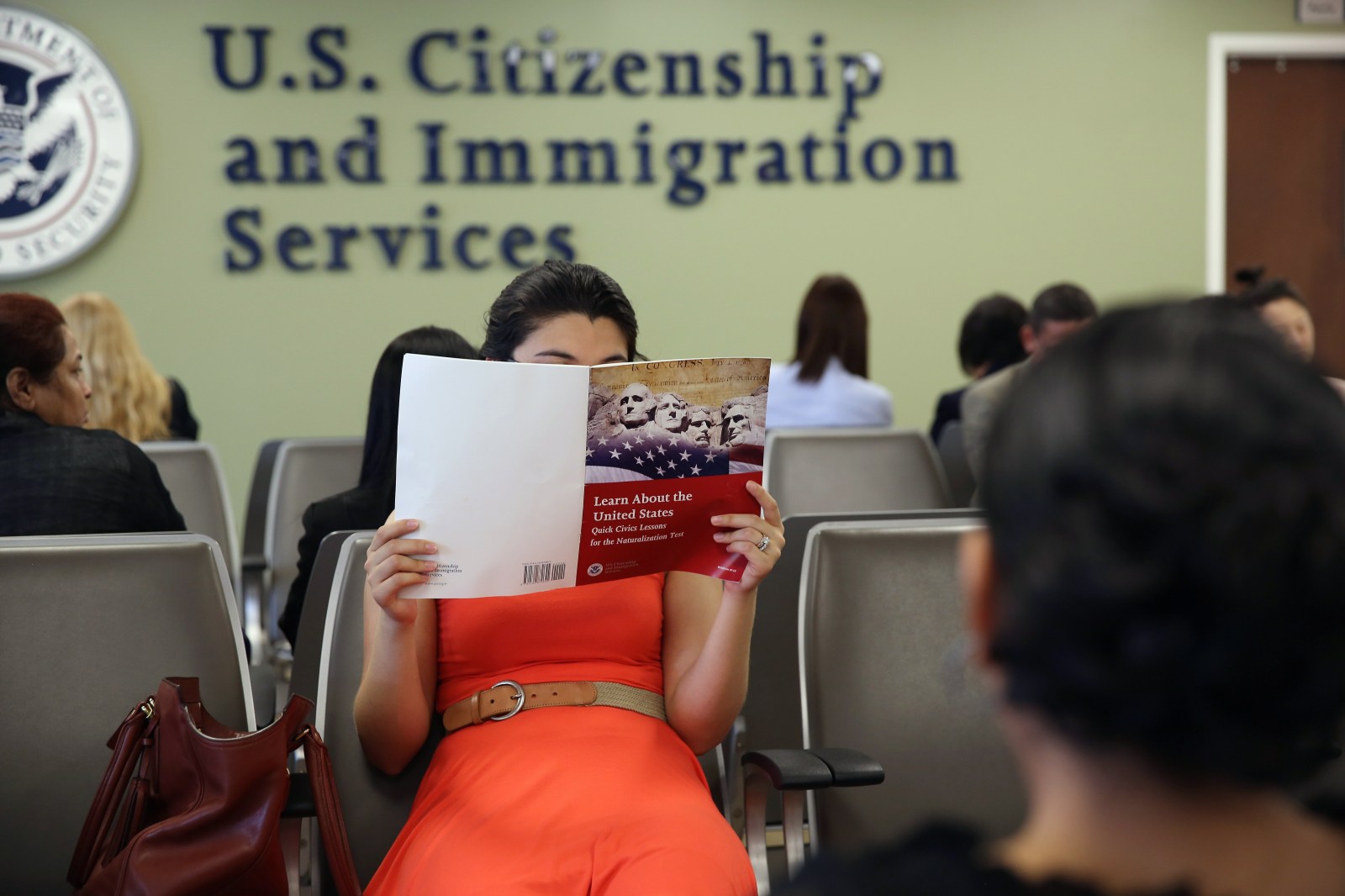
More than 1.5 million green card applications were pending in the United States by the end of June, according to government data. U.S. Citizenship and Immigration Services (USCIS) reported 1,560,290 Form I-485 applications were pending as of June 30. Form I-485 is for eligible immigrants in the U.S. to apply for permanent resident status, or a green card. These pending applications have been received but not yet decided by USCIS.
USCIS is the federal agency that manages the country’s immigration system. It processes applications for green cards, citizenship, work permits, asylum, and other immigration benefits. The backlog shows where applications are concentrated, amidst efforts to tighten immigration scrutiny. Data covers the period from April 1 to June 30, 2026.
Pending Applications by Location
Newsweek created a map showing where pending green card applications are concentrated across USCIS field offices. Florida had a significant number of pending applications, with 265,495 cases across nine USCIS field offices. In Florida, Tampa had 46,609 pending applications, Kendall had 45,973, and Hialeah had 43,153.
In Texas, field offices had 140,743 pending cases. Houston accounted for 57,601 cases, Dallas 38,257, and San Antonio 30,622. California’s field offices had 161,398 pending applications, with 23,633 in San Jose, 20,529 in Los Angeles, and 18,364 in San Francisco.
USCIS reports cases by the office handling them, which may not reflect where applicants live. The data excludes service centers due to their national reach, though they handle a significant backlog. The Vermont Service Center had 246,100 cases, Nebraska 42,805, California 21,108, and Texas 13,250.
Humanitarian and Family-based Cases
Humanitarian applications were the largest group, with 618,097 cases, about 40 percent of the total. Family-based applications were similar, with 611,067 cases, or 39 percent. Employment-based applications made up 268,408 cases, while 62,718 fell into other categories. Combined, family and humanitarian applications made up nearly 80 percent of pending I-485 applications.
The figures provide a snapshot of the backlog as of June 30. They do not indicate the waiting time or reasons for unresolved cases.
Legal Immigration Policies
About 1.36 million people gained lawful permanent resident status in fiscal 2024, up from 1.17 million in 2023, according to the Office of Homeland Security Statistics. This was the highest annual total between 2015 and 2024.
President Donald Trump issued immigration orders upon returning to the White House in January. These included measures to restrict humanitarian parole and suspend the U.S. refugee admissions program. As of June 30, 2026, more than 12.8 million cases were pending at USCIS, according to the Niskanen Center. Incoming applications dropped 34 percent compared to the same quarter the previous year.
USCIS data from April to June showed a 2.6 percentage point drop in the approval rate for decided green card applications from the previous quarter. In May, USCIS issued new guidance emphasizing discretionary approval for status adjustment applications. Certain immigrants on temporary status in the U.S. will generally need to apply through consular processing outside the country, except in extraordinary circumstances. Officers will assess applications individually.
These legal immigration changes are part of broader efforts, including a focus on ICE arrests and deportations, and tightening access to legal immigration benefits.
Contact Newsweek editors on this story: Matthew Cannon and James Debens
Leave a Reply