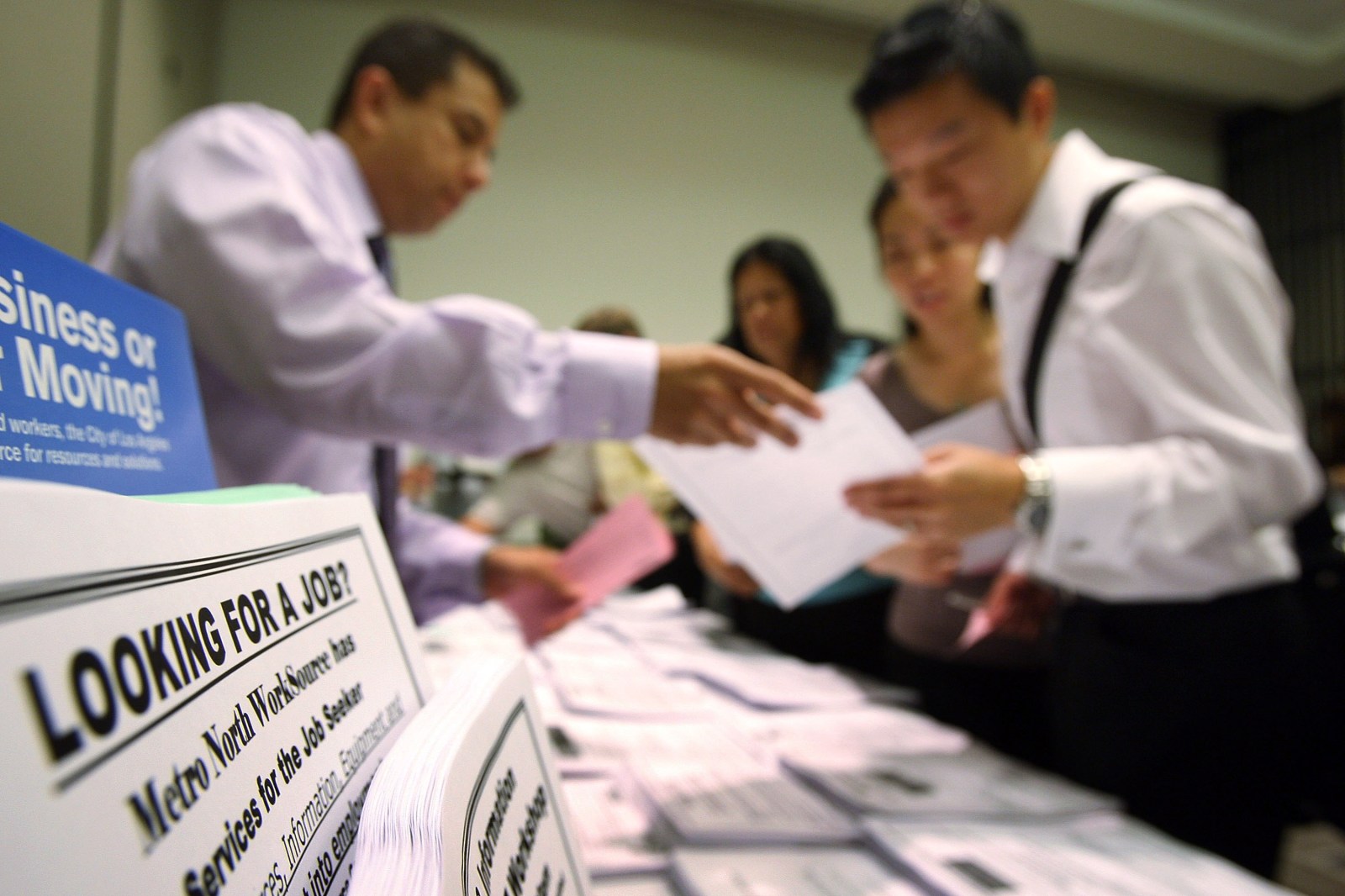
An increasing number of Americans have exhausted their unemployment benefits as hiring slows, leaving job seekers without income support after months of searching. This trend reveals a gap in the labor market where layoffs are low, but finding new employment takes longer.
Impact on Specific Industries
Industries such as technology, media, and retail are particularly affected as long-term unemployment rises. Though the unemployment rate remains relatively low, economists describe the labor market as being in a ‘low hire, low fire’ cycle. Companies neither cut jobs in large numbers nor add them at pace, resulting in more workers struggling to find jobs before their benefits end.
Misleading Labor Market Indicators
The unemployment rate, although near historic lows, does not fully capture underlying pressure. More individuals work part-time despite wanting full-time positions, and household reliance on multiple jobs is increasing. Long-term unemployment is also on the rise.
Reuters described the labor stability as a potential ‘mirage,’ while Federal Reserve Chair Jerome Powell referred to the economy’s balance as ‘unusual and uncomfortable.’
Climbing Long-Term Unemployment
The number of individuals unemployed for 27 weeks or more is increasing, similar to just before the 2008 recession. While below the pandemic peaks, over 1.83 million people now fall into this category. This figure has climbed from 1.67 million last year and 1.24 million in April 2024.
The share of long-term unemployed workers also continues to rise, with 26 percent of unemployed Americans jobless for over 27 weeks in December, now down to 25.3 percent.
Significance of 27 Weeks
Being unemployed for 27 weeks is critical according to the Bureau of Labor Statistics. It highlights potential misalignments between job availability and worker skills, signaling a risk of individuals dropping out of the workforce entirely. The challenge isn’t just the availability of jobs but matching them with the right skills.
Although some sectors continue adding positions, workers in specific industries face prolonged job searches. Unemployment insurance becomes essential during these extended transitions, but for some, benefits expire before securing new work.
Duration of Unemployment Benefits
Typically, unemployment insurance lasts up to 26 weeks, with variations based on state laws and economic statuses. While federal extensions during economic downturns have occurred, current extensions do not reach the scale of those during the COVID-19 pandemic.
Without extensions, unemployed individuals beyond eligibility receive no further weekly payments, posing challenges like dipping into savings, incurring debt, or taking lower-paying jobs.
Insights from the Unemployment Rate
Though benefits exhaustion rises, the 4.3 percent unemployment rate as of April provides a more nuanced perspective. Despite job growth exceeding expectations with 115,000 new positions, the overall labor market remains stable but not accelerating. This reflects structural issues affecting job numbers needed to maintain steady unemployment rates.
Structural factors, such as slow population growth, aging demographics, and reduced immigration, keep the labor supply tight according to Lydia Boussour, a senior economist at EY-Parthenon.
States with the Best and Worst Benefits
Unemployment benefits vary by state, affecting eligibility, payment, and duration. States with higher wages, like Washington and Massachusetts, offer more generous benefits, with maximum weekly payments at $1,152 and $1,105 respectively.
By contrast, Southern states like Mississippi offer a maximum of $235 weekly, with Alabama, Florida, and Louisiana capped at $275. These benefits often do not cover basic living costs and expire sooner.
Future Implications
For households already struggling with inflation, the loss of unemployment benefits can be pivotal. With a slowdown in hiring and rising long-term unemployment, more individuals may face protracted job searches without financial support, increasing those exhausting their benefits.
Leave a Reply