Dr. Heidi Overton, a prominent White House aide, has been designated to head the Food and Drug Administration (FDA), as announced by President Donald Trump. Overton, a medical doctor and the deputy director of the White House Domestic Policy Council, has contributed to several of Trump’s health initiatives in his second term. She has emerged as a credible figure within the administration, advocating for the Republican president’s objectives.
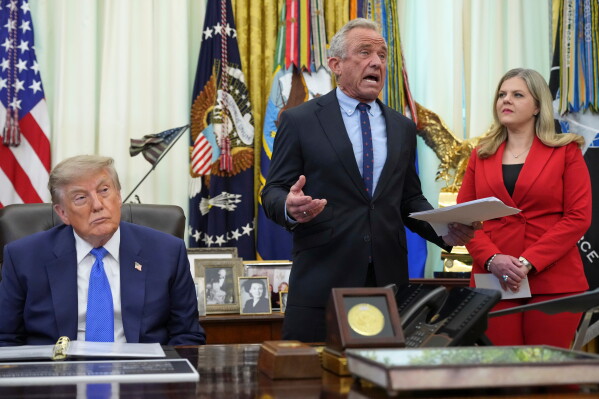
If the Senate confirms Overton, she will have to balance multiple priorities. These include Trump’s personal political focuses, traditional Republican anti-regulatory stances, and Health Secretary Robert F. Kennedy Jr.’s anti-corporate objectives. During a meeting concerning a presidential executive order on vaccines, Overton stood with Trump and Kennedy in the Oval Office, reflecting the complex dynamics she would face as FDA leader.
Challenges were evident in the tenure of the previous FDA head, Dr. Marty Makary. He stepped down in May, leaving behind various unfinished projects. Issues on ultraprocessed foods, antidepressants, and COVID-19 vaccines need ongoing attention. Trump’s post on Truth Social complimented Overton, emphasizing her ability to fulfill his goals relating to enhancing cures, innovating, reducing drug prices, and supporting Kennedy’s “Make America Healthy Again” movement.
Robert F. Kennedy Jr. expressed support on X, praising Overton’s exceptional judgment, professionalism, and dedication to American citizens. Overton has actively promoted Trump’s health policies, including attending medical school at the University of New Mexico and earning a doctoral degree in clinical investigation from Johns Hopkins University. Before joining Trump’s administration, she served as the chief policy officer at America First Policy Institute, a conservative think tank.
Presently, Overton has been visible at events with the president to reveal major health-related projects, including drug price deals and a controversial vaccine order. This order proposed separating the combined measles, mumps, and rubella vaccine into individual immunizations, raising concerns within the medical community. Despite claims made by Trump, scientific studies have consistently shown there is no correlation between vaccines and autism spectrum disorder.
Overton has been outspoken about abortion pills. If confirmed, she might attempt to reverse FDA rules that expand access to these pills. U.S. abortion opponents have been frustrated by what they see as inadequate action from the administration in controlling these online prescriptions, seen by them as diminishing state abortion bans.
Mifepristone, typically combined with misoprostol for medical abortions, comprises nearly two-thirds of U.S. abortions. It is considered one of the safest FDA-approved medications. Overton’s confirmation process involves approval from a narrowly Republican-led Senate and scrutiny by the Senate Health, Education, Labor and Pensions Committee. Its chair, Sen. Bill Cassidy, a physician from Louisiana, has criticized Trump’s vaccination policies.
Prominent Democratic senators have openly criticized Overton’s nomination. Washington Sen. Patty Murray referred to her as an extremist unsuitable for leading the FDA. Makary’s replacement is tasked with addressing residual challenges and grievances.
Prior to his departure, Makary faced criticism from both health industry executives and anti-abortion activists. He encountered opposition over the FDA’s inaction regarding flavored e-cigarettes, which many blame for the rise in teenage vaping. Days before he resigned, the agency eased regulations for electronic cigarettes and nicotine pouches, bypassing FDA expert advice.
Pharmaceutical firms expect changes at the FDA, following rejections and reversals of biotech drugs intended for rare diseases. Biotech firms, investors, and patient groups have protested, with conservative lawmakers echoing their concerns. Makary attempted to address industry grievances by introducing programs for quicker drug approvals, though these initiatives occasionally brought difficulties.
Several of Makary’s deputies have also exited the agency. Dr. Vinay Prasad resigned as vaccine and biotech chief after intense criticism from various stakeholders. Dr. Tracy Beth Hoeg, involved in analyzing the safety of antidepressants and COVID-19 vaccines, no longer serves as the FDA’s acting drug center director.
Expectations are high for Overton from Kennedy’s health movement, although some of its members remain skeptical. Kelly Ryerson, an activist opposing pesticides, expressed disagreement with Overton’s views shared at a MAHA roundtable held at the White House.
One pivotal decision for the next commissioner is regulating peptides. Despite safety concerns voiced by the FDA, Kennedy’s advisers recommend easing access. The FDA under Kennedy is working with the White House to establish regulations for ultraprocessed foods. Concerns about their impact on health issues like diabetes and obesity are being addressed.
Recently, under Kennedy, the FDA has set more stringent vaccine testing standards and has withheld publishing research on COVID-19 shots. The agency is reviewing antidepressants and their potential link to disorders when used during pregnancy, a long-standing target of Kennedy.
Additionally, the FDA is investigating two summertime foodborne illness outbreaks. A cyclospora outbreak tied to contaminated iceberg lettuce and a multi-state salmonella outbreak linked to jalapeño peppers have sickened thousands.
The Associated Press, receiving support from Howard Hughes Medical Institute and Robert Wood Johnson Foundation, is solely responsible for its content.
Leave a Reply