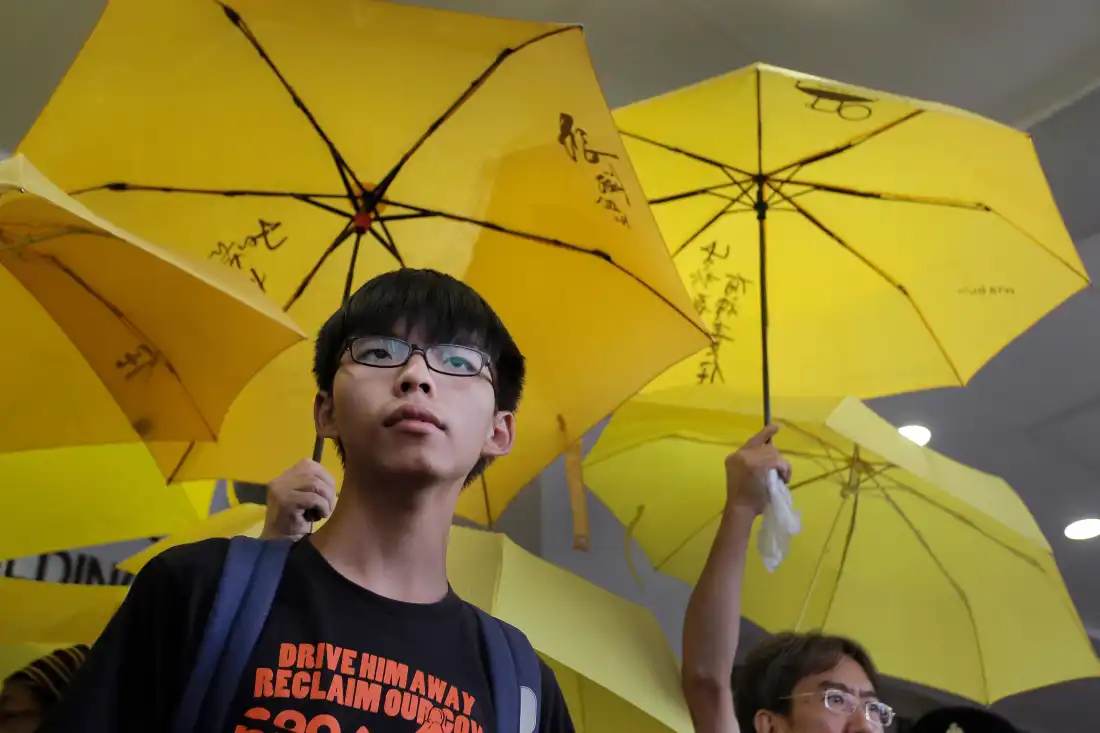
Joshua Wong, a leading figure in Hong Kong’s pro-democracy movement, received a 10-year prison sentence on Thursday. This marks his second conviction under Beijing’s national security law, aiming to quell dissent in the city. The charge, filed in 2025, alleged conspiracy to cooperate with foreign entities endangering national security. Wong admitted guilt in September, likely reducing the jail term.
Wong is already serving a four-year, eight-month sentence from a previous major case tied to an unofficial primary election, which he also pleaded guilty to. Initially, his release was anticipated for January 2027. Judge William Tam described Wong’s actions as severe, initially considering a 13-year sentence, later mitigated due to the guilty plea.
Throughout the proceedings, Wong appeared composed, acknowledging his supporters with gratitude. Supporters, including a tearful Tiffany Chin, a former member of Wong’s group Scholarism, attended the court session. Judge Tam allowed concurrent serving of Wong’s sentences, leaving him with only two more months from the prior sentence.
Residents like ET Wong remember him as a young leader with “big-picture thinking.” She lamented his imprisonment, stating he should not have faced a day in prison.
The sentencing signals discouragement for dissent across Hong Kong. Previously buzzing with civil and media activity, the city saw significant changes post-2019’s anti-government movement. Parameters for elections tightened, and many activists faced detention. Criticism of authorities led to the closure of various news entities and civil organizations.
Observers suggest that authorities aim to detain activists like Wong indefinitely. Eric Lai from Georgetown Center for Asian Law highlighted the potential repeated use of NSL charges for this purpose. Conversely, Beijing sees Wong as an advocate of Hong Kong independence, against its core interests. Authorities claim the law ensures post-2019 stability, asserting that their measures are evidence-backed.
The charges highlighted Wong and Nathan Law’s lobbying efforts for international support for Hong Kong’s democratization around 2016. Their activities included meetings with notable U.S. politicians such as Nancy Pelosi and Marco Rubio. Post-law enactment, such advocacy continued overseas, focusing on petitions and political discussions. Wong maintained support from Hong Kong, leveraging media and social platforms for international attention.
Wong’s lawyer, Derek Chan, requested a hopeful sentence, emphasizing Wong’s wish to care for his parents post-release. Supporters note Wong’s perseverance through prison, continuing education, and personal growth.
Despite incarceration, Wong remains a significant political symbol for the generation experiencing Hong Kong’s colonial transition before 1997. His influence challenges the pro-Beijing narrative, with media scrutiny, such as the critique of a 2017 Netflix documentary, underlining concerns. The documentary gained popularity in Hong Kong after official commentary.
Leave a Reply