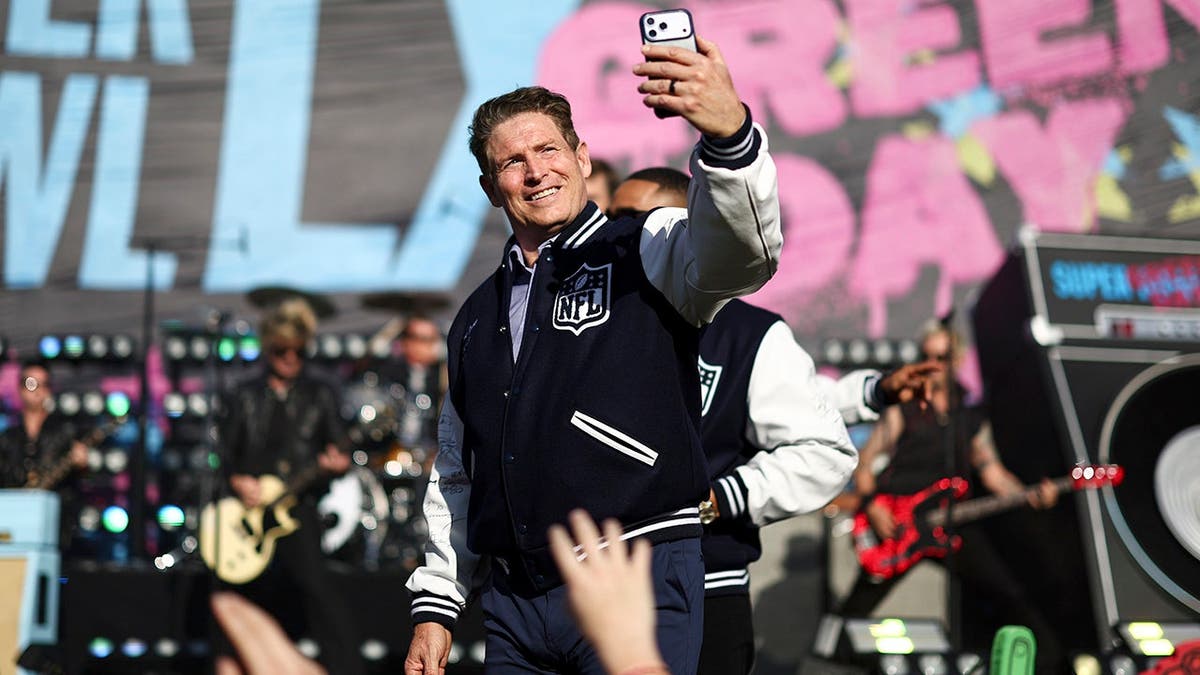
NFL legend and BYU alum Steve Young once questioned how BYU would adapt to the name, image, and likeness (NIL) era in college football. Contrary to concerns, BYU has thrived. Since 2021, BYU has matched Boise State for ninth-most wins in college football. The Cougars have reached high AP poll rankings, including No. 2 after defeating Notre Dame.
BYU Vice President of Advancement Keith Vorkink spoke to OutKick about the university’s approach. “Rumored payments existed long before NIL,” Vorkink noted. “We adhere to policies and are grateful for the chance to participate in a compliant manner.” BYU, a private institution tied to The Church of Jesus Christ of Latter-day Saints, remains committed to its core values even as it engages in NIL.
Coach Kalani Sitake embodies the university’s culture in athletics, according to Vorkink. “We focus on culture, not leading the NIL market,” Vorkink said. This culture resonates with players, guiding their choice to stay at the school despite potential higher offers elsewhere.
Young highlighted Sitake’s success in fostering a unique team environment. “Building affinity amidst college players focused on income is challenging,” Young commented. “Yet, Sitake’s efforts have cultivated a unified team spirit.”
Vorkink noted star players like Bruce Branch and Bear Bachmeier opted to remain with BYU, valuing cultural fit over financial incentives. The reach of BYU’s culture is evident in stories like that of AJ Dybantsa, a top NBA Draft pick who found a home despite initially knowing little about the university.
BYU’s honor code, which includes restrictions such as abstaining from certain substances and sexual relations outside marriage, plays a role in recruiting. Young remarked that while the honor code may seem counterintuitive, it can attract students who appreciate its distinctiveness.
Despite challenges, BYU maintains its identity. “Amid big money and changing systems, the ‘BYU way’ serves as our guide,” Young said. Both he and Vorkink agree on the need for regulatory measures to stabilize this evolving system and protect student-athletes’ interests.
Young stressed that balancing payment with educational goals will require congressional intervention. “Congress can align these interests without harming players, who previously received little despite contributing significantly,” Young explained.
BYU’s adaptation to NIL without compromising its principles is recognized by Young. “We’ve faced the challenges head-on, competing the BYU way,” he stated.
Leave a Reply