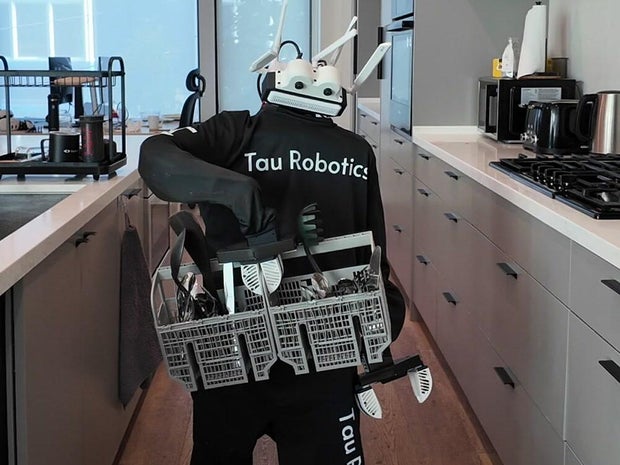
By August 2026, residents of San Francisco have a novel option for cleaning their homes. Tau Robotics offers a service where humanoid robots perform chores for $30 an hour. This initiative is part of a pilot program limited to 1,000 households, launched by the engineering company known for its AI-powered robots.
Humanoid Robots in Action
The robots, costing $50,000 each, are trained using artificial intelligence to handle tasks like vacuuming, cleaning kitchen counters, and taking out trash. Dressed in black uniforms and sporting names such as Chelsea and Elon, these machines mimic human performance initially, with plans to exceed it. Tau’s goal is to scale up to 1,000 cleanings weekly in San Francisco by 2027 and expand internationally by 2028.
Current Limitations and Human Assistance
Despite advancements, the robots still depend on human oversight. Trained technicians wear VR goggles to view homes through the robots’ eyes, stepping in when tasks prove challenging. Examples include navigating stairs or deciding where to vacuum. The CEO, Alexander Koch, admits that full autonomy is distant, explaining the current limits of the robots’ capabilities.
Safety and Security Concerns
Safety is a priority, considering the robots’ potential hazards. Ken Goldberg, a robotics expert, warns about risks associated with the robots’ heavy movement and limited responsiveness. Precautions are in place to protect humans, with protocols to shut down robots if necessary.
Security and privacy also require consideration. The robots’ camera systems capture video that assists in training the AI. While this enhances functionality, it poses privacy risks by possibly recording personal information. Tau ensures control over the data, with systems managed internally to mitigate privacy violations.
Market Growth and Future Prospects
The humanoid robot market is poised for significant growth, with estimates suggesting a rise from its current value of $2 billion to $200 billion by 2035. Though industrial use is prevalent, future home applications are anticipated as capabilities improve and societal acceptance grows.
However, some experts, like Goldberg, remain cautious about the timeline, projecting that it will take years for robots to efficiently handle domestic services like cleaning. While the economic potential is immense, the technological hurdles remain significant.
Zornitsa Todorova from Barclays predicts gradual and incremental technological adoption. Interest in domestic use will increase as the robots’ effectiveness grows, but substantial progress is still required before they become commonplace in homes.
Leave a Reply