Hurricane Genevieve’s Impact
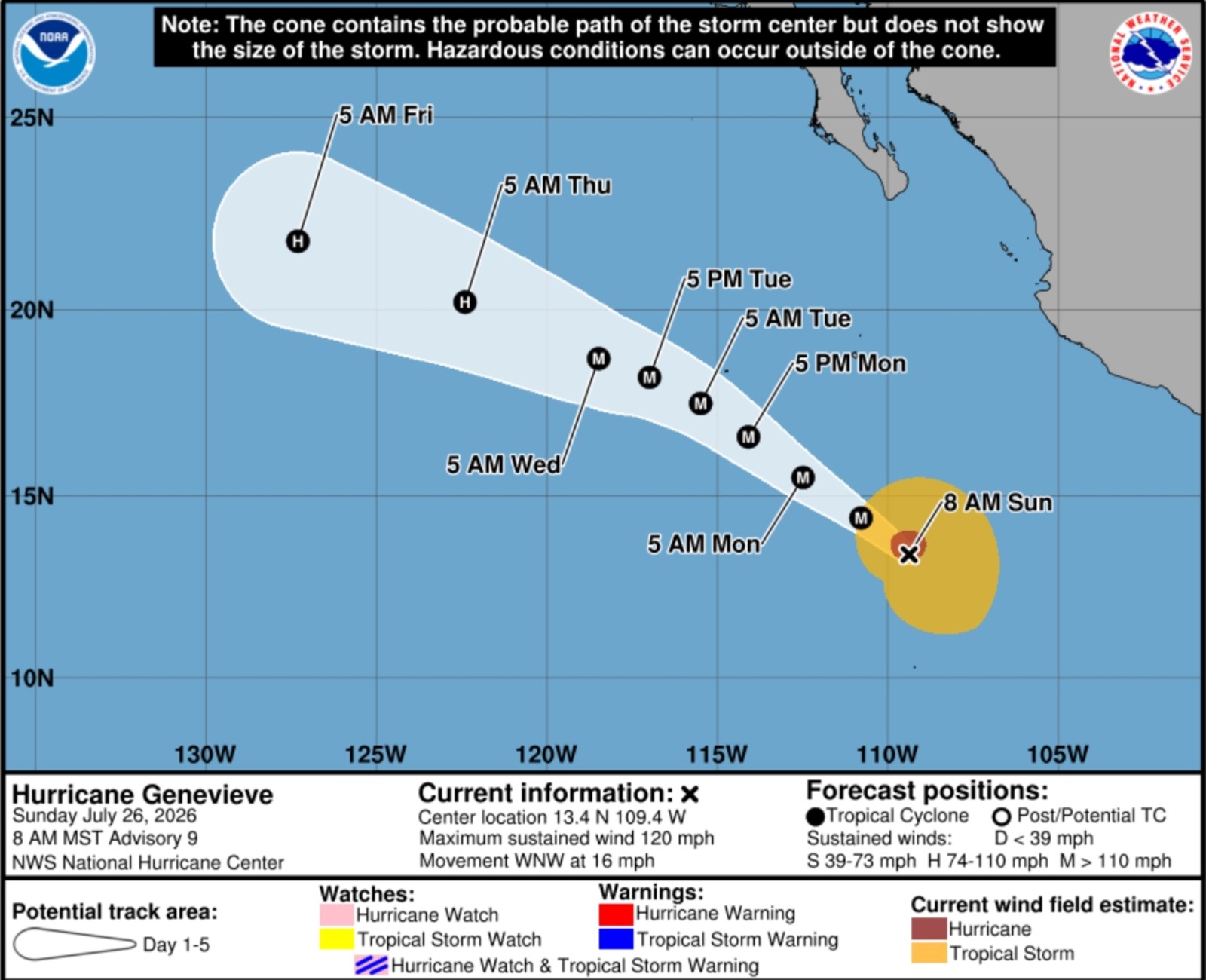
Hurricane Genevieve has emerged as the first significant hurricane in the 2026 Eastern Pacific season. It is also the first major hurricane of the year in either the Eastern Pacific or Atlantic basins. Weather experts forecast that the storm could intensify into a Category 4 hurricane by Monday.
The National Hurricane Center (NHC) reports that Genevieve has already reached Category 3 status. It carries maximum sustained winds of 120 miles per hour, currently moving over the open waters of the eastern Pacific Ocean, southwest of Mexico. Although Genevieve is not expected to hit land, intensified winds could continue before the storm weakens later this week.
Classification of Major Hurricanes
As per the Saffir-Simpson Hurricane Wind Scale (SSHWS), a major hurricane is classified as Category 3, 4, or 5. Such storms maintain sustained winds of at least 111 mph, capable of delivering severe wind damage and significant coastal impacts if they approach populated regions. Genevieve reached this threshold on Sunday after a rapid escalation in strength.
Potential Damage from Category 3 Hurricanes
“Devastating damage will occur” during a Category 3 hurricane if it nears landfall.
The NHC explains that well-constructed framed homes may suffer severe damage, including the loss of roof decking and gable ends. Numerous trees could be uprooted, causing road obstructions. Infrastructure disruptions, like electricity and water outages, are expected for days to weeks after the storm departs.
Current Location of Hurricane Genevieve
According to the NHC, as of Sunday morning, Genevieve was positioned about 515 miles southwest of Manzanillo, Mexico. It was moving at a speed of 16 mph heading west-northwest. The hurricane’s central pressure measured at 963 millibars, indicating stronger structure.
Weather Condition Alerts
Hurricane Genevieve’s current state shows it off Mexico’s coast, with high-speed winds captured in animated weather footage by windy.com. Satellite images underscore its clearly defined eye. Despite its power, rainfall is anticipated to stay offshore during its lifecycle.
While Genevieve isn’t predicted to make landfall, coastal areas may feel its presence. “Swells from Genevieve are impacting parts of Mexico’s southwestern coast and will possibly reach southern Baja California Peninsula soon,” the NHC warns. “These swells could generate dangerous surf and rip current conditions.”
Forecasts suggest Genevieve will remain over open waters, where cooler sea temperatures and other conditions may weaken it. However, Genevieve is likely to maintain its status as a major hurricane through at least Wednesday morning.
Significance of Genevieve’s Arrival
Genevieve’s arrival signifies the first major storm of 2026 in prominent North American regions. Currently, the Atlantic remains calm with no active tropical cyclones under the NHC’s watch.
Leave a Reply