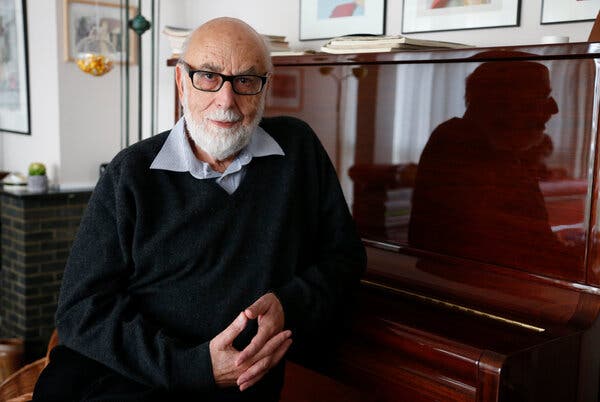
François Englert’s work significantly contributed to the discovery of the Higgs boson. This achievement explained how particles acquire mass, solving a major physics mystery.
On July 4, 2012, a large audience gathered at CERN to hear the findings from two experiments related to the Higgs boson. This particle held crucial importance in physics, often referred to as ‘the God particle.’ Its detection confirmed the existence of a field imparting mass to all particles, including electrons and quarks.
“I think we have it,” declared Rolf-Dieter Heuer, CERN’s director general at the time, receiving thunderous applause.
Peter Higgs, after whom the particle was named, was present and visibly emotional. Beside him sat François Englert, a Belgian physicist. Both were instrumental in developing the theory behind the Higgs field, vital for the Standard Model of particle physics. This framework, developed in the 1970s, categorizes all known fundamental particles and forces and is considered a monumental scientific achievement.
In 2013, Higgs and Englert shared the Nobel Prize in Physics. They were recognized for their theoretical discovery that aids in understanding the origin of mass in subatomic particles.
François Englert passed away on a Thursday in Uccle, Belgium, a suburb of Brussels, at 93. CERN announced his death on their website.
In the late 1950s, Englert worked at Cornell University as a research associate for Robert Brout. The two became interested in the work of Yoichiro Nambu, a Japanese American physicist. Nambu tackled the problem of symmetry breaking in some subatomic reactions, a challenge for physicists at the time.
Leave a Reply