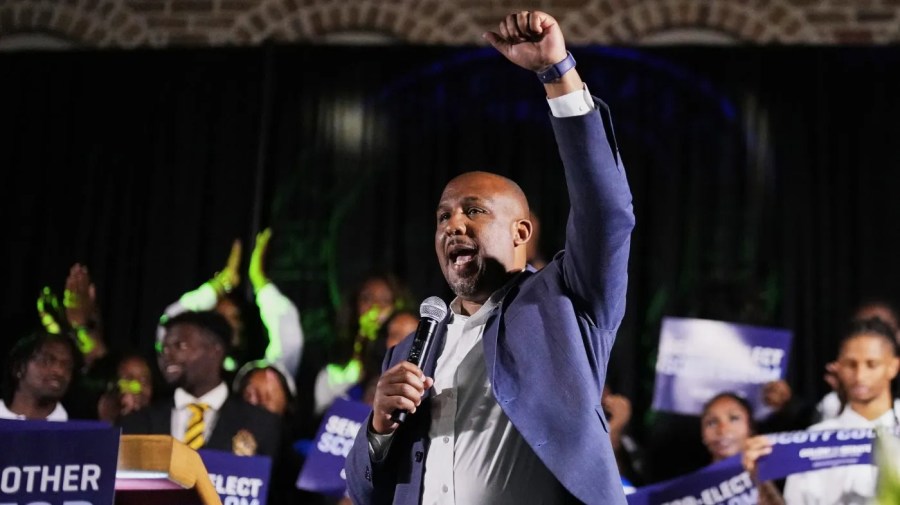
The new class of House freshmen is preparing to impact Congress significantly. Recently elected House Democrats aim to prioritize reversing Medicaid cuts and banning stock trading by members. These Democrats boast diverse backgrounds, including smokejumpers, mayors, state lawmakers, and emergency nurses. Their goal is to make politics more representative and bipartisan.
Rep.-elect Sam Forstag (D-Mont.), a smokejumper and union leader, expressed a desire to see more working-class individuals in Congress. He noted the rarity of working-class people making it to such positions of power, calling it a fundamental issue of representation.
The incoming class of House freshmen enters amid one of the largest Democratic majorities in Congress since at least 2008, with potential seat numbers akin to those in the 1990s. Despite the dominance of millionaires in Congress, new elected union members bolster working-class representation.
Nicholas Carnes, a public policy professor at Duke, pointed out the considerable challenges working-class candidates face when running for office. Financial pressures and systemic barriers contribute to the underrepresentation of the working class.
Rep.-elect Cyril Jefferson (D-N.C.) highlighted how political systems cater to wealthy candidates. He emphasized that true government representation requires a shift towards including more common people in Congress.
Political campaigns, primarily focused on fundraising, pose significant hurdles, particularly for working-class candidates. Rep.-elect Matt Little (D-Minn.) noted the considerable time spent on raising money and highlighted the need to change this dynamic.
Attempts to support working-class candidates include programs like the New Jersey AFL-CIO’s “Labor Candidates School” and proposals for seed money programs, political scholarships, and reserved party leadership seats.
The election results added a historically diverse range of candidates to Congress. Highlights include:
- 155 women are set to serve in the 120th Congress, nearly a third of Capitol Hill.
- Sen.-elect Abdul El-Sayed (D-Mich.) is the first Muslim American elected to the Senate.
- Sen.-elect Peggy Flanagan (D-Minn.) will be the first Native American woman in the Senate.
- Three Black women will serve in the Senate simultaneously, a historic first.
- Rep.-elect Michael Alfonso (R-Wisc.) is the youngest in the House at age 26.
- Incoming senators are nearly 15 years younger on average than those they succeed.
Freshmen Democrats are eager to transform Congress’s culture with initiatives promoting bipartisan engagement and supporting consistency in campaign pledges.
Rep.-elect Zach Dembo (D-Ky.) took the initiative to host a bipartisan mixer, encouraging dialogue across party lines. Some newcomers, like Cyril Jefferson and Sam Forstag, suggest cultural shifts like reducing formality and increasing empathy during legislative discussions.
The Hill’s On The Ballot highlights notable campaigns, including Sen.-elect Scott Colom’s (D) unexpected victory over Sen. Cindy Hyde-Smith (R) in Mississippi. Colom’s campaign, renowned for its extensive use of ads, demonstrated the power of persistent messaging despite early doubts from consultants.
Media attention and creative advertising efforts played crucial roles. Andrew Colom, the brother and campaign collaborator, emphasized the importance of innovative storytelling and grassroots engagement.
- Andrew Colom highlighted the impact of supporters like Arun Chaudhary, communication advisors, and strategic media contributors as pivotal to the campaign’s success.
The political landscape for upcoming elections continues to evolve, with emerging leaders on both sides striving to energize their base and challenge the status quo.
With significant shifts in demographics and representation, the new Congress faces the opportunity to bring diverse perspectives to the forefront.
Leave a Reply