Tehran has declared its intention to retaliate against expanded U.S. sanctions, warning that Washington should anticipate a significant response to these actions. Ali Madanizadeh, Iran’s Economy Minister, criticized the U.S. measures as an “economic terrorist attack” during a televised interview. The United States has maintained sanctions on Iran since 1979 following the seizure of the U.S. embassy in Tehran by Iranian students.
Madanizadeh pointed out that key nations like China and Russia have not shown any plans to align with the U.S. sanctions. Chinese Foreign Ministry Spokesperson Lin Jian stated that Beijing firmly opposes “illegal unilateral sanctions,” as reported by China’s state news agency, Xinhua.
“Our response will not be purely defensive,” Madanizadeh warned, suggesting an offensive retaliation without specifying its nature. Despite the ambiguous threat, he elaborated on Iran’s preparedness, mentioning a comprehensive two-year plan to mitigate the sanctions’ impact.
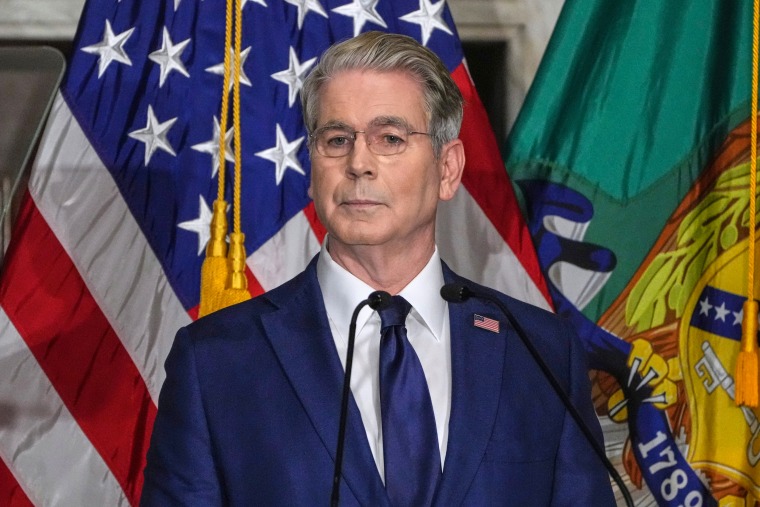
The comments followed U.S. Treasury Secretary Scott Bessent’s announcement of new sanctions against Iran, described as an “economic D-Day.” He stated that countries engaging financially with Tehran could face isolation. However, actual penalties were not applied, and Bessent provided limited information about the measures, with President Donald Trump reportedly urging world leaders to cease interactions with Iran.
The U.S. Department of the Treasury announced “Operation Economic Outcast,” expanding secondary sanctions in key sectors like digital assets, technology, gold, aviation, and shipping. Nearly 60 entities and individuals were sanctioned in various locations for enabling Iran’s activities deemed reckless by the U.S.
The United Arab Emirates recently ceased all financial transactions with Iran. On the streets of Tehran, some citizens, like a 27-year-old mechanic named Farzin, expressed indifference, noting that the sanctions have yet to impact his business significantly.
Andreas Krieg, a senior lecturer at King’s College London, observed that Iran views the measures as “economic warfare” for regime survival rather than a means for negotiation. Thus, Iran’s response remains one of defiance.
President Masoud Pezeshkian emphasized in Tasnim news agency that the U.S. should change its approach, warning that force and intimidation will only complicate the situation. The global community might see increased pressure from Tehran on the Strait of Hormuz, a vital oil trade route blocked by Iran amidst rising tensions and a related conflict.
Iranian media have also increased hostile rhetoric, including threats against Barron Trump, sparking concerns over the escalation. The U.S. Secret Service confirmed awareness of these threats and assured investigations are ongoing, although specific protective measures remain confidential.
Leave a Reply