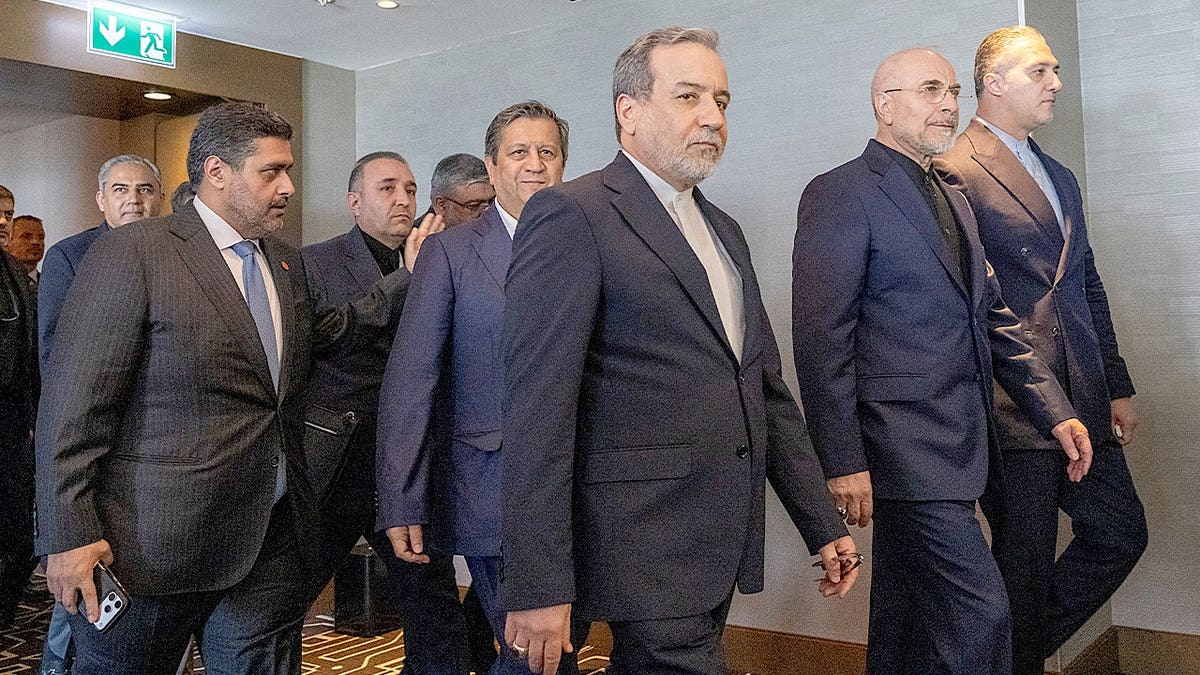
Iran has sent a comprehensive delegation to Switzerland for technical talks with the United States, indicating Tehran’s demand for immediate cash flow and financial concessions. These talks follow a memorandum of understanding signed by President Donald Trump and Iranian President Masoud Pezeshkian, highlighting the significance of these negotiations in the Middle East.
Counterterrorism expert Dr. Omar Mohammed noted Iran’s strategic approach to the negotiations. Tehran’s delegation, led by Mohammad Baqer Qalibaf and Foreign Minister Abbas Araghchi, includes top officials from various sectors. This strategy underscores the country’s focus on economic leverage.
The Iranian team comprises security, legal, and financial figures, such as Abdolnaser Hemmati, the governor of Iran’s Central Bank, who leads the economic committee. Other key figures include Ali Bagheri Kani from the Supreme National Security Council and Kazem Gharibabadi handling legal affairs. Senior state oil and energy officials are also present, emphasizing Iran’s primary objective of securing immediate cash flow and controlling maritime operations.
“These are the most consequential negotiations America has entered in the Middle East in years. Iran knows that, and it is playing it very well,” Dr. Mohammed stated.
The inclusion of these officials indicates Iran’s focus on money, leverage, and implementation. Hemmati’s presence emphasizes the financial aspects, while energy officials signal the importance of oil and maritime security in the talks.
The U.S. delegation, led by Vice President JD Vance, includes U.S. Special Envoy Steve Witkoff and Jared Kushner. Washington aims to address nuclear issues and the Lebanon ceasefire crisis, with hopes of improving relations with Iran.
However, contrasting views exist in Iran, where hardline lawmaker Mahmoud Nabavian claimed on state TV that Supreme Leader Mojtaba Khamenei opposed nuclear talks and demanded compensation from the United States.
Mohammed warns that if financial benefits precede concessions, Iran may interpret this as a victory instead of compromise, potentially maintaining its leverage and pressure points.
The talks, which were paused but not ended, highlight the differing approaches and priorities of both countries in these negotiations.
Leave a Reply