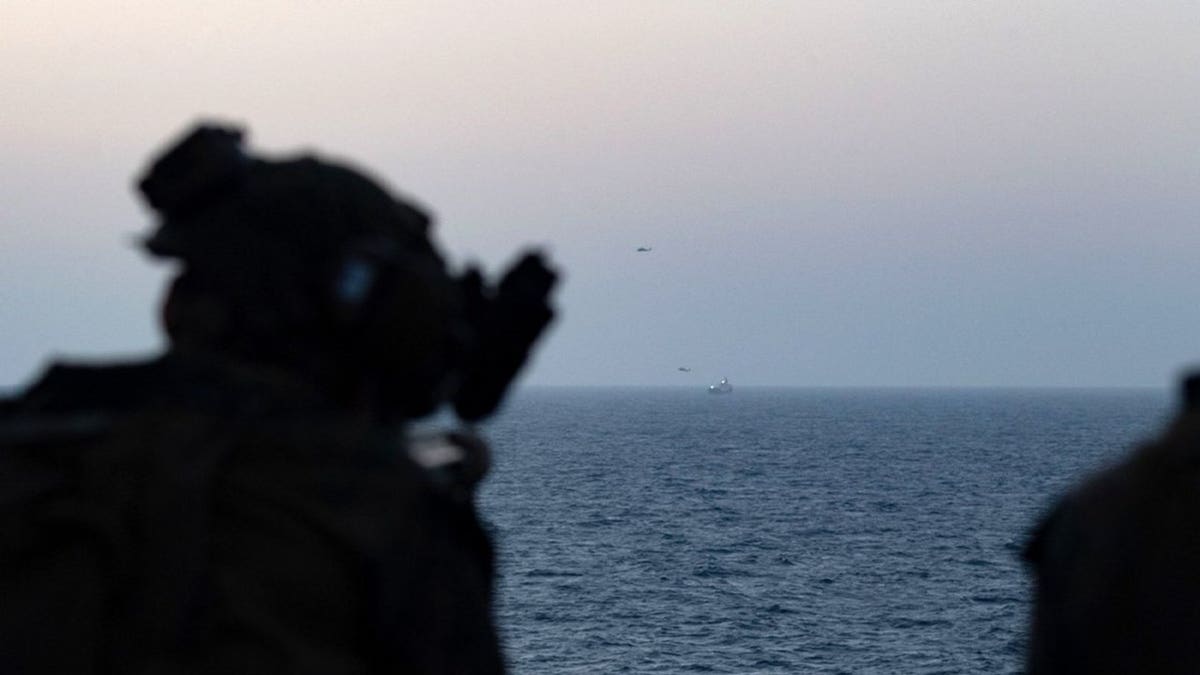
U.S. investigators have captured footage revealing that small Iranian tankers, known as the “ghost fleet,” are bypassing a U.S. naval blockade. These tankers are smuggling liquefied petroleum gas (LPG) to China via a clandestine maritime hub near Malaysia. United Against Nuclear Iran (UANI) conducted an in-depth investigation, revealing that at least nine tankers carrying Iranian oil or LPG have evaded U.S. restrictions since July.
One such vessel, identified as the SOGL, reportedly carried 500,000 barrels of Iranian LPG from Assaluyeh Port, Iran, in late August. It managed to slip past the blockade and traveled to a Malaysian anchorage, where it received fuel and other services before proceeding to China to offload its cargo. According to a senior analyst at UANI, Jemima Shelley, the Malaysian Eastern Outer Port Limits Anchorage (EOPL), about 70 kilometers from Malaysia’s coastline, serves as a crucial point for Iran’s sanctioned energy trade to China.
This location allows vessels to wait offshore, obtain supplies, and transfer cargo, providing a critical link for Iranian energy exports. Despite the blockade’s overall effectiveness in preventing crude oil exports from Iran, small tankers like the SOGL have found ways to breach it. The main U.S. focus remains on blocking larger tankers carrying significant quantities of Iranian crude oil.
The U.S. blockade, first imposed in April, has largely succeeded in restricting Iranian oil exports by preventing vessels from leaving the Gulf of Oman. However, some opportunistic tankers have managed to carry out successful breaches, causing economic pressure on Iran.
LPG, a flammable mixture primarily composed of propane and butane, poses significant risks during transport. The U.S. blockade aims to turn away such vessels to avoid high-risk military confrontations on volatile cargo like LPG. Iranian ghost fleet tactics often involve turning off their Automatic Identification System (AIS) transponders to avoid detection, sailing under false flags, and conducting risky ship-to-ship transfers in the region.
The SOGL has been listed on the U.S. sanctions list due to its involvement in transporting Iranian petroleum products. Shelly explained that the Malaysian anchorage, vital for tankers bound for China, allows for ship-to-ship transfers often needed due to the blockade. This anchorage also facilitates floating storage, important for evading sanctions.
Despite the U.S. measures, China remains a principal destination for Iranian oil, reportedly accounting for up to 100% of Iran’s oil and LPG exports. These activities enable Iran to sidestep sanctions, with China benefiting from discounted oil and LPG.
After UANI’s visit to the Malaysian anchorage, the SOGL moved to the South China Sea, where it finally discharged its cargo at Xinzhou Port in China. Other vessels, like the U.S.-sanctioned LPG carrier G Summer, have also been documented bypassing blockade lines, further complicating efforts to curb illicit Iranian oil exports.
Leave a Reply