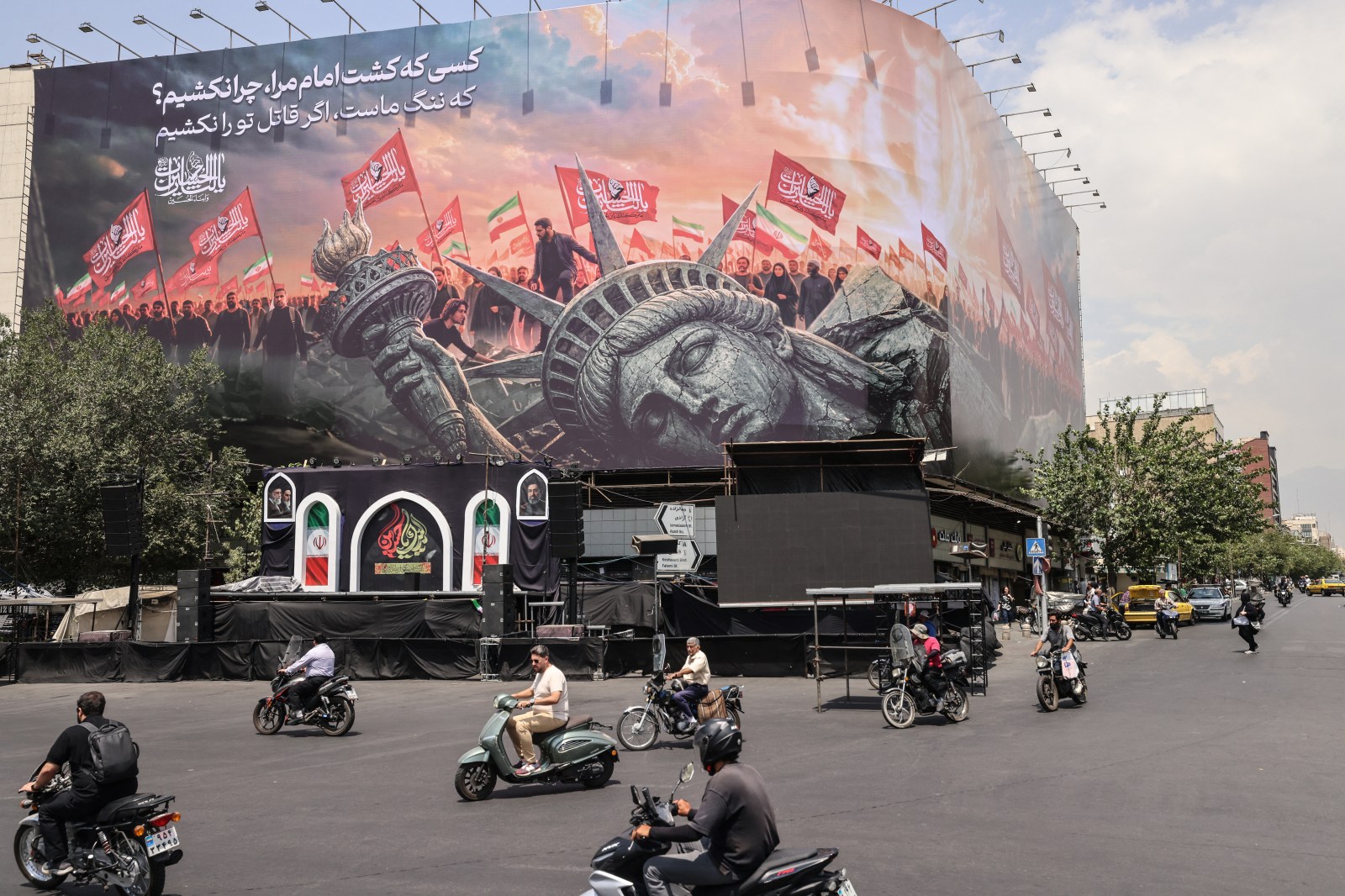
The war initiated by the United States and Israel six months ago has underscored Iran’s strategic leverage in the Strait of Hormuz. This approach has proven more influential than nuclear capabilities in the Islamic Republic’s arsenal. President Donald Trump’s administration focused on Iran’s nuclear program, which officials have consistently stated was not intended for bomb production. Despite this focus, Iran’s control over the Strait of Hormuz has significantly impacted global energy trade, affecting countries like the U.S., where the intervention has faced increasing criticism.
Tehran’s hold over this vital maritime chokepoint has emerged as a more effective tool than nuclear armament, offering a powerful economic weapon. Joshua Tallis, a former senior U.S. Navy official and current director at the Center for Naval Analyses, suggested Iran’s economic influence on a global scale is a more potent weapon than a nuclear bomb. Iran had long issued warnings about closing the Strait during full-scale military confrontations, a strategy stemming from its 1980s conflict with Iraq. This tactic has become reality and is beginning to show potentially lasting effects.
“Iran’s ability to impose economic pain on the global economy is, in some ways, a more powerful weapon than a nuclear bomb,” Tallis told Newsweek.
Through cost-effective means, Iran’s actions in the Strait of Hormuz have forced the U.S. to deplete its sophisticated munitions stockpiles. Meanwhile, Iran rapidly builds its own affordable capabilities. The Iranian strikes on commercial shipping create substantial disruption, prompting shipping lines and insurance companies to reevaluate the risks. Iran gains strategic advantages with minimal reputational damage, making its influence over Hormuz traffic more accessible to deploy than nuclear arms.
Iran’s Strait of Hormuz strategy has also complicated U.S. diplomatic efforts. As the White House shifted back to diplomacy, Iranian officials communicated with Oman rather than the U.S., seeking a path to secure shipping passages. Oman, with its strategic location opposite Iran, has emerged as a vital player in finding a resolution, proposing a fee system for shared security and sustainability.
This leverage presents a reputational challenge for the U.S., magnified by Yemen’s Ansar Allah, or Houthi movement. Before the U.S.-Israeli conflict with Iran began, Ansar Allah disrupted maritime trade in the Red Sea, impacting the Suez Canal’s throughput significantly. This forced ships to take longer routes around Africa, causing further disruption. In the absence of a deal, Saudi Arabia and other regional partners might lose confidence in U.S. security commitments.
Tehran-based security analyst Mostafa Najafi noted the weakening of U.S. military deterrence as other regional actors and global powers view American military influence differently. The difficulty in reaching a new agreement worsens due to the collapse of a U.S.-Iran understanding reached in June, marked by skirmishes over navigation routes in Hormuz.
“Mounting economic costs, domestic political pressure, logistical challenges, operational fatigue, and growing concerns among regional partners would significantly constrain the United States’ ability to maintain a long-term military campaign,” Najafi added.
Najafi emphasized that if the current crisis extends into a war of attrition, Iran’s strategic doctrine, focusing on asymmetric methods, could turn the tables on the U.S., exploiting weaknesses in its conventional military posture. Iran’s goal is to increase the cost of the U.S. presence, restrict its operational capacity, and facilitate an eventual withdrawal from the region.
Leave a Reply