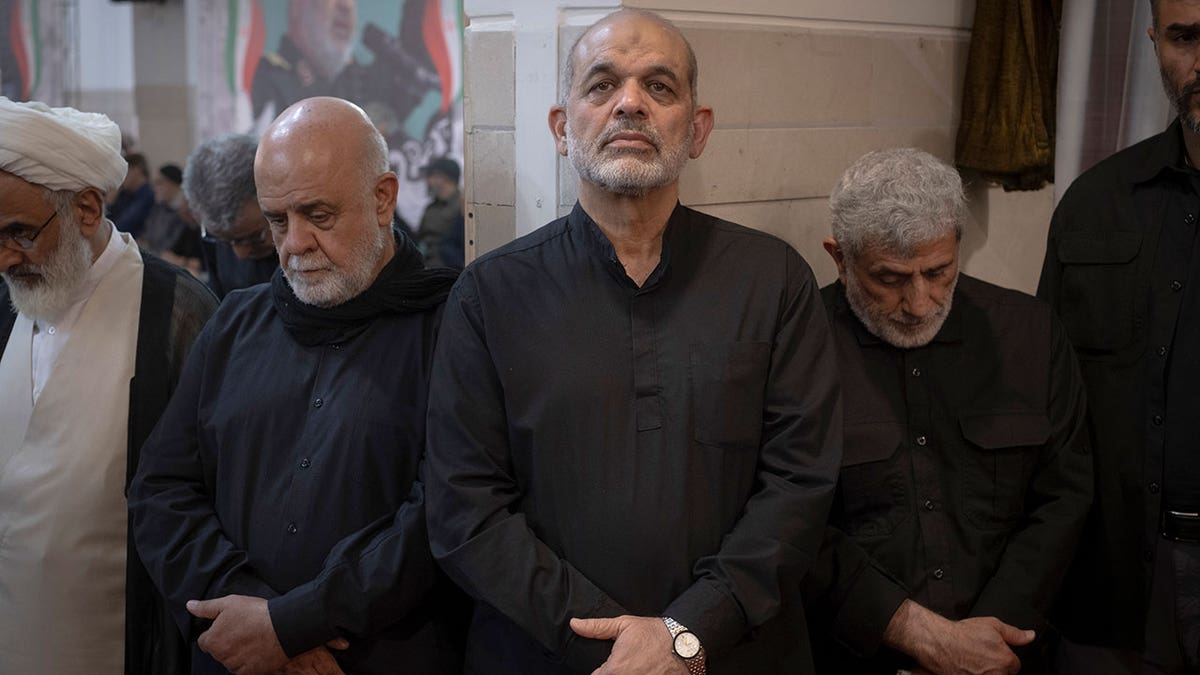
Iran’s recent military appointments highlight the nation’s strategic direction. These changes reflect the country’s approach to confronting adversaries and maintaining internal stability.
Understanding Iran’s Military Hierarchy Changes
The new military leadership under Iran’s Supreme Leader, Mojtaba Khamenei, is not merely a response to wartime damage. It aims to bolster Iran’s stance against the United States and Israel, while also securing the Islamic Republic internally. The leaders appointed come from a background entrenched in revolutionary and security operations, not recent diplomacy.
“Replacing leadership alone doesn’t equate to regime change; it’s about transforming the very institutions and ideologies,” experts warn.
Iran’s new appointees have histories deeply rooted in resistance against Western powers, particularly Washington and Jerusalem. The involvement of figures like Ahmad Vahidi and Hossein Salami underscores this point, as they are linked to longstanding conflicts and intelligence operations.
Institutional Continuity over Generational Shift
With Ali Abdollahi rising as the new chief of the General Staff, the focus remains on continuity, not renewal. Abdollahi’s journey began with the Revolutionary Committees in 1979, reflective of deep-rooted institutional loyalty rather than generational change.
Statements from military leaders like Kiumars Heydari, who praised suppressive actions against protests, blur the lines between defending the nation and the regime, signaling a unified defense strategy.
International Implications of Leadership Appointments
Ahmad Vahidi’s role as commander of the IRGC, despite accusations linked to the 1994 AMIA bombing in Buenos Aires, reveals Iran’s commitment to its military strategy. Vahidi’s experience in intelligence and irregular warfare marks a significant stance in Iran’s relations with the U.S. and Israel.
The IRGC’s strategy continues to challenge its adversaries via proxies, advanced weaponry, and covert operations, emphasizing its historical approach.
Domestic Focus with External Consequences
Internally, the leadership is complemented by the return of Hossein Taeb to the Basij force, which operates on the domestic front to maintain control through surveillance and suppression. This internal focus indicates how Tehran perceives domestic stability as vital as external defense.
This convergence of security tactics suggests that Iran sees foreign threats and domestic unrest as intertwined dangers that could destabilize its grip on power.
Considerations for U.S. and Israel
Washington and Jerusalem must consider that removing individual commanders does not equate to a dismantling of the hostile strategic institutions of Iran. If the ideological and institutional frameworks remain, operational continuity persists.
The Islamic Republic’s new hierarchy signals a regime wary of threats, using past war and intelligence experiences to navigate current challenges. This perspective reinforces their approach, signaling preparedness for ongoing confrontations, both internally and externally.
Leave a Reply