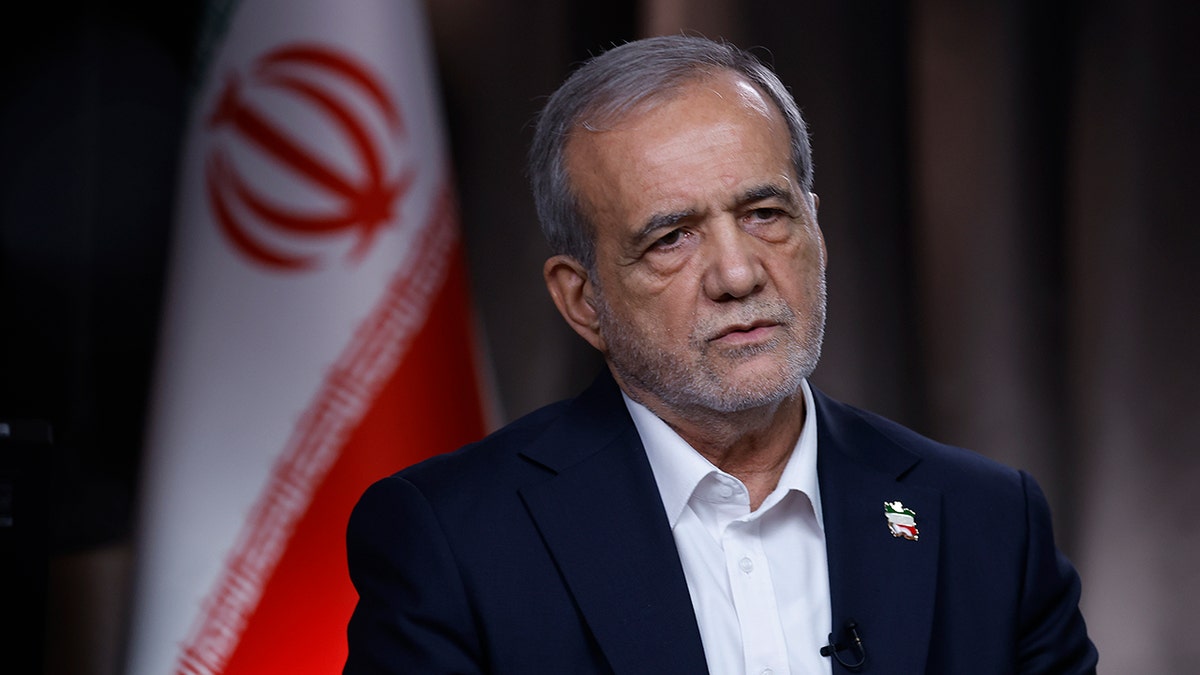
On May 24, President Masoud Pezeshkian of Iran referenced one of the nation’s most powerful wartime symbols, indicating Tehran’s determination to withstand pressures from the U.S. and Israel. This statement came as President Donald Trump hinted at a nearly completed agreement with Iran, aiming to end ongoing tensions. However, Iran stated that a final deal remains distant, with further negotiations required.
During an interview with Fox News in New York City, Pezeshkian marked the anniversary of Iran’s 1982 recapture of Khorramshahr in the Iran-Iraq War. He declared, “Khorramshahr today is Iran, the Persian Gulf, and the Strait of Hormuz,” emphasizing the values of resistance, self-sacrifice, and repelling aggression as core elements of Iranian culture.
This statement evokes one of the deepest ideological themes of the Islamic Republic, symbolizing national resistance and defiance against invasion,noted Dr. Omar Mohammed, director of the Antisemitism Research Initiative at George Washington University.
The timing of Pezeshkian’s remarks correlates with the anniversary of Khorramshahr’s liberation, a pivotal event in Iranian history that saw the city retaken from Iraqi forces after intense urban combat.
Dr. Mohammed explained that invoking this historical event aligns the current geopolitical situation with past conflicts, portraying Iran as under attack by foreign aggressors and rallying ordinary citizens to a cause of resistance and sacrifice.
Pezeshkian’s reference to the Strait of Hormuz hints at a long-standing Iranian tactic, signaling potential military escalation in response to foreign pressure. Mohammed emphasized that this rhetorical approach conveys an existential struggle, akin to Russia’s Great Patriotic War concept.
The Iranian President’s comments are framed to project a high-stakes message, underscoring an unwavering stance against perceived invasions and foreshadowing limited willingness to negotiate under perceived threats.
Leave a Reply