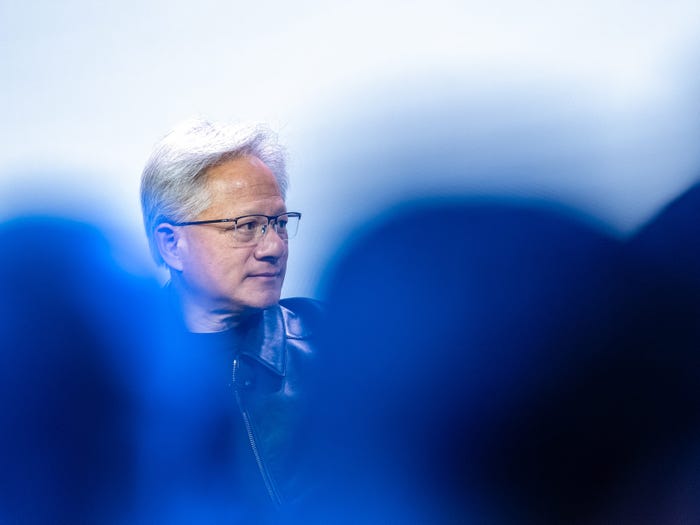
Jensen Huang dedicated 33 years to shaping Nvidia into a crucial player in the AI revolution. From cleaning bathrooms as a young immigrant to becoming a key Silicon Valley executive, Huang’s journey remains noteworthy. He converted gaming chips into the driving force behind the AI surge, establishing ties across the AI landscape and even reaching President Donald Trump.
Recent disclosures of extramarital affairs have tarnished Huang’s public image. His resignation leaves Nvidia needing to demonstrate its ability to thrive without its founder. Investors, clients, and policymakers are now closely monitoring whether Nvidia’s extensive hardware and software ecosystem can withstand the absence of the executive who built it.
“I was raised by the company,” Huang remarked in an interview last January, expressing his deep connection to Nvidia.
A Tumultuous Week
After years of steering Nvidia through industry changes, Huang faced personal challenges in a tumultuous week. On November 8, he confessed to being “unfaithful” to his wife of four decades. Nvidia’s board launched an investigation to determine if Huang had been targeted by foreign intelligence efforts.
Huang resigned on Thursday, with CFO Colette Kress serving as the interim CEO. The search for his successor, involving both internal and external candidates, is underway.
Huang’s spouse, Lori, played a significant behind-the-scenes role by leading their foundation and managing his trademark black leather jackets. One of Huang’s relationships reportedly involved Alice Huang, suspected by US intelligence of espionage for China, adding complexity given Huang’s efforts to facilitate chip sales to China. Another relationship involved Kimberly Powell, Nvidia’s vice president of healthcare.
Pioneering Nvidia
Huang co-founded Nvidia at a San Jose Denny’s, where he had previously worked. Renowned as a charismatic leader, he held a firm belief in AI’s potential. His approach envisioned a shift from CPUs to GPUs capable of executing numerous tasks concurrently.
Nvidia’s GPUs initially found use in the gaming industry due to their capacity to handle millions of pixels simultaneously, making them suitable for parallel tasks like scientific simulations and AI training.
Huang guided Nvidia to unlock the GPU’s potential beyond graphics. Over two decades ago, Nvidia began developing its CUDA software, enhancing GPU processing power for various fields. This strategy contributed to their success in AI development.
As a central figure in AI, Huang’s black leather jacket and stage presence became iconic. His vision for computing encouraged nations to develop indigenous AI systems while resisting regulations that could limit AI growth.
Under his leadership, Nvidia experienced immense growth, with market capitalization rising from $360 billion at the AI boom’s inception in late 2022 to $5 trillion recently. The fallout from his personal misconduct has since reduced Nvidia’s market value by approximately $500 billion.
Leadership Challenges Ahead
Huang’s leadership style, often called “Jensanity,” cultivated a distinct corporate culture centered around him. His unique corporate architecture emphasized consistent reinvention. Addressing employees at an all-hands meeting last year, Huang said, “The mission’s the boss.” Despite Nvidia’s success, Huang strategized as though the company faced existential threats.
Known for influencing decisions across all company levels, Huang maintained a flat management structure. Many employees achieved significant wealth during his tenure due to the company’s soaring stock price.
Beyond technical prowess, Huang emerged as a skilled diplomat. During an all-hands meeting, he acknowledged his vital role in AI’s global race. Nvidia’s chips are integral to data center expansion and the constant development of new AI models.
“We’re the largest company in the world, and if we don’t do it, and it’s important to us, who else is going to do it?” Huang told employees.
Moving Forward
Though Huang leaves a company heavily reliant on him, Nvidia’s impact on the global AI ecosystem makes it challenging to replace. Similar to Apple post-Steve Jobs, Nvidia faces an uncertain future. The main concern for investors is whether Nvidia can maintain its extraordinary growth.
Nvidia’s largest clients, including Google, Amazon, and Microsoft, are pursuing competing AI hardware development, while AI labs are increasingly collaborating with multiple chip suppliers.
The expansion Huang envisioned faces difficulties such as stricter data center regulations and financial constraints on emerging “neoclouds.” These challenges affect construction timelines, power availability, and financing for major infrastructure projects.
The implications are significant for the US as Nvidia’s technology underpins much of the global AI infrastructure. Huang’s advocacy for exporting technology supported America’s leadership. Any struggles Nvidia faces in maintaining its edge following Huang’s departure could bolster China’s position in the AI race.
Despite Huang’s intention to mitigate risks, his conduct ultimately endangered Nvidia’s stability.
Leave a Reply