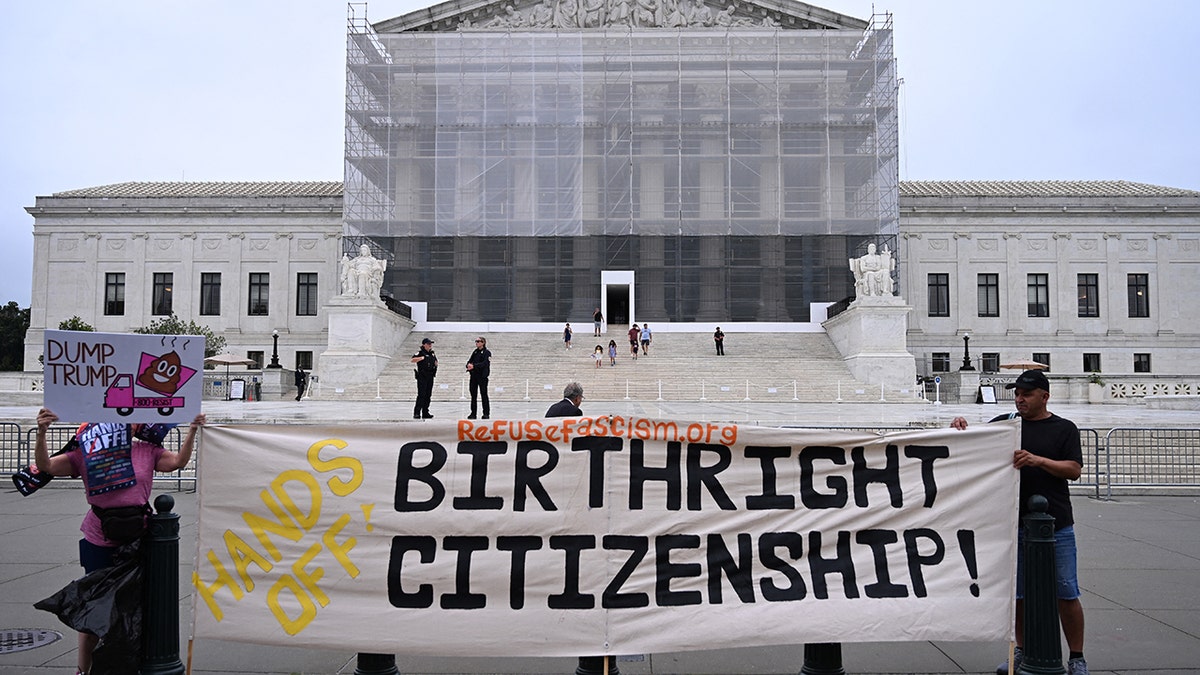
A federal judge in Washington, D.C. has blocked former President Donald Trump’s attempt to restrict birthright citizenship. U.S. District Judge Christopher Cooper issued a 67-page ruling against Trump’s executive order that aimed to prevent U.S.-born children of suspected terrorists, gang members, or children born via surrogacy from gaining citizenship.
The order followed a previous Supreme Court decision that nullified Trump’s initial order, signed at the start of his second term. This initial order sought to deny citizenship to children born in the U.S. to mothers in the country illegally or temporarily and fathers without U.S. citizenship or green cards.
The recent ruling by Judge Cooper extends protections to a broader group of children, including those born to certain foreign employees, alien enemies, and those born via commercial surrogacy in the U.S.
Cooper emphasized that the Supreme Court has consistently reaffirmed birthright citizenship under the 14th Amendment, referencing key cases such as United States v. Wong Kim Ark. This case confirmed citizenship for a man born to Chinese immigrants, setting a precedent for the interpretation of birthright citizenship.
Trump’s executive order had already faced partial blockage by Judge Deborah Boardman in Maryland. Cooper’s decision further underscores that only specific historical exceptions apply to birthright citizenship, such as children of foreign diplomats or enemy occupiers.
Cooper criticized the Trump administration’s arguments regarding terrorist affiliations, pointing out that these do not analogize to historical exceptions. He rejected claims that foreign invaders could occupy U.S. territory without physically holding it.
The ruling also countered Trump’s efforts to exclude children born via surrogacy from citizenship, noting that surrogacy arrangements are often chosen specifically to guarantee U.S. legal protections.
The Trump administration plans to appeal the decision and seek temporary enforcement of the order. White House spokeswoman Lauren Bis criticized the ruling as political interference with Trump’s policies.
The Justice Department is considering seeking temporary relief from the U.S. Court of Appeals or intervention from the Supreme Court.
This ruling adds to Cooper’s history of decisions against Trump’s initiatives, including rejecting efforts to change the Kennedy Center and a Freedom of Information Act lawsuit.
Leave a Reply