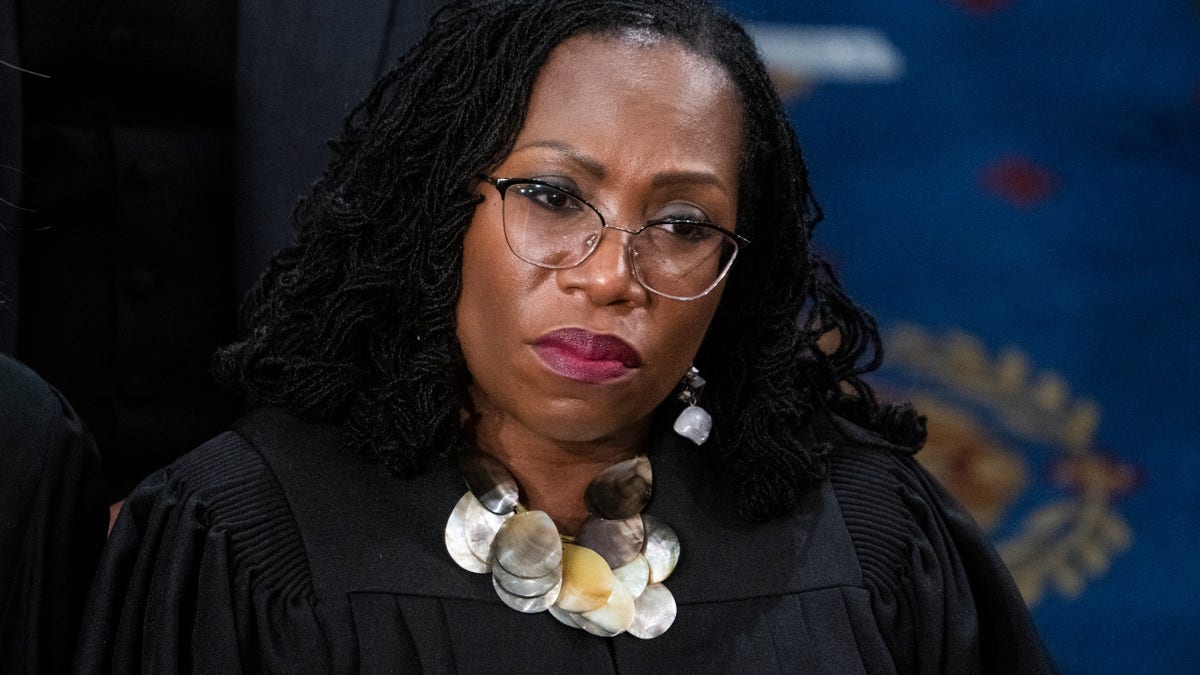
Justice Ketanji Brown Jackson expressed her objection to the Supreme Court’s recent decision regarding the Voting Rights Act. The court’s ruling in a Louisiana gerrymandering case now serves as a directive for lower courts, potentially undoing past victories for voting rights organizations.
On Monday, the Supreme Court returned a Mississippi case to the U.S. District Court for further consideration. This was in light of their decision in Louisiana v. Callais, where they dismissed the use of race-based gerrymandering.
This case presents only the question of Section 2’s private enforceability, which our decision in Louisiana v. Callais did not address. Thus, I see no basis for vacating the lower court’s judgment.
Justice Jackson disagreed with the decision, especially regarding the enforcement of Section 2 of the Voting Rights Act. The court had narrowed the interpretation of this section, which limits how states can draw districts affecting minority voters.
The case Louisiana v. Callais focused on the state’s 2024 congressional map. The map proposed a second majority-Black district, raising questions about racial gerrymandering. The justices stated that while compliance with the Voting Rights Act is a compelling interest, Louisiana was not mandated to add a new majority-Black district. They agreed with a lower court’s decision that had prevented the state from using the map.
This ruling might lead to more legal battles over congressional boundaries. It also increases the burden on plaintiffs to prove racially discriminatory intent in challenging the maps.
Leave a Reply