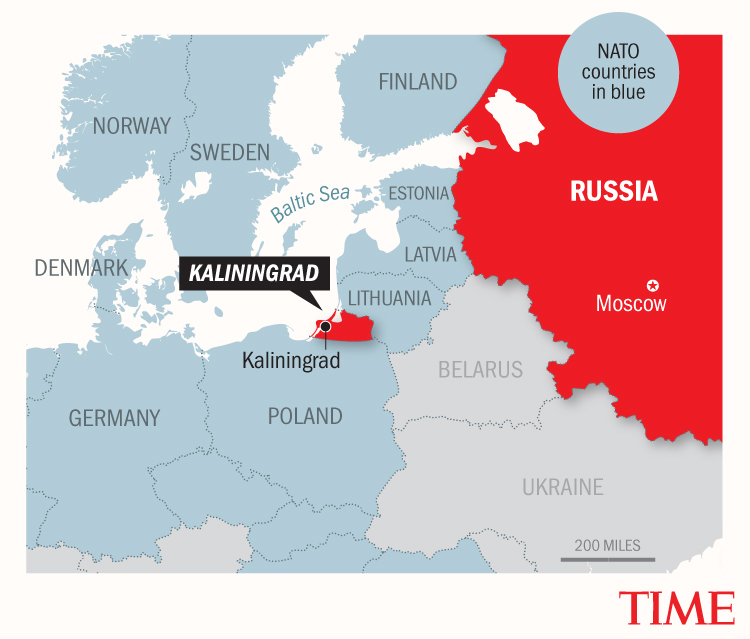
The Russian exclave of Kaliningrad, located on the Baltic Sea, holds strategic significance due to growing maritime security tensions involving Russia and Ukraine. Recent conflicts have renewed focus on Kaliningrad, which sits between NATO members Poland and Lithuania.
Strategic Investments in Transportation
Moscow announced plans to invest 47 billion rubles (approximately $572 million) in constructing two railway ferries connecting the Russian mainland to Kaliningrad. This initiative aims to ensure a steady supply of essential goods to the region. Since 2022, when Lithuania imposed restrictions on some Russian goods based on EU sanctions, the ice-free port of Kaliningrad has become increasingly vital. In 2025, sea transport accounted for 52% of goods moving to and from Kaliningrad, up from 8% in 2021, according to Rosmorport, a state-owned port operator.
NATO’s presence in the Baltic presents challenges for Russia, as it fears isolation of Kaliningrad. Prime Minister Mikhail Mishustin emphasized the necessity of investment due to what he described as attempts at transport blockades affecting local businesses, though he did not specify the countries involved.
Recent Incidents and Military Concerns
Following a recent attack on the Russian cargo vessel Sparta II in the Gulf of Finland, and Ukraine’s admission of responsibility, tensions have escalated. Kremlin spokesperson Dmitry Peskov criticized the attack, citing an increase in Baltic terrorism.
Further concerns arose as Kaliningrad’s governor Alexei Besprozvannykh reported a drone alert near the Lithuanian border, although Lithuania denied any involvement. NATO regards Kaliningrad as a potential hotspot, with Russia previously warning it may resort to nuclear options if NATO endeavors to isolate the region.
Alongside, European Russian embassies accused NATO of exacerbating tensions through military exercises directed at Kaliningrad. NATO Secretary General Mark Rutte reaffirmed their stance as defensive, urging Russia to cease its nuclear threats and aggression towards Ukraine.
Geopolitical Importance of Kaliningrad
Kaliningrad, once a part of Germany’s East Prussia, was ceded to the Soviet Union after World War II. It now serves as both an exclave and a city, housing over one million residents, about half of whom live in Kaliningrad city. Nestled 400 miles from Russia’s main territory, the region is bordered by Lithuania and Poland.
This geographical positioning grants Russia strategic leverage and a base to threaten Eastern Europe. However, its location also presents vulnerabilities, leading to significant military fortification.
Military Capabilities and NATO’s Concerns
The exclave houses advanced military systems like the S-300 and S-400 air defenses and Iskander-M missile systems, underscoring its military value. Kaliningrad’s ice-free port supports year-round naval operations, enhancing Russia’s strategic presence in the region.
With Finland and Sweden joining NATO, Kaliningrad’s strategic role is accentuated. NATO acknowledges the advantages Kaliningrad affords Russia, with Estonia’s Foreign Affairs Minister indicating the alliance could quickly sever access to the Baltic if necessary.
Military assets in Kaliningrad are part of Russia’s Anti-Access/Area Denial strategy, aiming to restrict enemy deployment in Eastern Europe. While most military forces have been redirected after the 2022 Ukraine invasion, the remaining presence remains significant.
In case of a conflict, experts suggest that Russia might attempt to control the Suwalki corridor to isolate Baltic states. However, a large-scale war is considered unlikely.
Leave a Reply