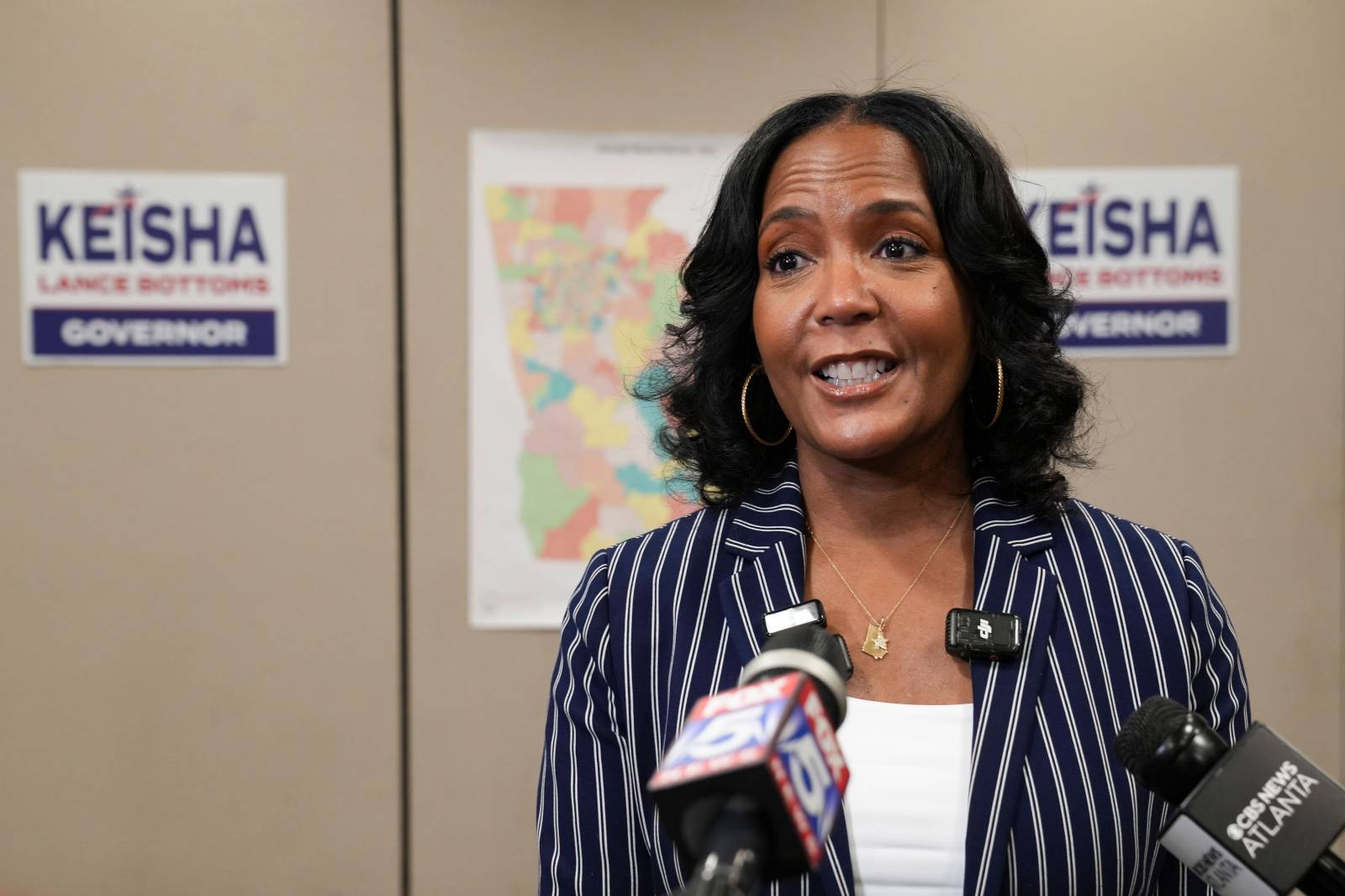
Former Atlanta Mayor Keisha Lance Bottoms has announced her campaign for the 2026 Georgia gubernatorial race. This election opens up a rare chance for Democrats in a state that has not elected a Democratic governor in decades. Republican Governor Brian Kemp cannot run due to term limits, giving Democrats a shot at the governor’s office in an open contest.
Current Standing and Challenges
Bottoms currently leads in polling over her Republican opponents, showing stronger numbers than Stacey Abrams had at this point in 2020 against Kemp. Despite this, with the runoff concluded, Republicans will consolidate their support around one candidate. This consolidation presents a tough challenge for Bottoms.
She has successfully won the Democratic primary in May, strengthening her position by uniting her party quickly. Meanwhile, Republicans experienced a contentious runoff between Lieutenant Governor Burt Jones and businessman Rick Jackson. Early polling indicates she is competitive, often slightly leading the Republican candidates.
Fluidity of the Race
Despite her early lead, the race remains highly competitive. Georgia is known for being a swing state. The outcome in November will depend significantly on voter turnout, national political trends, and the Republicans’ ability to unify after a divisive primary season.
Keisha Lance Bottoms’ Chances Against Rick Jackson
Rick Jackson won the Republican runoff with 52.7 percent of the vote, as reported by the Associated Press. Competing against Jackson might be unpredictable for Bottoms. As a wealthy healthcare executive, Jackson has personally contributed substantial funds to his campaign, positioning himself as an outsider willing to confront the Republican establishment. This financial capacity grants him a notable advantage in advertising and messaging, independent of traditional party donors.
Jackson’s outsider image might attract voters disenchanted with both major parties or skeptical of career politicians. Simultaneously, his lack of political experience could be a disadvantage. His campaign emphasizes business credentials and tax reduction promises, whereas Bottoms can leverage her experience as Atlanta’s mayor and her federal public service track record.
Concord Public Opinion Partners, in a poll sponsored by Education Reform Now Advocacy, a Democrat-leaning nonprofit, showed Bottoms leading Jackson by 15 points. Kalshi, a prediction market, attributes a 53 percent probability of winning to Bottoms compared to 49 percent for Republicans. Polymarket shows a slightly better prediction for Bottoms, with a 56 percent win probability against 44 percent for Republicans.
However, Jackson’s financial resources could close Bottoms’ lead. His campaign spending has already made him a competitive primary candidate and could alter the general election if his monetary influence continues.
Historical Context for Democratic Candidates
One of Bottoms’ biggest challenges comes from historical trends. The last Democrat who served as Georgia governor was Roy Barnes from 1999 to 2003. Since then, Republicans have solidified their hold on the office, despite Democrats making inroads federally.
Georgia has seen Democrats winning Senate races and narrowly achieving victory in presidential contests. Nevertheless, Republicans have remained dominant in statewide executive offices. Kemp’s reelection in 2022 by over seven points underscored the GOP’s strength.
For Bottoms to break the Republican streak, she needs not only high Democratic turnout but also support from independents and moderate Republicans. Democrats have historically found this hard to achieve regularly in governor races.
The Influence of National Politics and Trump’s Approval
The national political environment, especially Trump’s popularity, could influence the 2026 race. Trump’s approval rating is currently low in Georgia. A Civiqs report places his approval at 41 percent with a net rating of -20 percent. His handling of the economy and foreign policy notably affect these ratings.
For Bottoms, these numbers could be beneficial. Her campaign has highlighted Republican ties to Trump, focusing on mobilizing voters who oppose his policies. However, relying solely on anti-Trump sentiment is risky. Georgia’s elections are often closely contested, and appealing to candidates’ strengths is crucial.
Bottoms enters the race with a strong initial position for a Democratic candidate in Georgia, but her path to victory is narrow. Success will depend on maintaining her lead, engaging a unified party, and capitalizing on favorable national conditions.
Leave a Reply