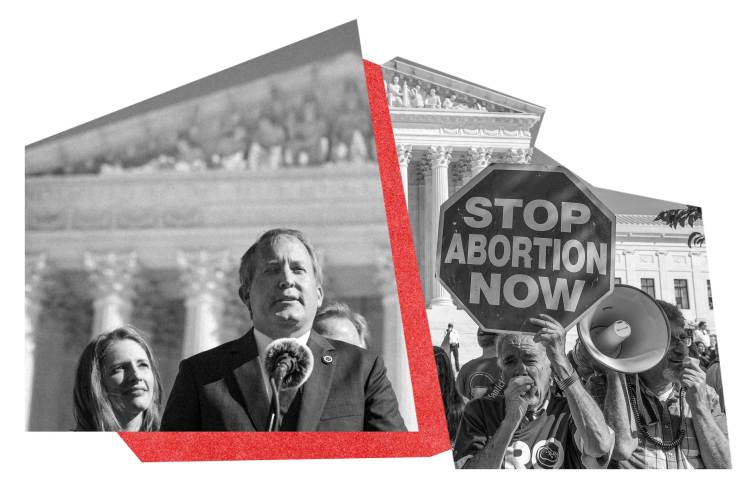
Early in his time as Texas attorney general, Ken Paxton expressed his view on a perceived national tragedy. In 2016, he commented on the 43rd anniversary of Roe v. Wade, a Supreme Court ruling that safeguarded abortion rights. Paxton saw the decision as an obstacle to ending early pregnancy terminations.
Paxton challenged the limits of Roe and succeeded in 2021 when he defended a near-total abortion ban in Texas. This ban was crafted to avoid typical legal challenges. While Roe was still valid, the U.S. Supreme Court allowed the ban to take effect. After Roe was overturned, Paxton sought to widen Texas’ abortion restrictions further.
He clashed with the Biden administration, sparred with states that protected abortion access, and developed strategies that others later used. His term as attorney general faced criticism over personal scandals. Still, many recognize his significant work in advancing abortion restrictions as his most notable achievement. His approach often involved testing legal boundaries and using novel strategies.
If Paxton wins his U.S. Senate race, his role in the abortion debate might shift. In the Senate, most legislation needs 60 votes to pass, possibly limiting his direct influence. However, some believe he can use his Texas experience to shape national legislation. Mary Elizabeth Castle from Texas Values, a Christian advocacy group, suggests Paxton could influence U.S. Senate lawmaking.
Legal experts and advocates predict Paxton might join efforts to pressure the FDA to withdraw approval for mifepristone, an abortion drug. Some activists aim to secure fetal legal rights, impacting birth control and in vitro fertilization (IVF). Paxton, who supports IVF, is open to fertilized egg protection but remains involved in cases raising critical questions, like how federal laws relate to state abortion restrictions.
During the Senate race, abortion has been a minor issue compared to Paxton’s ethics. His Democratic opponent, James Talarico, advocates for federal abortion rights and critiques the restrictive laws Paxton defended. Though Paxton discusses abortion less, his influence extends beyond Texas, as observers closely watch his Senate aspirations.
Dr. Jennifer Villavicencio, an abortion provider, has relocated her family due to legal concerns about Paxton’s impact. She worries that his strategies could reach the U.S. Senate.
When Paxton took office in 2015, his stance on abortion was clear. He was raised by an anti-abortion activist and co-sponsored a law banning abortions after 20 weeks. In 2021, Texas crafted a novel six-week ban that allowed citizens to sue physicians, which Paxton successfully defended.
Providers challenged this law, but Paxton’s office argued state officials couldn’t enforce it. The U.S. Supreme Court agreed, allowing this six-week ban, which influenced similar laws in other states.
Paxton’s ban led to medical dilemmas, like cases of women experiencing pregnancy emergencies but unable to obtain timely abortions. In one case, a woman tragically died after medical professionals delayed intervention to avoid legal issues.
Paxton marked the overturn of Roe v. Wade with celebration, instituting Sanctity of Life Day. The Texas Legislature had prepared laws with severe penalties for abortion post-Roe. When the Biden administration issued emergency abortion care guidance, citing EMTALA, Paxton sued to protect state laws. A federal judge agreed with Paxton, limiting EMTALA’s scope in Texas. This created legal complexities on whether EMTALA overrides state abortion laws, affecting treatment decisions.
Texas residents have experienced critical care gaps due to these legal conflicts. In one case, a woman died from preeclampsia because options for termination weren’t provided. Her family holds restrictive laws partially responsible. Similar stories highlight how abortion law interpretations affect real lives.
Paxton set key legal precedents that other states with strong anti-abortion stances have followed. In one incident, a woman, Kate Cox, sought an abortion due to fetal anomalies. Paxton challenged a court ruling in her favor by threatening legal action against her doctors. Eventually, Cox had to seek care outside Texas.
Paxton was also the first attorney general to criminally prosecute a provider under state abortion bans. For instance, Maria Rojas, a clinic manager, faces charges amid accusations of illegal practices. Paxton also pursued civil actions against out-of-state providers who helped Texas patients. His legal challenges extend to other states’ medical providers.
Paxton targeted organizations helping patients obtain abortion drugs and pursued cities offering travel funds for abortions. His strategy prevented the city of San Antonio from funding such efforts. Paxton vows to prevent actions he views as manipulative, a commitment he consistently reinforces.
Leave a Reply