Background on Learning Resources and Recent Legal Actions
Learning Resources, based in Vernon Hills, is contesting the recent global tariffs imposed by the Trump administration. This legal challenge was filed in the U.S. Court of International Trade, along with HMTX Industries, a flooring company in Connecticut. The lawsuit targets tariffs ranging from 10% to 12.5% on top U.S. trading partners, which were levied in response to alleged forced labor practices in those nations.
The tariffs fall under Section 301 of the Trade Act of 1974. This act permits the president to impose tariffs on countries involved in unfair trade practices. However, the primary concern is the claimed use of forced labor in global supply chains spanning 60 key trading partners that account for 99.4% of U.S. imports.
“It’s not really about forced labor; it’s about raising taxes,” said Elana Ruffman, Chief Marketing Officer at Learning Resources.
Previous Success and Current Arguments
Previously, Learning Resources successfully challenged an earlier round of tariffs in 2025, leading to a Supreme Court decision. The ruling resulted in a recovery of tens of billions for U.S. companies. The new tariffs follow temporary 10% global tariffs imposed by Trump after the Supreme Court struck down prior tariffs set under the International Emergency Economic Powers Act.
The recent lawsuit argues that the current tariffs attempt to re-establish the same regime under different statutes, failing once more to justify their existence. Ruffman contests the lack of specific evidence supporting claims of forced labor, suggesting the motivations behind the tariffs are financial.
Impact on Businesses and Economic Studies
In February, the Supreme Court ordered a refund of approximately $160 billion collected under the disputed tariffs. Learning Resources recouped $10 million of the $12 million in expenses incurred from these tariffs. However, economic analyses reveal that the burden fell heavily on consumers. A study by the Midwest Economic Policy Institute and the Project for Middle Class Renewal found significant economic repercussions in 2025.
The study highlighted an increase in costs for Midwest households, averaging over $2,000 per household, significantly higher than the national average. It detailed a shrinkage of $18 billion in the Midwest economy and a reduction in manufacturing jobs by over 41,000, disproportionately affecting low-income families.
Company Strategies and Future Plans
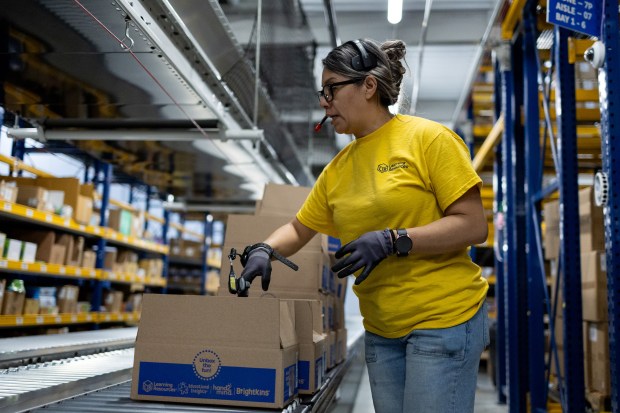
Learning Resources, which operates from a 1.1 million square foot warehouse in Vernon Hills, produces educational toys. The company outsourced half of its manufacturing to China. Despite previous financial pressures, the company maintained product prices in 2026, opting to pass on tariff rebates to consumers instead.
“We did not change our prices for 2026,” Ruffman stated, “That’s our mechanism of trying to get the money back to the consumers.”
In addition to avoiding layoffs and tariff-related price hikes, Learning Resources is expanding under an EDGE tax incentive agreement with the Illinois state. A new 700,000 square foot facility is under construction, expected to open in 2028. This expansion includes creating 37 new full-time positions while retaining 288 existing jobs, thanks to corporate tax credits offered by Illinois’ Economic Development for a Growing Economy program.
Leave a Reply