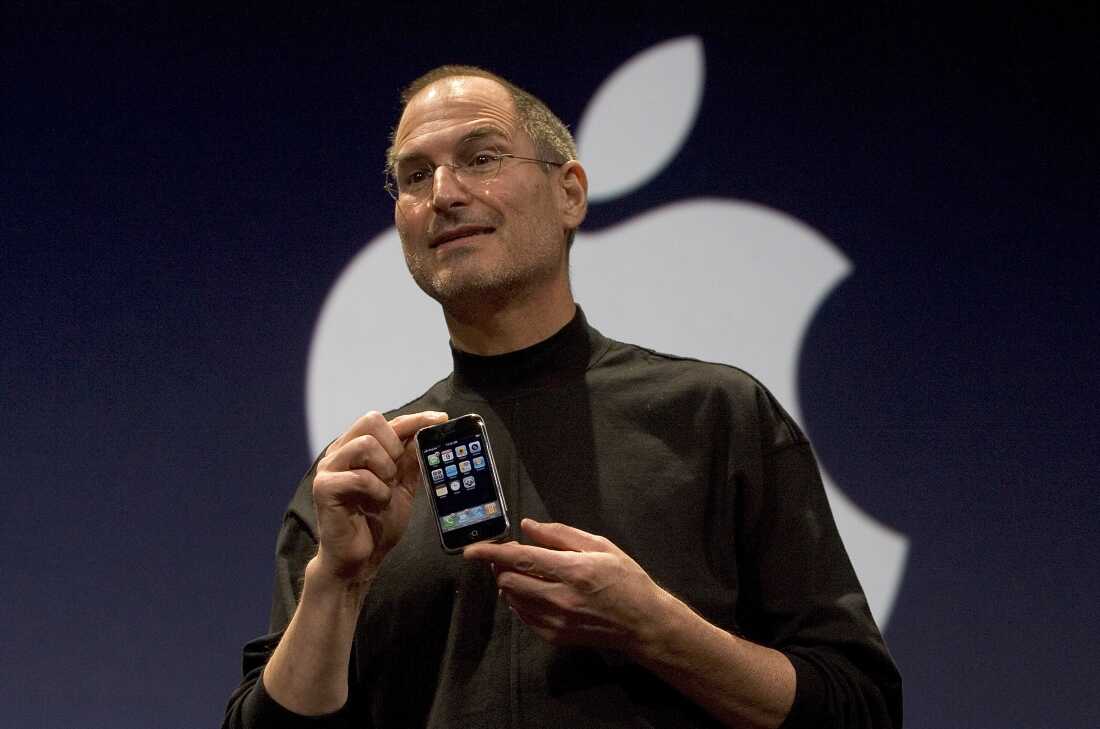
In 2007, Apple CEO Steve Jobs introduced the iPhone. A new working paper suggests that the rise of smartphones might explain the continuing drop in birth rates over nearly two decades. Economist Caitlin Myers has proposed a significant reason behind this trend: smartphones.
Understanding the Decline
Research led by Myers and others has focused on the sharp decline in fertility over the past 20 years. Since 2007, U.S. birth rates have decreased by 22%. Initially, economists attributed this to the Great Recession, expecting a rebound as seen after previous economic downturns. However, as the economy recovered, birth rates continued to fall.
Smartphones and Birth Rates
Myers, a professor of economics at Middlebury College, believes a significant factor emerged around 2007, coinciding with falling birth rates. That year, Steve Jobs stated the iPhone would change everything, which might include birth rates. In her paper titled “Is the iPhone Birth Control?” Myers proposes that smartphones may account for a third to half of the birth rate decline in that timeframe.
Natural Experiment Insights
Myers uses historical circumstances to create a natural experiment. Initially, the iPhone was only compatible with AT&T. Areas with AT&T broadband coverage had earlier access to iPhones. “In some areas of the country, AT&T had broadband coverage and you could get an iPhone, and in other areas, including where I live in Vermont, that coverage was much more limited,” Myers recalls. The data showed births started to fall in places where iPhones were accessible, while they decreased less where they were unavailable.
Some may argue that faster smartphone spread in urban or affluent areas influenced results. However, Myers accounted for population density and local economics, and the results remained consistent.
Behavioral Changes and Youth
The decline affects women of all ages, most notably teenagers. Jean Twenge, a professor of psychology at San Diego State University, finds this plausible. “The smartphone fundamentally changed the way adolescents spent their time outside of school,” Twenge noted. “They started spending a lot more time online and on their phones and a lot less time hanging out with their friends in person and driving around in a car or going to the mall or just hanging out.”
Myers highlighted how reduced in-person interactions due to smartphone use might lead to fewer pregnancies. “If there’s one thing I learned in abstinence-only sex ed in the ’90s in Georgia growing up, it’s that you’re probably not going to get pregnant if you’re not interacting with people in person — if you’re not having sex,” Myers says.
Impact of Instant Information
In collaboration with her stepson, Ezekiel Hooper, Myers proposed smartphones also provided easy access to information on contraceptives and abortion. Additionally, the availability of pornography through smartphones may have replaced in-person relationships. Myers noted her students often mention pornography as a substitute for physical connections.
Future Trends
With smartphones now widely available across networks, Myers questions whether birth rates will stabilize or continue declining. “I think it’s possible that we’ll continue to see effects of phones on behavior and outcomes like fertility for years to come,” she suggests. Further observation will be necessary to understand this trend’s future impact.
Leave a Reply