Global demand for lithium has surged by over 400% this decade, exceeding 1.5 million metric tons annually. Projections suggest demand may reach nearly 4 million tons by 2035. Electric vehicles, utility-scale and data center energy storage, and robotics industries fuel this growth. The U.S., however, produces slightly over 1% of global lithium, primarily from Albemarle’s Silver Peak mine in Nevada. The world mainly depends on China for refining these critical minerals. Shifts may be underway.
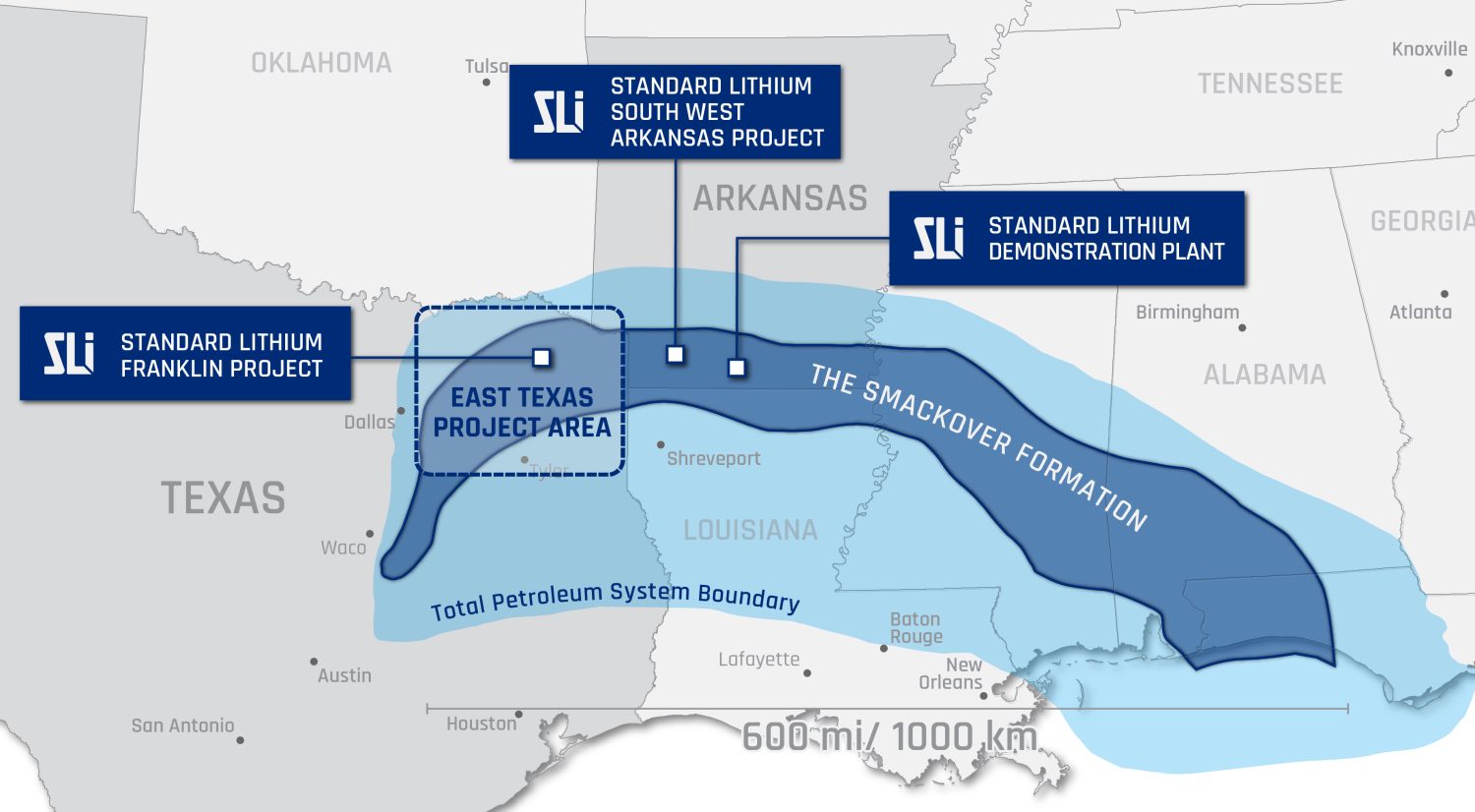
Near Silver Peak, the Smackover Formation in southern Arkansas and East Texas has attracted attention. Crude oil was discovered there a century ago, but the focus now is on its substantial lithium concentrations in an underground aquifer. French settlers named the area “Sumac Couvert” due to its sumac bushes, evolving into Smackover. As Standard Lithium CEO David Park noted, their lands hold potential for over 150,000 tons yearly production.
Competitive Claims and Developments
Standard Lithium is a leader in the Smackover region, aiming to make the U.S. a major lithium player. Its South West Arkansas Project (SWA) will authorize late this year, with construction of its 22,500-ton phase anticipating the first quarter of 2027. EnergyX, a challenger from Austin, Texas, led by Teague Egan, plans to start its 15,000-ton Project Lonestar by the end of 2027. A pilot plant commenced operations this year.
Oil industry giants follow closely. ExxonMobil holds over 400,000 net acres in the formation. It plans a pilot project next year. Chevron has secured a 125,000-acre position. The U.S. lacks the traditional resources found in Australia, Chile, Argentina, and China. It requires direct lithium extraction (DLE) technology, which involves drilling wells, extracting brine water, refining lithium, and returning over 90% underground. This method is faster than evaporation ponds, taking two days instead of two years.
EnergyX’s Egan stated, “You extract the lithium and reinject the remainder of the brine so that it leaves the ecosystem the same as before.”
Economic Viability and Future Prospects
BMO Capital Markets analyst Max Yerrill expressed skepticism and optimism about DLE. It remains unproven commercially and faces global market competition and price manipulation risks. Recent elimination of EV tax credits adds challenges. Yerrill emphasized DLE as a necessity due to regional geology. Lithium’s global market still grows at 20% or more annually.
Self-driving vehicles and robotaxis are increasingly reliant on electric vehicles. Tesla’s transition from Cybertruck to Cybercab highlights shifting priorities. Companies like Waymo, Avride, and Zoox are also investing in autonomous vehicles. Lithium’s importance extends beyond cars; it encompasses medical devices, electronics, utility-scale battery storage, and more, as Egan emphasized.
U.S. Lithium Expansion
Similar to rare earths, lithium’s challenge lies in economically extracting its ions from brine. Unlike China, the U.S. is focusing on refining these minerals locally to reduce reliance on Chinese bottlenecks. Standard Lithium’s Park highlighted the strategic importance of this shift to counter potential supply chain disruptions. The company has secured necessary financing and customer contracts for its projects.
Standard Lithium’s SWA project received a $225 million grant from the Biden administration, with bipartisan support evident despite some Republican opposition to EV subsidies. The company plans to double its capacity once the first phase completes. It aims to expand further in East Texas, where higher lithium concentrations promise potential growth.
EnergyX signed a significant 10-year offtake agreement with Trafigura covering its U.S. and South American operations, presenting a large DLE offtake deal. The focus includes expansion plans to significantly increase Project Lonestar’s capacity by 2031.
Oil Industry Influence and Market Dynamics
Lithium Americas might spearhead the U.S. industry with its Thacker Pass in Nevada, but the Smackover Formation holds unique potential. Exxon’s substantial land acquisition shifted the industry’s focus towards direct lithium extraction. Companies anticipate EnergyX or Standard Lithium to establish successful commercial operations to encourage further investments and innovation.
Park noted that sluggish U.S. EV sales contrast with global trends driven by Chinese manufacturers. Despite recent setbacks, U.S. demand recovers, supported by high fuel prices. The focus, Park asserts, is on ensuring supply can match demand.
Standard Lithium’s Park acknowledges the Trump administration’s contributions in supporting SWA’s startup, and advocates for a renewed push to bolster the industry. Though progress was slower than desired, he highlights bipartisan support as core to moving projects forward. The first major Smackover project is approaching its commencement phase, signaling a new chapter in U.S. lithium production.
Leave a Reply