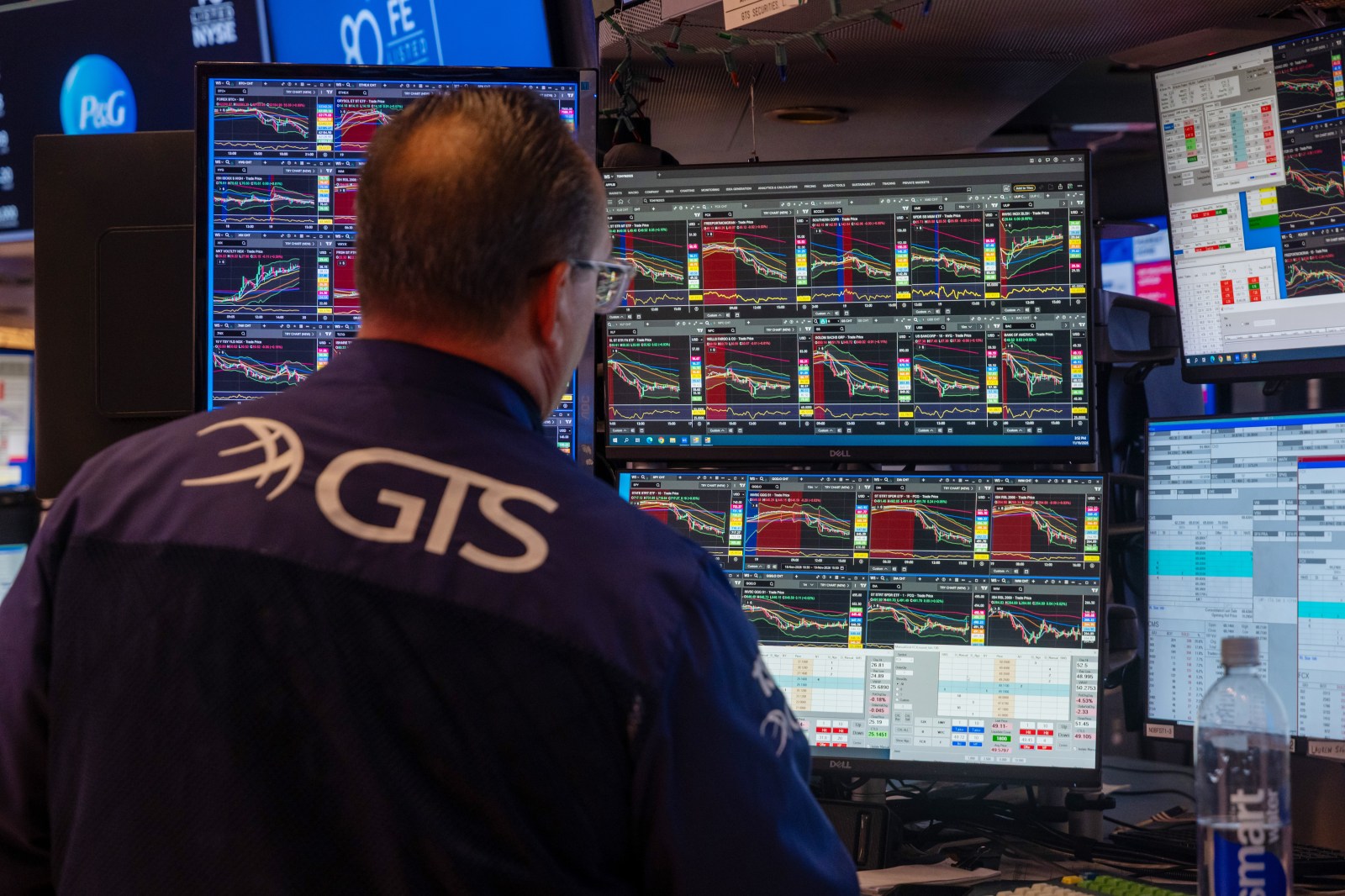
The Dow Jones Industrial Average fell sharply on Thursday, dipping below the 50,000-point mark, a figure that gained notoriety during contentious congressional testimony by Pam Bondi. The Dow closed 1,101.11 points lower at 49,097.06, marking its first close below this threshold since June. This decline has reignited discussions around economic indicators that earlier this year were a point of political contention.
Bondi, who was attorney general at the time, referenced the Dow’s performance during a hearing about the Justice Department’s handling of the Jeffrey Epstein investigation. She pointed to the index’s record performance as evidence of the Trump administration’s economic success. Notably, this remark brought attention to a figure that became part of a broader political discourse.
The market drop was part of a larger sell-off. The S&P 500 decreased by 2.02 percent, closing at 7,175.83, while the Nasdaq composite fell by 2.25 percent to 23,879.20. The downturn came amid growing concerns over the artificial intelligence industry, regulatory actions, and potential increases in Federal Reserve interest rates.
Investors closely watched Nvidia, with shares declining 3.3 percent to $145.98 despite better-than-expected quarterly results. Concerns were fueled by the absence of lasting optimism from its report and the added pressure from a reported SEC investigation into Nvidia’s past disclosures.
Why Bondi’s Remarks Gained Attention
Bondi’s reference to the Dow during a congressional hearing on February 11, 2026, became a notable political point. While facing questions about the release of Epstein documents, Bondi highlighted the strong stock market, advocating that such economic indicators reflect the administration’s success. Although these remarks drew some skepticism, Bondi maintained her stance, linking the Dow’s performance to political achievements.
The 50,000 figure emerged as a symbolic benchmark rather than an official target, emphasized during challenging discussions about Epstein. Bondi’s assertions brought the index into a political arena, raising questions about its relevance to ongoing debates.
Nvidia’s Earnings and Investor Sentiment
Nvidia’s robust third-quarter results initially offered optimism but failed to sustain market momentum. The company reported adjusted earnings of $2.68 per share with revenue at $115.84 billion, exceeding expectations. However, the market’s reaction highlighted investor concerns including regulatory scrutiny over Nvidia’s disclosures and leadership stability following changes in the CEO position.
The Securities and Exchange Commission’s reported investigation adds to uncertainties facing the chipmaker. Leadership questions, paired with regulatory challenges, have led investors to reassess Nvidia’s future prospects amid broader AI investment considerations.
Interest Rate Concerns Resurface
Additionally, Federal Reserve Governor Christopher Waller’s comments spotlight the prospect of more aggressive rate hikes. A potential half-percentage-point increase to curb inflation has created market apprehension, influencing stock valuations and investor decisions. Higher rates can make bonds relatively more attractive and increase business financing costs.
These economic dynamics are particularly challenging for technology firms that rely on future growth expectations. Potential adjustments in interest rates could impact their valuations significantly.
Healthcare Stocks and the Dow’s Performance
Healthcare stocks further pressured the Dow. A proposed anti-fraud rule from the Centers for Medicare & Medicaid Services, called the CRUSH rule, aims to increase insurance audits and may impact major healthcare providers. Declines in shares like UnitedHealth Group weighed on the Dow, which includes 30 prominent companies.
Market Outlook
With the Dow below 50,000, the focus turns to whether current influences will ease in the near future. Nvidia’s strong AI demand needs to reassure investors, who are cautious about valuation and leadership issues. Additionally, Waller’s rate comments add uncertainty, as tighter monetary policy could affect market stability.
Anthropic’s IPO, labeled as the largest in history, offers insights into investor appetite for AI ventures. Despite its success, broader market challenges persisted, stressing the need for positive economic signals, such as controlled inflation and corporate revenue strength, to boost investor confidence as the year closes.
Leave a Reply