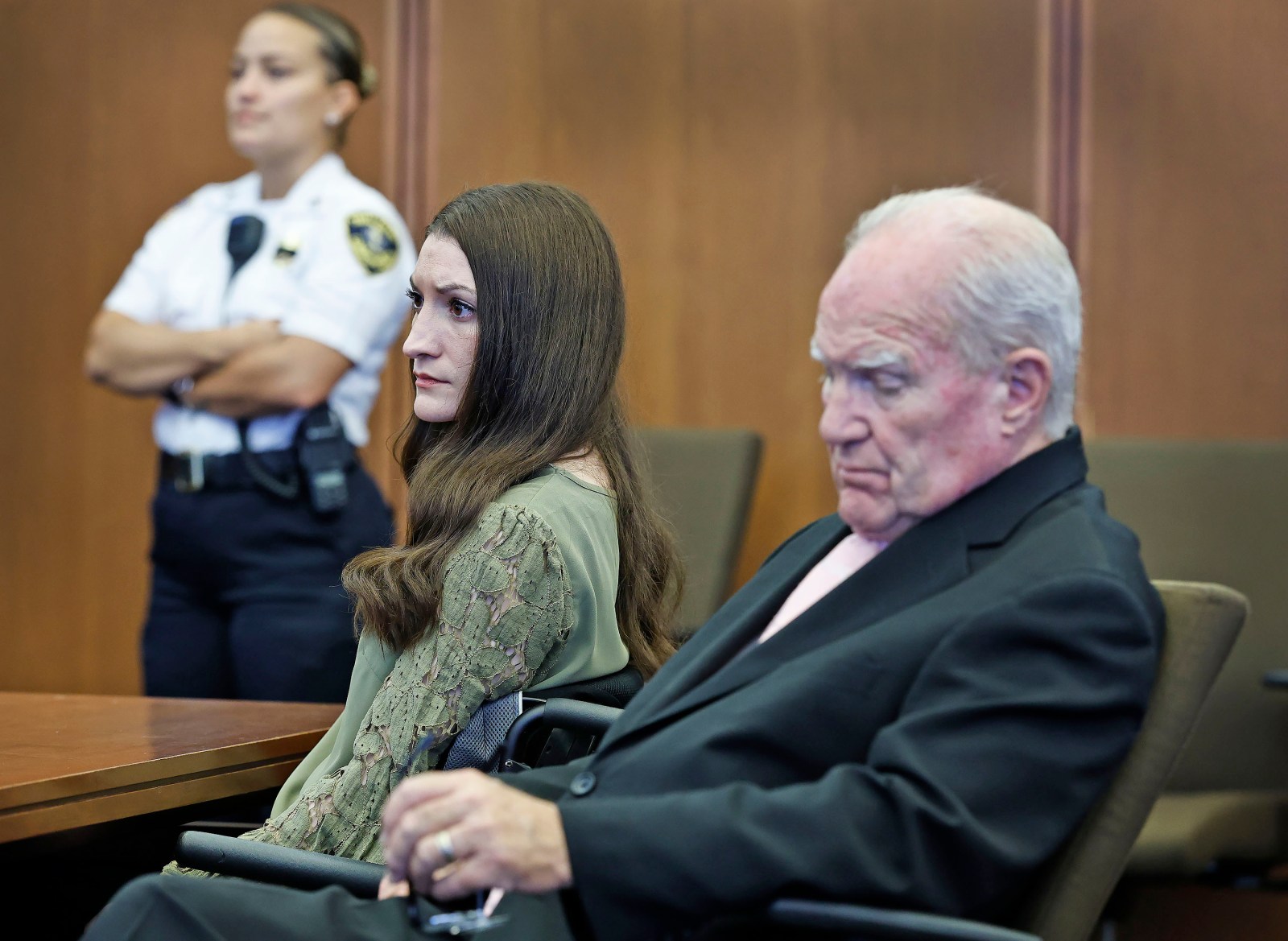
Judge Denies Attempt to Dismiss Charges
A Massachusetts judge has denied Lindsay Clancy’s effort to dismiss murder charges against her, allowing prosecutors to pursue a retrial in the case involving the deaths of her three children. On Thursday, Plymouth Superior Court Judge William F. Sullivan rejected the defense’s Rule 25 motion, which sought a required finding of not guilty after September’s mistrial.
Under Massachusetts law, a Rule 25 motion requests a judge to determine if prosecutors presented sufficient evidence for conviction. Clancy’s attorney, Kevin Reddington, argued that the Commonwealth failed to prove key elements: that Clancy killed her children and that she was criminally responsible at the time. Judge Sullivan found the evidence presented would permit a reasonable jury to convict her.
There was evidence introduced, both physical and circumstantial, that would permit a rational trier of fact to find beyond a reasonable doubt the elements of the charge of murder,” Sullivan wrote.
This decision doesn’t determine guilt or innocence. Instead, it means the evidence from the first trial was legally adequate for a new jury to hear the case.
Prosecutors’ Perspective and Upcoming Steps
The ruling is a significant win for prosecutors, who claim Clancy planned the killings of her three children, Cora, Dawson, and Callan, on January 24, 2023, while her husband was away. Prosecutors introduced evidence showing Clancy was alone with the children during the crucial period. Her husband testified that upon his return, he found violent evidence inside the home.
Medical examiners testified the children died from asphyxia, alleging they were strangled with exercise bands. The defense’s challenge to the state’s evidence of criminal responsibility was also rejected. Both sides acknowledged Clancy had a serious mental illness, but the key issue was if she understood the wrongfulness of her actions.
Three prosecution experts testified Clancy retained those capacities, even if defense experts disagreed. Judge Sullivan stated resolving such conflicting opinions is for a jury, not a judge, to decide.
Future Proceedings
A hearing is set for November 2 to discuss unresolved issues, including Clancy’s motion against a retrial on double jeopardy grounds and a court inquiry into a holdout juror. Prosecutors have not announced if they will retry, pursue lesser charges, or drop the case. If retried, a new jury must decide Clancy’s guilt or her mental state affecting criminal responsibility.
Leave a Reply