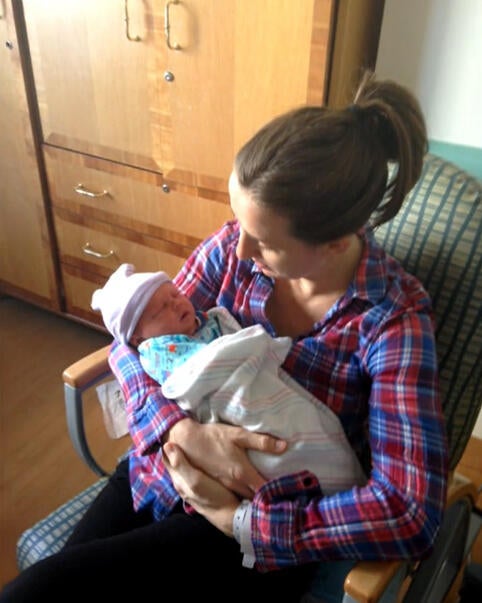
Ten years ago, Meghan Cliffel was balancing her job and motherhood in New York City. By December 2015, she had resumed work eight months after having her second daughter. Despite handling work stress, she felt uneasy. On December 4, she started believing she was being watched.
Meghan described feeling trapped in an altered reality where she was convinced that everyone in the city was against her. Soon, she started hallucinating, imagining threats from familiar faces on the television.
Her husband, Colin, recounted the intensity of her crisis. He noted how Meghan’s behavior became unrecognizable during a critical 12-hour period. Their home turned into a battleground as Meghan tried to ‘rescue’ their daughters, who were safe and playing. Colin had to block her from reaching the door as she threatened to go to the roof.
Colin contacted emergency services, and Meghan spent two weeks in Bellevue Hospital where she was given Lithium. After two months, her diagnosis was revealed as postpartum psychosis, a serious mental disorder.
Understanding Postpartum Psychosis
Dr. Veerle Bergink, a leading psychiatrist at Mount Sinai’s School of Medicine, clarifies that postpartum psychosis differs significantly from postpartum depression. She highlights it as a psychiatric emergency, characterized by mania, racing thoughts, loss of reality, or depression with psychotic features. These symptoms can emerge within months after childbirth.
When asked about the risks associated with postpartum psychosis, Bergink explained that while suicide is a major risk, infanticide remains very rare.
The Lindsay Clancy Trial
Postpartum psychosis was central in Lindsay Clancy’s trial, a case that captivated national attention. Clancy was charged with the murder of her three children in 2023. Both defense and prosecution agreed on her mental illness diagnosis. However, legal arguments focused on her comprehension of right and wrong at the time of the incident.
Prosecutor Jennifer Sprague questioned if Clancy could distinguish right from wrong and follow the law. Defense attorney Kevin Reddington insisted her undiagnosed psychosis rendered her legally insane, emphasizing her love for her children.
The jury’s inability to reach a unanimous decision led to a mistrial. Research indicates that postpartum psychosis affects roughly 1 to 2 women per 1,000 births annually in the U.S.
The Struggle for Awareness and Research
Dr. Bergink points out the historical recognition of postpartum psychosis. Yet, there are limited research groups and funding dedicated to it in the U.S. Despite unknown prevention methods, diagnosable cases show remarkable recovery rates with treatment.
Dr. Jennifer Payne, a reproductive psychiatrist, underlines the rarity of postpartum psychosis and the potential for public and legal educational opportunities highlighted by Clancy’s case. Despite some changes since Andrea Yates’ trial, the legal system still struggles with these cases, overshadowed by maternal mental health stigmas.
Payne advocates for addressing postpartum psychosis cases through mental health treatment rather than straightforward criminal trials.
Meghan Cliffel’s Recovery and Advocacy
Years after recovery, Meghan and her husband, Colin, opted for a third child, using medication as preventive care. Reflecting on the birth of their son, Meghan felt much more joy and stability.
Feeling compelled to share her experience amid Clancy’s trial, Meghan emphasizes postpartum psychosis as a genuine illness without shame. Recovery requires time and care, she advises.
If you or someone you know faces emotional distress, reach out to the 988 Suicide & Crisis Lifeline or the National Alliance on Mental Illness for support.
Leave a Reply