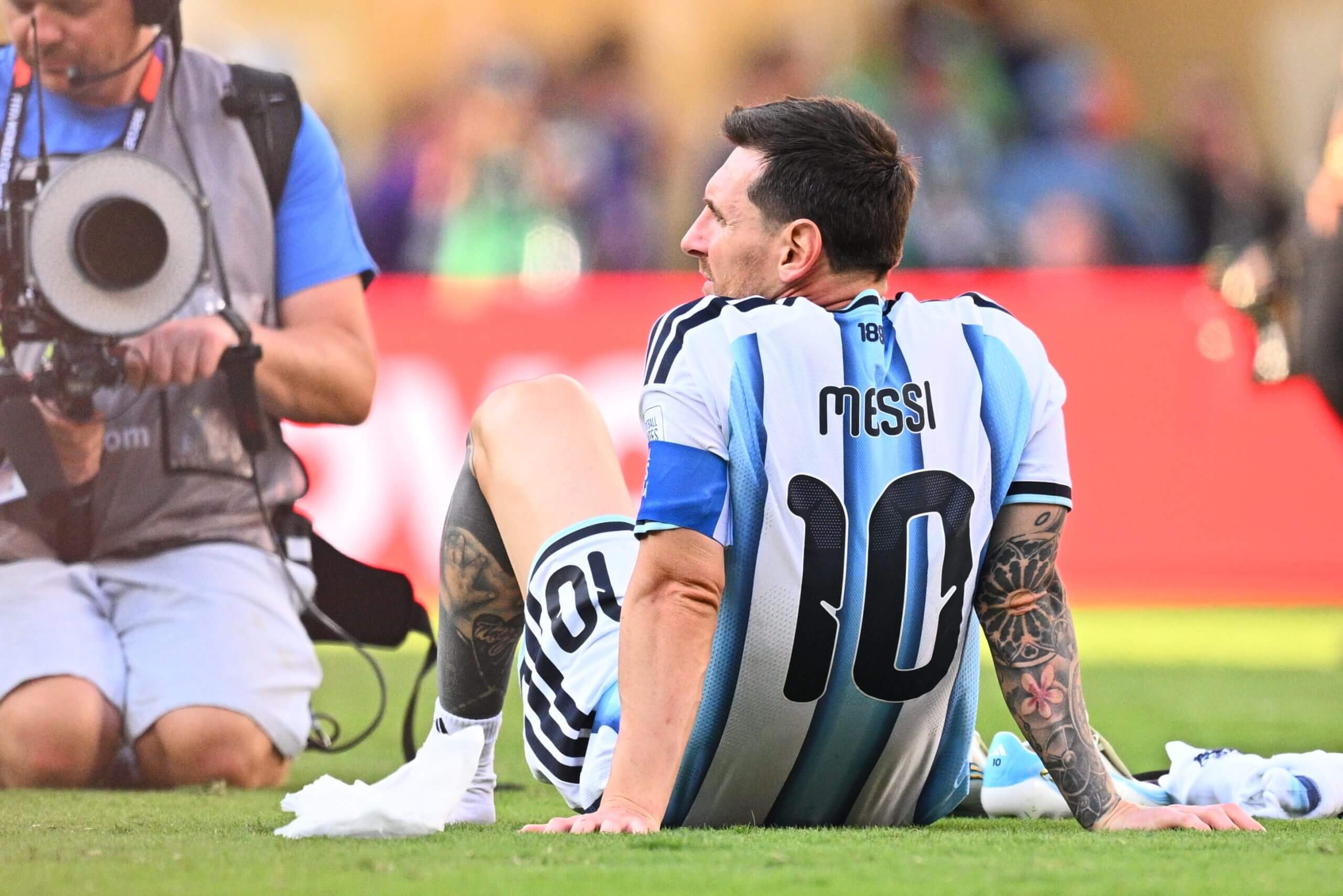
Lionel Messi stood alone amidst the crowd at MetLife Stadium. Tens of thousands of fans watched him, while billions more tuned in worldwide. Despite the masses, Messi appeared isolated. When the World Cup final concluded, Spain’s dugout surged onto the pitch in celebration. Meanwhile, Messi lingered alone, defeated.
During the match, space was a luxury Messi never afforded. As soon as the final whistle sounded, a swarm surrounded him. Cameras captured his solemn gaze. Dejected, Messi sat down and removed his specialized Adidas boots, named the Last Tango. Amidst the stadium’s roar, the music seemed to stop for Messi. His World Cup journey seemingly reached its end.
Messi’s World Cup dream ended as he gazed into the distance.
The Argentine flair defined his last World Cup dance. Throughout the knockout stages, an ever-present sense of looming separation haunted Argentina. Each game brought uncertainty, from Sidny Cabral’s equalizer for Cape Verde to Egypt’s near-victory and Switzerland pushing Argentina to extra-time. The team’s rhythm mirrored a dance on the verge of disarray.
Attending Argentina’s matches in Kansas City, Miami, Atlanta, and New York meant experiencing the impending absence of Messi. Carlos Gardel’s melancholic song about ausencia captured this feeling. The first to reach Messi post-match was Ferran Torres, the player who achieved his dream. Instead of consolation, Messi’s Argentine teammates found themselves in a skirmish, with Leandro Paredes instigating further disorder.
As the game unfolded, Messi’s influence was minimal. He touched the ball sparingly, while Spain’s defense remained impenetrable. Argentina’s efforts faltered, leaving Messi nearly invisible among fans donning his number 10 jersey. His expected goals (xG) were only 0.03.
In the closing moments, the crowd chanted “ME-SSI, ME-SSI!” in a mix of denial and support. Messi led his team to receive runners-up medals from U.S. President Donald Trump. Lost, he pondered his next move at 39. As Spain celebrated their victory, Messi turned to the fans. Tears flowed as a banner depicting Messi and Diego Maradona fluttered, symbolizing their shared legacy.
Messi, like Maradona, holds one World Cup win.
The echoes of the 1990 World Cup were clear during the match. In 1990, Argentina failed to register a shot on target against West Germany until conceding a penalty. The 2026 final followed a similar script. When Torres scored, Messi laid on the pitch in despair, sensing the end. Though Giuliano Simeone nearly took the game to penalties, Argentina’s hopes faded.
Messi’s World Cup voyage closed where Maradona’s terminated — in America. Unlike Maradona’s legendary exit filled with controversy, Messi’s departure exuded love and gratitude.
On the eve of the final, Messi reflected on Instagram, acknowledging the indelible story crafted by his team. His past victories, including the Copa America and the previous World Cup, added layers to his legend. Even if Kylian Mbappe broke records, many benchmarks remain tied to Messi. As he exited the stadium, nostalgia for a bygone era crept in. What will the World Cup be without Messi?
Despite Gianni Infantino’s expansion plans, one thing is certain: A World Cup devoid of Messi feels incomplete.
Leave a Reply