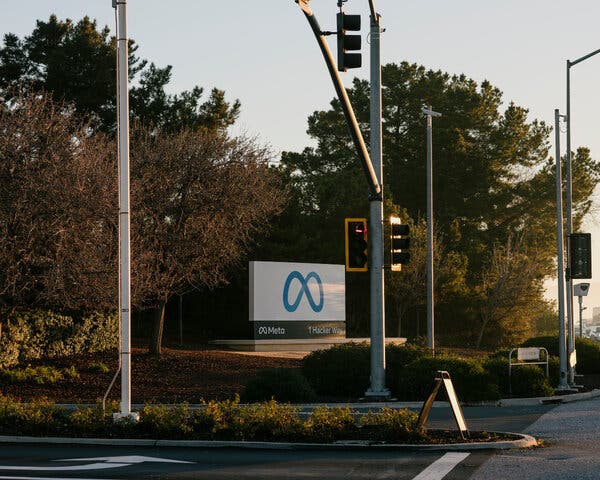
For the past month, there has been significant tension among Meta employees. In April, the workforce was informed that 8,000 positions, representing 10 percent of the company’s staff, would be terminated on May 20 as part of Meta’s transformation towards artificial intelligence. Additionally, 7,000 workers learned that they would be reassigned to new A.I. initiatives.
Layoffs commenced in Singapore, beginning at 4 a.m. local time when communications were dispatched to those affected. Employees in the UK, the US, and other regions received similar notifications on Wednesday morning in their respective time zones.
As news spread, many employees exchanged solemn messages and scrutinized the internal directory to determine who among their teams had been laid off. In a unique response, hundreds of employees reacted with salad emojis on Meta’s forums, symbolizing a ‘salute.’ Some of those laid off included individuals hired just a month prior, as confirmed by two sources familiar with the cuts.
Meta’s workplaces remained largely unoccupied on Wednesday following advice from Janelle Gale, the head of human resources, urging employees to work from home. Flyers opposing a new program for using employee data in A.I. training peppered the office walls, according to eight employees. Anticipating potential job losses, some workers started collecting free snacks and laptop chargers from the offices on Monday.
This upheaval at Meta, which encompasses Facebook, Instagram, and WhatsApp, serves as a real-time example of workforce reductions driven by A.I. The occurrence of job cuts linked to this rapidly advancing technology is escalating in the tech industry. It’s becoming evident that tech employees are inadvertently developing A.I. systems that can replace them. Recently, Cisco announced the elimination of 4,000 jobs to focus more resources on A.I., while Microsoft, Block, and Coinbase have also implemented layoffs due to A.I.
Leave a Reply