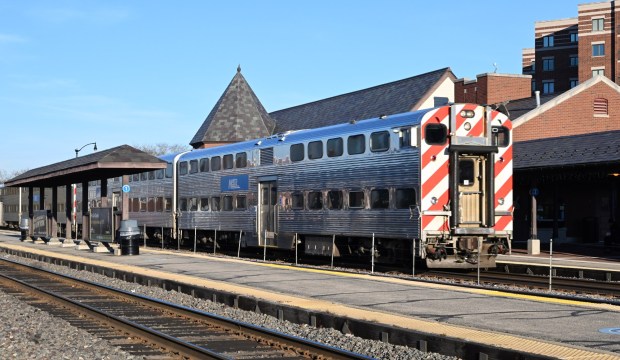
The COVID-19 pandemic, despite its challenges, set the stage for a significant transformation in Metra services. The shift of many downtown commuters to remote work reduced ridership, prompting Metra to rethink its operations. This led to a proposed $9 billion Systemwide Network Plan (SNP) aimed at faster, more frequent trains, and expanded access to O’Hare International Airport. The plan maintains strong rush-hour services while expanding options for all-day travel within six counties, adopting the concept of ‘Regional Rail’.
Details of the Systemwide Network Plan
The SNP report, expected to be finalized by the Metra board in December, outlines both immediate and long-term goals. In the short term, or ‘Regional Rail 1.0’, Metra plans to introduce ‘inner-zone’ and ‘outer-zone’ services. These services target different areas by providing more frequent trains in Chicago and nearby suburbs, while offering faster connections for commuters from further out.
The Union Pacific North Line serves as an example. The inner zone could span from Winnetka to downtown Chicago, and the outer zone from Kenosha to Winnetka. Transfer stations would allow passengers to switch systems efficiently. Inner-zone trains would have turnaround points at Winnetka, enabling service as frequent as every 30 minutes, even on weekends, to the Ogilvie Transportation Center. Outer-zone trains would stop at all stations up to Winnetka, then proceed directly downtown.
Similarly, the Milwaukee District North Line is identified as a candidate for zoning, given that over half of its trips occur within the stations closest to downtown. The plan suggests possible outer zones at Glenview and Libertyville. Other lines considered for zoning include the Rock Island and Metra Electric lines.
A Metra express train was seen passing through Arlington Heights as part of the service demonstration.
However, some routes like the BNSF and Union Pacific West lines are not suitable for zoning due to heavy freight traffic. Instead, Metra suggests streamlining their stop patterns to maintain frequent and consistent service.
Regional Rail 1.0 and Major Projects
The initial phase of the Regional Rail project is budgeted at $2.7 billion, heavily focused on the SouthWest Service and Rock Island lines. Noteworthy among the projects is a $390 million flyover bridge connecting these two lines. This bridge would facilitate the use of LaSalle Street Station for SouthWest Service trains, thus freeing up space at Union Station for other operations.
On the North Central Service, the addition of new turning tracks and signals aims to run 30-minute trains between O’Hare Airport and Union Station. Milwaukee District West Line riders also stand to benefit from shared route segments, with a recommended transfer point at River Grove.
Long-Term Goals: Regional Rail 2.0
The long-range plan, Regional Rail 2.0, envisions shorter intervals of 15 to 30 minutes for train services, at an increased cost of $6.4 billion. Expansion of O’Hare connections, including a cross-town service through Union Station that ties to Rock Island and potentially the BNSF, is a major component. This will involve additional track and possibly flyovers to reduce congestion.
Other proposed enhancements involve more locomotives and coaches for the UP Northwest and North Lines, as well as infrastructure improvements in Arlington Heights to accommodate more frequent UP Northwest trains.
However, the scale of these plans requires overcoming several hurdles. The $9 billion budget is significant, almost matching the Northern Illinois Transit Authority’s combined five-year budget of $9.7 billion for CTA, Metra, and Pace. Additionally, coordination with freight railroad companies is essential, involving nine of Metra’s 11 rail lines.
Director of Operations Planning and Project Management, Aaron Maertins, emphasized the importance of collaboration with these railroad companies during a virtual forum. Enhancing train frequency has proven beneficial in the past, notably increasing ridership on the BNSF and Metra Electric lines during off-peak hours.
If you have questions or feedback regarding the plan, you can reach out via email to [email protected].
Leave a Reply