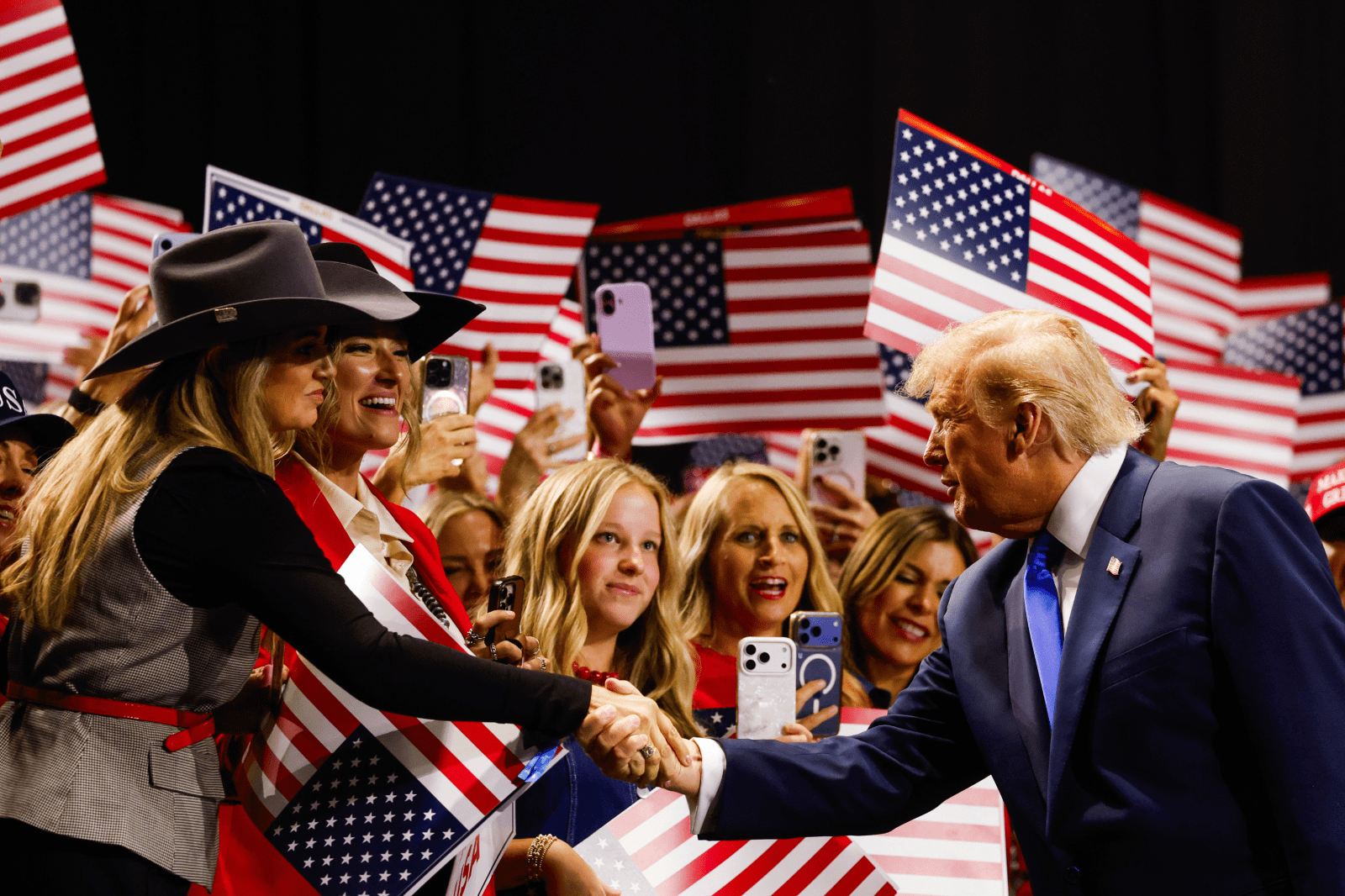
President Donald Trump’s net approval rating in the Midwest dropped by five points in a month, according to Emerson College Polling. His national disapproval reached a second-term high. This development affects Republican candidates in key U.S. Senate races, as they face rural dissatisfaction over fuel costs and the Iran conflict.
Emerson’s September survey highlighted the Iran conflict, employment, and tariff policies as top concerns for voters. Iowa, Kansas, Michigan, and Ohio voters play crucial roles in determining the regional impact on the GOP. Ashley Hinson, an Iowa Republican endorsed by Trump, has opposed increased beef imports and urged an end to the Iran conflict in her Senate campaign.
White House spokesman Davis Ingle told Newsweek that the 2024 election serves as the ultimate poll, with nearly 80 million Americans supporting Trump’s agenda. He pointed to progress on jobs, inflation, and housing affordability, noting more results would emerge as policies take effect.
Trump carried Iowa, Kansas, and Ohio in 2024; Michigan was closely contested. Any weakening across this region is significant. August figures showed 43 percent approval and 52 percent disapproval among Midwestern likely voters, a net rating of -9. By September, approval dropped to 42 percent and disapproval rose to 56 percent, widening the deficit to -14 points.
The increase in opposition rather than a loss of support drove the change. The Midwest forms a regional subset of each national poll, with a smaller sample and wider credibility interval, marking this as a warning sign. Nationally, Emerson recorded Trump’s disapproval at a record high, with 39 percent approval and 58 percent disapproval in September. This marks the highest disapproval and matching the low approval first noted in May.
Both August and September surveys involved 1,000 likely voters with a margin of error of plus or minus 3 percentage points. Survey methods included probability-based panels and text-to-web interviews, accounting for variables such as gender, education, and region.
Rural Concerns on the Campaign Trail
Political tensions are evident in Iowa’s Senate race, where Hinson is vying to replace retiring Republican Joni Ernst. Hinson criticized Trump’s increase in beef imports, impacting cattle producers in the state. Democrat Josh Turek, a Paralympic gold medalist, offers a unique profile. Polls show both candidates competitive.
Fuel costs add another challenge. Hinson advocates for gas tax relief and ending the Iran conflict to ease burden on Iowans. Farmers and freight businesses feel higher diesel prices across various aspects of their work, impacting voter sentiment. Emerson found 41 percent of voters concerned about the economy, with the Iran conflict and jobs as key issues.
Key Senate Races Highlight Regional Impact
Kansas represents an unexpected battleground, with Democrat Adam Hamilton polling closely against Republican Senator Roger Marshall. Michigan’s race between Democrat Abdul El-Sayed and Republican Mike Rogers is similarly close. Ohio pits Republican Jon Husted against former Senator Sherrod Brown, with high fuel prices adding to voter concerns.
These races elevate the Midwest approval shift beyond regional interest. Republicans face risks like diminished voter enthusiasm or independent voter movements, affecting election outcomes. The approval trend in the Midwest could have significant implications for upcoming Senate elections.
Leave a Reply