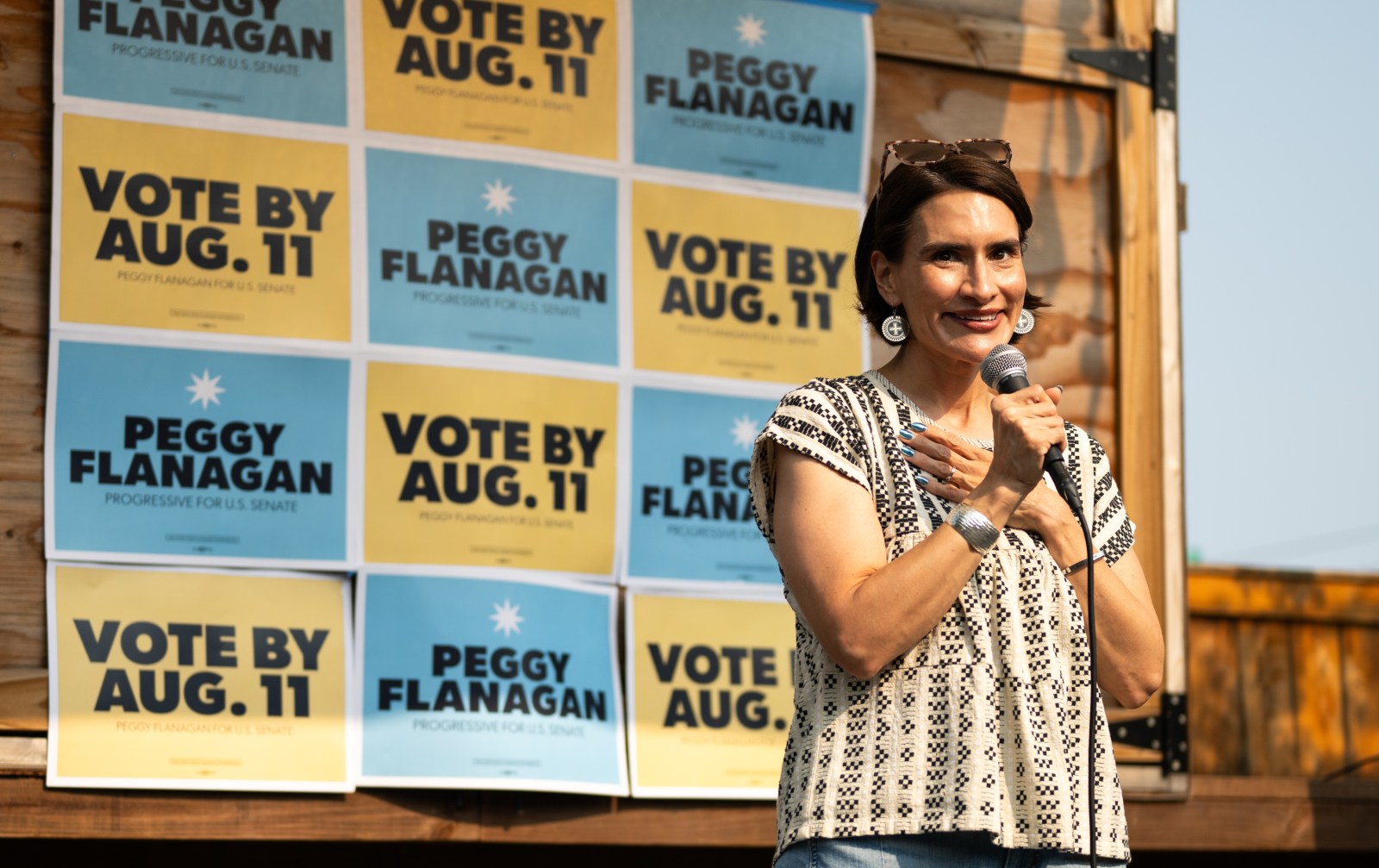
Minnesota Democrats emphasized the importance of grassroots organizing and a message of change in the recent primary to select their U.S. Senate candidate. Lieutenant Governor Peggy Flanagan defeated Representative Angie Craig with 59 percent of the vote compared to Craig’s 39.4 percent, with almost all votes counted.
Flanagan effectively used her opposition to certain foreign policies and her rejection of corporate Political Action Committee (PAC) money to portray Craig as disconnected from voter priorities. This narrative aligned with the dynamics of recent electoral trends. Despite Craig raising $12.6 million to Flanagan’s $6.4 million, Flanagan gained the endorsements of influential figures like Senators Elizabeth Warren and Bernie Sanders, contrasting with Craig’s backing by figures such as House Minority Leader Hakeem Jeffries.
This race mirrored a broader ideological battle between progressive and centrist ideologies. Campaign strategies played a significant role, with Flanagan focusing on grassroots engagement. “Not taking corporate PAC money was one of the easiest decisions I’ve ever made,” Flanagan told Newsweek, highlighting her commitment to grassroots support.
Craig spent heavily on advertising, totaling $9.6 million, while Flanagan spent significantly less, investing $1.9 million. Instead, Flanagan hosted over 300 events across Minnesota, promoting policies like Medicare for All and a higher minimum wage. Her efforts led to notable voter engagement at state caucuses, crucial for party endorsements.
Flanagan’s campaign strategy included extensive volunteer efforts, with many volunteers experiencing campaign work for the first time. This engagement was reflected in substantial voter outreach and grassroots support.
Flanagan will face Michele Tafoya, the Republican candidate for Senate, who has criticized political accountability issues. The upcoming race will draw significant attention, yet analysts consider Minnesota to lean Democratic based on historical voting patterns.
Upon potential election, Flanagan aims to collaborate with like-minded progressive senators to shift Senate priorities. Her willingness to work with Republicans stems from a shared skepticism of institutions and a hope for bipartisan change.
Flanagan believes her election represents a broader movement rejecting conventional political alliances and focusing on everyday people’s needs. The campaign’s success highlights a shift in election dynamics, favoring grassroots, issue-driven campaigns.
Leave a Reply