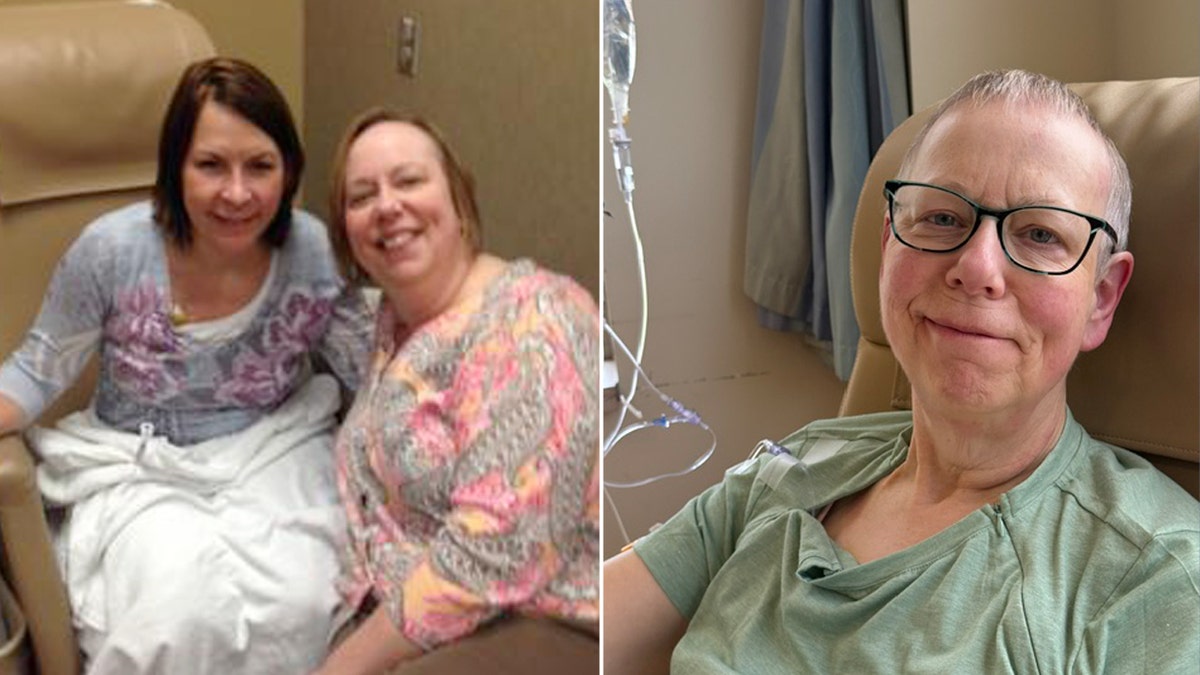
A Minnesota woman, Becky Drexler, faced an unexpected challenge when she was diagnosed with ovarian cancer, not long after losing her best friend Connie Dahl to the same disease. Dahl, at 51, fought against stage 4 ovarian cancer before passing away in September 2017. Drexler, deeply affected by her friend’s ordeal, started volunteering with the Minnesota Ovarian Cancer Alliance (MOCA) during Dahl’s fight.
After retiring in 2017, Drexler planned to dedicate her time to travel and family. However, she was diagnosed with stage 3B high-grade serous ovarian cancer in July 2018, interrupting her plans. Drexler had overlooked symptoms such as frequent urination, constipation, bloating, and hip pain, attributing them to aging. Eventually, a CT scan revealed masses on her ovaries, leading to surgery and chemotherapy.
Even with her own battle, Drexler found strength in her late friend’s positive outlook. She actively engaged in MOCA support groups, drawing support from others with similar experiences. In August 2020, Drexler faced a cancer recurrence. After consulting with her oncologist, she opted for targeted radiation, completing treatment in January 2021, achieving “no evidence of disease” status.
Drexler began a maintenance treatment with Lynparza, a PARP inhibitor, not available during her friend’s treatment. This kept her cancer-free until 2026, when a recurrence required surgery and a new cycle of chemotherapy.
Throughout her journey, Drexler continued her involvement with MOCA, even participating in presentations to medical students. She reflected on the advancements in ovarian cancer treatment unavailable to Dahl, emphasizing the need for research in early detection, as most women are diagnosed at advanced stages.
Dr. Brian M. Slomovitz from Mount Sinai Medical Center underscores the non-specific symptoms of ovarian cancer, often mistaken for less serious conditions. He highlights the importance of self-advocacy for women noticing persistent symptoms.
Drexler urges women to trust their instincts when it comes to health concerns and advises consulting a gynecologic oncologist for specialized care. Despite the lack of a reliable screening method, early detection remains crucial for improving outcomes in ovarian cancer treatment.
Leave a Reply