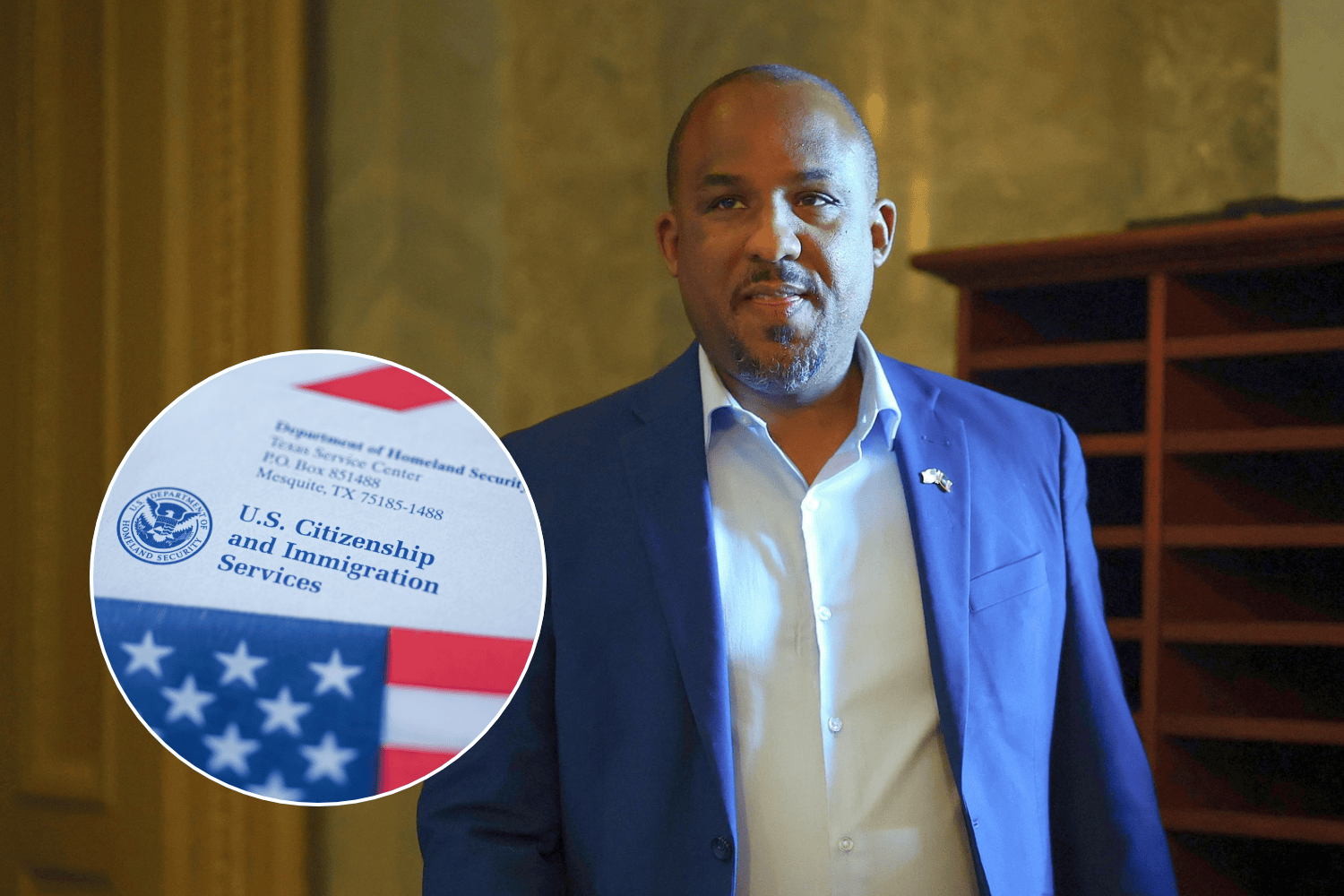
Scott Colom, the Democratic Senator-elect for Mississippi, has taken a firm stance on H-1B visas. He emphasizes that American workers should have priority access to tech jobs over foreign employees. During his first town hall since being elected, Colom stated, “I believe in a secure border. We need to know who is in our country.”
Colom expressed strong views on H-1B visas, highlighting the need to prioritize American workers for specialized tech positions often filled via this visa. H-1B visas enable U.S. employers to hire foreign professionals for specialized roles typically requiring at least a bachelor’s degree or equivalent expertise.
“You probably haven’t heard a Democrat say this,” Colom remarked. “But regarding H-1B visas, we must ensure Americans have access to tech jobs that companies like Microsoft offer.”
Colom urged for proper training and experience opportunities for Americans to qualify for these jobs, rather than depending on international candidates. His victory over Republican Cindy Hyde-Smith marked a significant upset, making him the first Democratic senator from Mississippi since the 1980s, and the first Black senator since Reconstruction.
H-1B visas have also been a contentious topic for former President Donald Trump. His “Buy American and Hire America” agenda included efforts to reform these visas, focusing on “most-skilled or highest-paid” applicants. In 2020, Trump stated that H-1B visas should attract top talent to create jobs in the U.S., instead of being used as a low-wage labor conduit.
Criticism of H-1B visas spans across party lines. Democratic Senator Dick Durbin and Republican Senator Charles Grassley introduced bipartisan reform legislation in 2007. Similarly, Senator Bernie Sanders has voiced concerns regarding the misuse of visa programs in sectors like amusement parks and ski resorts.
Supporters of H-1B visas argue they are crucial for filling employment gaps in STEM fields. They claim these visas allow companies to hire skilled professionals when there are insufficient qualified U.S. workers.
Leave a Reply