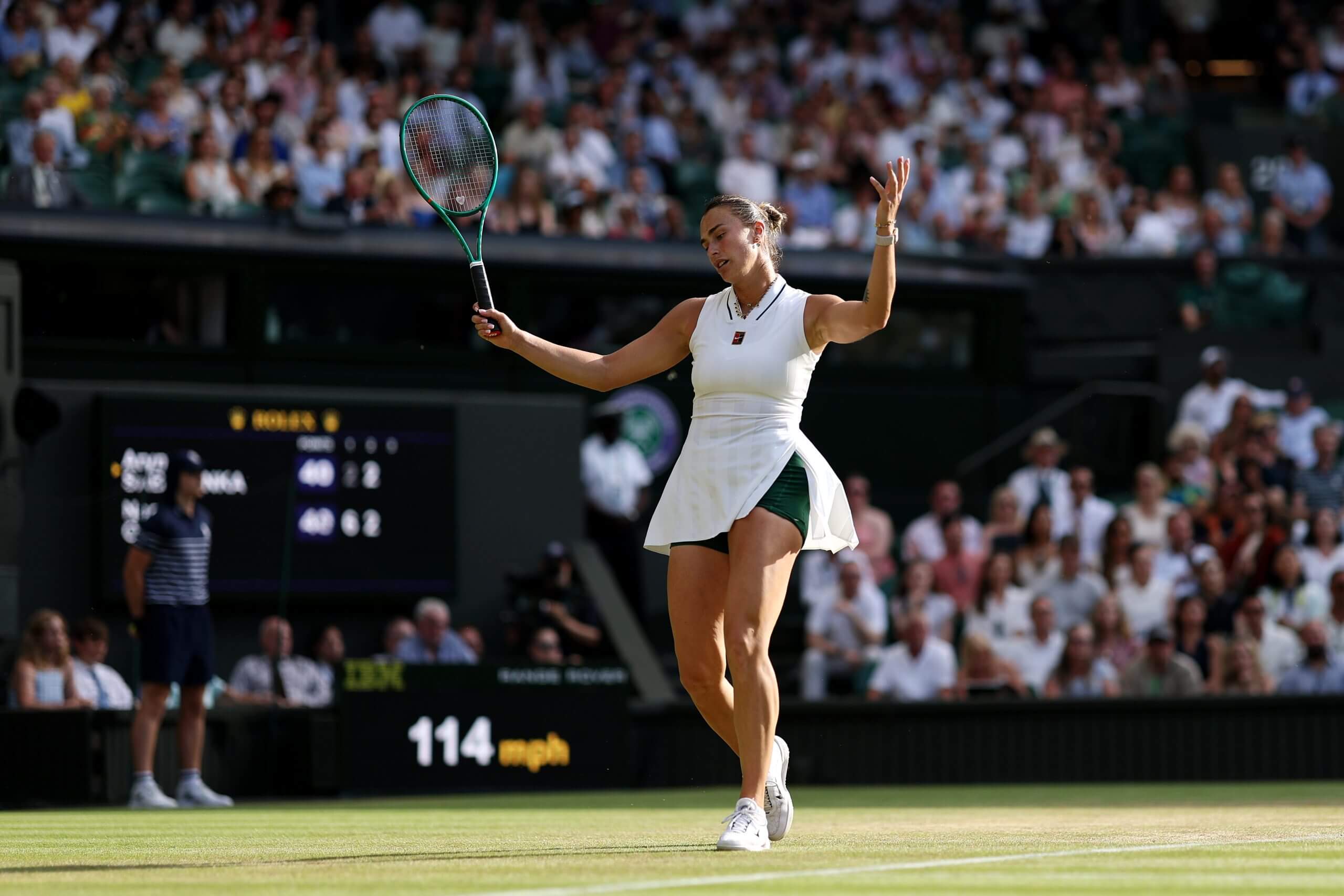
Naomi Osaka took a significant step forward in her grass-court tennis career with a win against Aryna Sabalenka at Wimbledon. The match ended in straight sets, showcasing Osaka’s dominance on a warm London evening.
Osaka’s performance was nearly flawless. Her serve and groundstrokes put immense pressure on the world No. 1, Sabalenka, who struggled to return Osaka’s swift shots.
With a 6-2, 7-6(2) victory, Osaka achieved her most notable win since returning to tennis after maternity leave in 2024. This win marked her first advancement to the quarterfinals at Wimbledon, providing a milestone in her career.
Sabalenka faced another challenging result in a season filled with ups and downs. Earlier in the year, she reached the Australian Open final and won the BNP Paribas Open and the Miami Open. However, her performance on clay and grass courts was erratic, affecting her stability. For example, she lost a quarterfinal at the French Open after serving for the match.
The match focused more on Osaka’s skill and strategy rather than Sabalenka’s lapses. Despite losing their previous three meetings, Osaka’s decisive play left little opportunity for Sabalenka to take control.
Both players are 28 and have different histories at Wimbledon. Sabalenka, a three-time semifinalist, and Osaka, who had never progressed beyond the fourth round, faced off. Previously, grass courts were a challenge for Osaka, but she showed an aggressive and strategic approach on Sunday, particularly with her serve.
Osaka’s serving statistics were impressive. In the second set, she achieved 70 percent on first serves, winning 22 of 23 points. Overall, she won 87 percent of her first serve points, making nearly half unreturnable. Her second serve was also strong, winning 61 percent of those points.
Osaka’s recent comments indicate she is still piecing together her success, though she has some insights. She has adapted to the grass surface and enhanced her movement, essential for success. She draws comparisons to her form before her break to have her daughter Shai in 2023.
Her performance against Sabalenka highlighted her improved movement and ability to exploit openings. Throughout the match, Osaka maneuvered skillfully, striking well-placed forehands and backhands consistently.
Sabalenka steadied in the second set but faced constant pressure. Osaka maintained her momentum with strong service games, leading to a tiebreak where her serve remained dominant.
Osaka’s serve set the tone during the tiebreak, leaving Sabalenka struggling to respond. As Osaka led 5-1, the result appeared clear. Eventually, Sabalenka’s attempts faltered, and Osaka secured the win.
In her post-match comments, Sabalenka expressed frustration, acknowledging her struggles and aiming to improve next year. She hadn’t lost in straight sets at a Grand Slam since 2020.
‘I wasn’t really thinking about my record at all. I was just trying to focus point by point,’ Sabalenka said, reflecting on the match.
Leave a Reply