NASA is set to introduce the four astronauts selected for the upcoming Artemis III mission, a significant step in the Artemis moon program. The announcement will take place at the Johnson Space Center in Houston, marking the start of a lengthy period of mission-specific training. The crew is scheduled to launch into Earth orbit next year to test key procedures involving moon landers from SpaceX and Blue Origin. This milestone is crucial before the U.S. can successfully land astronauts on the moon by 2028.
Objectives of the Artemis III Mission
During Artemis III, the crew will practice operations later needed in lunar orbit. This mission follows a pattern set by historical NASA missions. The crew will fly aboard an Orion capsule using NASA’s Space Launch System rocket, reminiscent of the Apollo 9 mission. In 1969, Apollo 9 tested the lunar module in Earth orbit after a successful lunar orbit mission, Apollo 8. Apollo 10 followed by testing the lunar module around the moon, paving the way for Apollo 11’s historic landing.
The Artemis program previously mirrored Apollo 8’s mission with Artemis II. It involved commander Reid Wiseman, Victor Glover, Christina Koch, and Canadian astronaut Jeremy Hansen in a successful flight around the moon in April.
NASA’s Moon Landing Plans
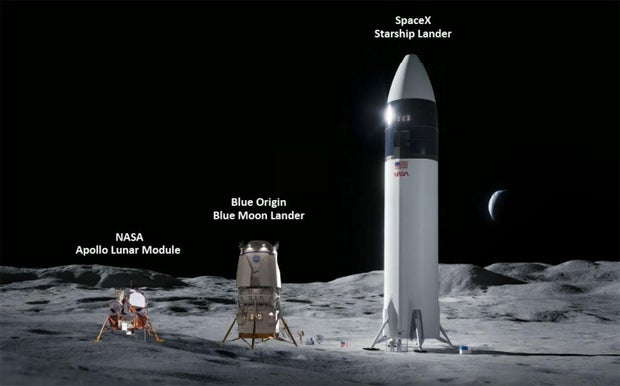
Currently, Artemis III stands as NASA’s sole test flight before attempting a moon landing in 2028. By then, one or both companies, SpaceX and Blue Origin, must achieve an uncrewed moon landing. An artist’s depiction illustrates NASA’s Apollo moon lander, Blue Moon’s Mark II lander, and SpaceX’s Starship variant together on the lunar surface.
The announcement of the Artemis III crew coincides with recovery efforts by Blue Origin after a launch pad explosion on May 28. This incident destroyed a New Glenn rocket needed for the Blue Moon Mark II lander scheduled for Earth orbit next year. The only launch pad at Cape Canaveral Space Force Station in Florida sustained major damage. Blue Origin plans to resume flights by year-end, though the mishap delayed important test flights.
Meanwhile, SpaceX faces challenges in perfecting its Super Heavy-Starship rocket for orbital tests. NASA continues preparations for the Artemis III mission, but uncertainties remain. If only one lander becomes ready, the mission will proceed. If neither is available, NASA may find alternative ways to advance the program.
The Vision of the Artemis Program
The Artemis program seeks to reestablish American presence on the moon by the end of 2028 while competing with China, which plans its own moon missions. Despite previously landing 12 astronauts on the moon, NASA aims to maintain its position as a leader in space exploration and technology.
Plans include launching robotic landers, lunar satellites, and the Artemis IV and V missions, followed by regular astronaut landings. The goal is to construct a lunar base near the moon’s south pole in the late 2020s. This region offers valuable resources such as water, air, and rocket fuel from ice deposits in permanently shadowed craters.
With necessary infrastructure like habitats and power stations, astronauts may live and work on the moon for extended periods. However, the timeline faces threats from potential delays in rocket and lander readiness. Further test flights between the Artemis III mission and an eventual moon landing may be needed.
Leave a Reply