Nepal commemorated a day of mourning on Monday for the victims of the devastating floods on August 26. Flags were lowered at government offices while families concluded mourning rituals. This date marked the 13th day since the floods, which claimed more than 1,300 lives in Nepal and Tibet, leaving around 5,000 people missing, including foreigners, as reported by Nepal’s disaster management agency.
In predominantly Hindu Nepal, a mourning period typically lasts 13 days, during which immediate family members remain at home, and relatives visit to pay their respects. On the final day, rituals are conducted to pray for the souls of those who passed away. Some families conducted symbolic funerals for their missing relatives. In Hinduism, cremation serves as a significant rite, bringing spiritual closure even without the bodies present.
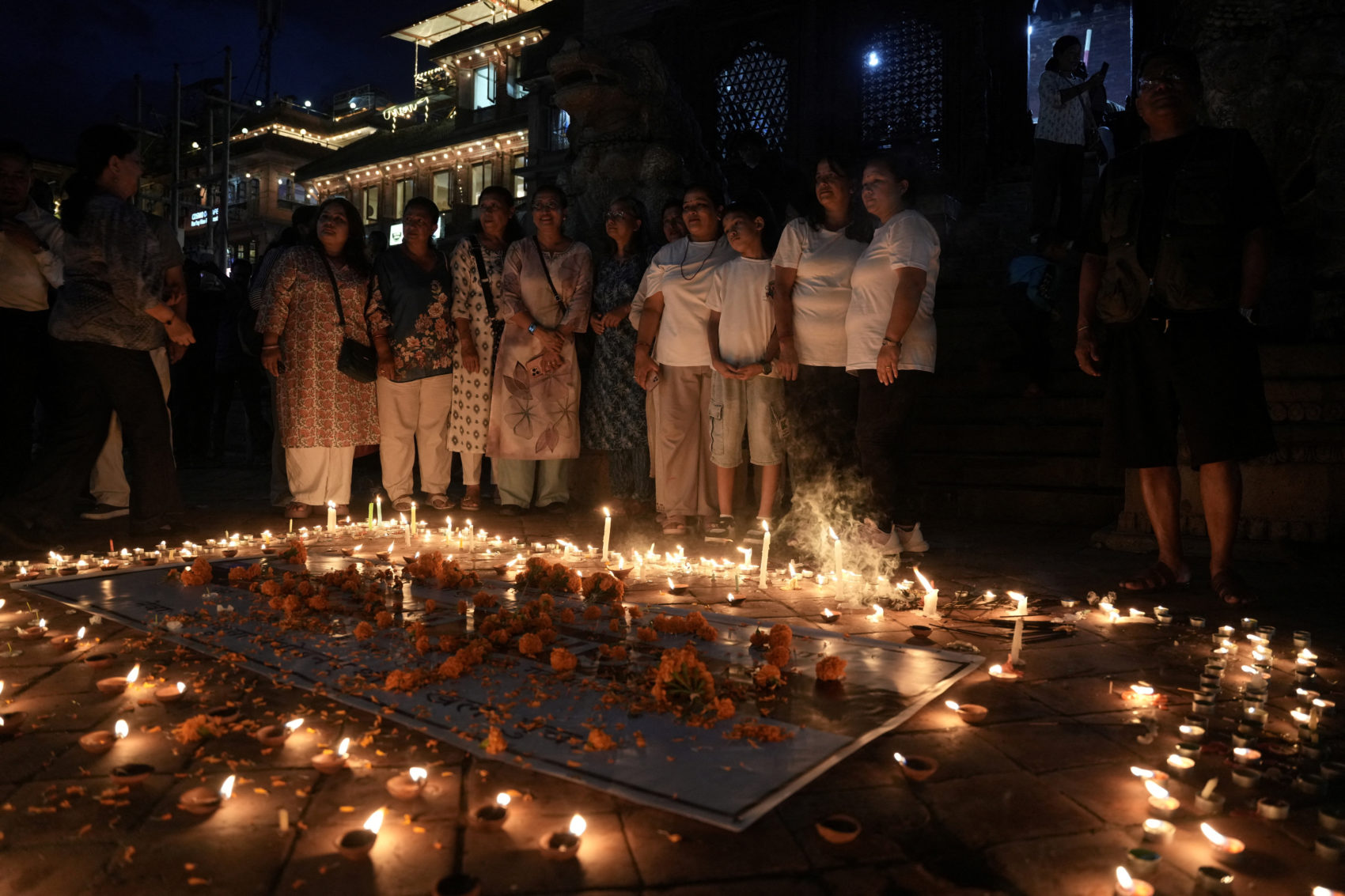
The government declared Monday an official mourning day, instructing flags at government offices to be flown at half-staff. Butter lamps and candles were lit in Basantapur Durbar Square, Kathmandu, to honor this day of mourning following deadly flash floods and mudslides.
A girl and a man look at pictures of victims displayed near the Maharajgunj Medical Campus in Kathmandu, Nepal, the day after the disastrous floods. Photo by Anushree Fadnavis/Reuters
Furthermore, ongoing search efforts aimed at locating the missing were met with criticism for supposedly inadequate progress. In Kathmandu, families gathered near the offices of the prime minister and other significant ministries, urging the government to expedite rescue operations for hundreds of individuals, notably those who worked at hydropower plants. Many of these workers were swept away by the Bhotekhoshi River or buried under debris.
Among the protesters was Sumana Shrestha, holding a poster of her 55-year-old husband missing since the flood. Her husband, a consulting geologist, was last heard from at the Trishuli hydropower plant office, which was buried under debris. Shrestha expressed frustration, stating, “We are here because we have not heard of any rescue attempt on this project, but it has been 13 days already. The only thing we have been able to do is pray to God and hope for a miracle.”
Mahesh Prasad Shrestha, another protester, displayed a photograph of his brother Niraj Shrestha, a 52-year-old engineer at the same site. He criticized the authorities for their delayed response, noting that a small excavator was only dispatched by helicopter almost a week after the disaster and emphasized the need for larger equipment. “They should have ordered big helicopters from places like China or India to fly in equipment,” he said.
Candlelight vigils occurred in several locations throughout Kathmandu in memory of those who lost their lives in the floods. Rescue teams concentrated efforts on 12 hydropower projects, with approximately 900 workers reported missing and about 500 thought to be trapped in various tunnels. Specialized rescue teams from India, China, South Korea, and the United States have been searching through debris, damaged structures, and tunnels at these sites.
Recently, rescuers saved two Nepalese workers from a plant on Friday and extracted a Chinese man from another facility on Saturday.
People participated in a moment of silence at Basantapur Durbar Square in Kathmandu, Nepal, to honor the lives lost in the floods. Photo by Sabrina Dango/Reuters
Support for trusted journalism and civil dialogue remains crucial in maintaining a healthy democracy as rescue and relief efforts continue.
Leave a Reply