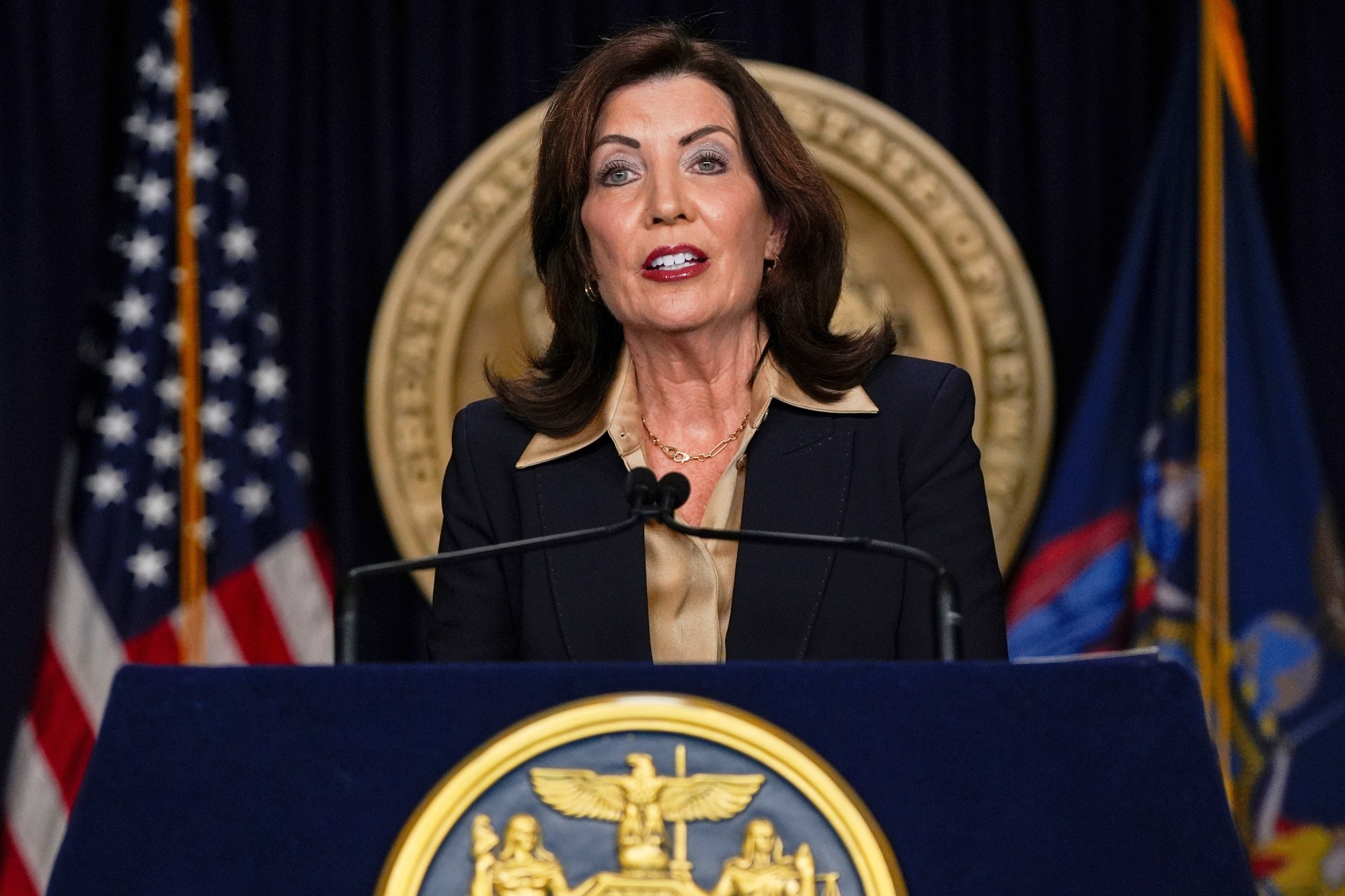
New York has introduced a legal requirement that any advertisements using artificial intelligence-generated individuals instead of real actors must disclose this fact explicitly. Governor Kathy Hochul signed this regulation into law in December, and it took effect on Tuesday. Her office described it as a pioneering law that aims to promote transparency, noting the increasing presence of AI-generated performers across various media platforms, including social media and digital advertising.
According to the state law, ‘synthetic performers’ are defined as ‘digitally-created media that appear as a real person.’ This regulation covers advertisements across all types of media.
Governor Hochul stated, “In New York, we are setting the rules of the road instead of letting AI run the show.” The law’s requirement for “simple, honest disclosure” aims to protect consumers, show respect for the creative workforce, and maintain New York’s position as a leader in responsible innovation.
Failure to clearly label the use of synthetic performers in advertisements will result in penalties: $1,000 for a first violation and $5,000 for subsequent infractions. Exemptions are provided in the law for advertisements related to movies, television shows, streaming content, video games, and other media where synthetic performers are prevalent throughout the work. Additionally, audio-only ads and those where AI is used exclusively for language translation are not subject to the law.
During the legislative process last year, the American Association of Advertising Agencies and several advertising organizations voiced strong opposition to the law. The 4As argued that the law would harm advertisers by introducing compliance uncertainty and burdening brands and agencies involved in advertising in New York, thereby hindering creative and technological innovation.
The New York State Broadcasters Association welcomed some of the amendments that introduced these carve-outs but expressed ongoing concerns over the broad definition of synthetic performers. David Donovan, president of the association, stated that local broadcast stations are prepared to adhere to the new regulation.
The actors’ union, SAG-AFTRA, emerged as the law’s greatest advocate. Recently, it finalized a new contract with studios and streaming platforms that it claims provides additional safeguards against synthetic performers.
This law is among many proposed or enacted across various U.S. states, aiming to enhance job security for human workers and address potential privacy and safety risks associated with AI. Existing state regulations include restrictions on deepfakes, limitations on collecting personal data, and mandates for increased corporate transparency.
Following Governor Hochul’s legislation, President Donald Trump issued an executive order urging states not to impose AI regulations. Critics argue that such a directive would allow tech companies to operate with minimal oversight and could hamper AI firms’ growth, potentially enabling China to advance in the AI sector.
Leave a Reply