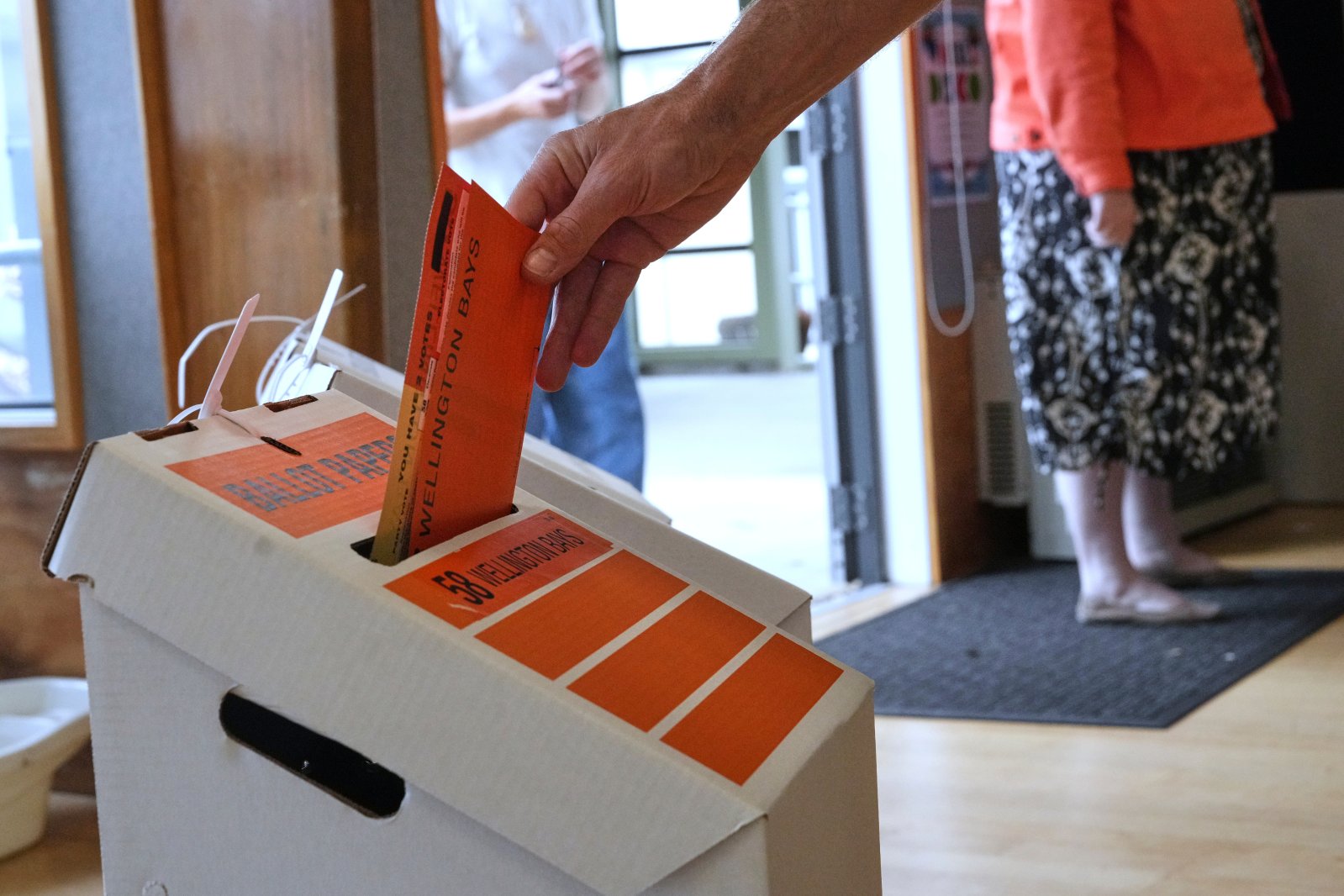
New Zealand’s recent election has ended in uncertainty as preliminary results reveal a narrow lead for Prime Minister Christopher Luxon’s center-right coalition. The coalition holds a slight one-seat majority in Parliament, yet the opposition Labour Party narrowly leads in the nationwide party vote. With the competition too close to determine a clear winner, New Zealand may have to wait for weeks to see the final government composition.
As preliminary results are in from all voting locations, the Labour Party holds 29.36% of the party vote compared to Luxon’s National Party at 29.21%. In numerical terms, Labour secured 710,330 party votes, while National received 706,680 votes, translating to a mere difference of 3,650, or 0.15 percentage points.
The National Party currently projects 42 seats, while Labour projects 36, benefiting from more electorate victories. Luxon’s coalition partners, ACT New Zealand and New Zealand First, are predicted to win 13 and 12 seats respectively. This potentially provides the center-right bloc with 67 seats, surpassing the 66-seat majority target.
Despite this preliminary majority, Luxon refrained from declaring victory. He stated, “We have a pathway to forming the next government,” while acknowledging that “it is too close to call.”
Special Votes to Decide Outcome
The results remain pending as special votes await tallying in the official count. The Electoral Commission estimates around 399,000 special votes need verification, which could alter Parliament’s final structure. These special votes encompass ballots from New Zealanders overseas and those unable to vote ordinarily within their electorates. As they are not part of election night totals, final party percentages and seat assignments can often shift.
New Zealand will operate under its caretaker convention until the results are finalized and a government is formed. Official results are expected to be announced by the Electoral Commission on November 27.
Labour leader Chris Hipkins expressed the ongoing uncertainty late on Saturday, “Tonight, New Zealand has spoken. It may take us a little bit longer to figure out exactly what it is that you’ve said.”
Broad Fragmentation and Minor Party Strength
Neither of the two leading parties reached the 30% mark in the preliminary party vote, showcasing limited voter enthusiasm for either main party. Smaller parties gained noticeable representation:
- The Greens: Projected 16 seats
- ACT New Zealand: Projected 13 seats
- New Zealand First: Projected 12 seats
- The Opportunity Party: Projected 7 seats (5.96% of the party vote)
- Te Pāti Māori: Projected 5 seats (winning five electorate contests)
Under New Zealand’s mixed-member proportional system, voters select both a local electorate representative and a political party. Parliament typically comprises 120 seats, but 11 overhang seats in the preliminary results expanded it to 131, raising the majority threshold to 66.
Polling Previewed a Tight Race
Polling around the campaign’s end indicated a highly contested election. Surveys showed varied predictions of whether National or Labour would lead. The 1News-Verian poll placed National at 30% and Labour at 29%, with the Greens at 16%, ACT at 10%, New Zealand First at 8%, and Opportunity at 6%. National’s slight edge lay within the survey’s margin of error.
Conversely, a Post-Freshwater Strategy poll favored Labour at 30.7% over National’s 26.4%, the Greens at 13%, New Zealand First at 12%, ACT at 9.8%, and Opportunity at 5.1%. This poll, targeting 1,044 eligible voters, cited a 3% margin of error.
Context of Global Political Trends
The New Zealand election follows a global phase in which conservative, populist, and far-right parties have advanced in various parts of Europe. Although the New Zealand political scene does not directly parallel these trends, notable gains by far-right parties in elections across Europe, such as Austria and Germany, indicate a broader movement. Unlike these trends, New Zealand’s coalition comprises diverse elements: Luxon’s National Party is center-right, ACT adheres to libertarian views, and New Zealand First holds populist stances. The election outcomes do not represent a simple conservative ascent, as National lost seats while ACT and New Zealand First grew stronger.
Leave a Reply