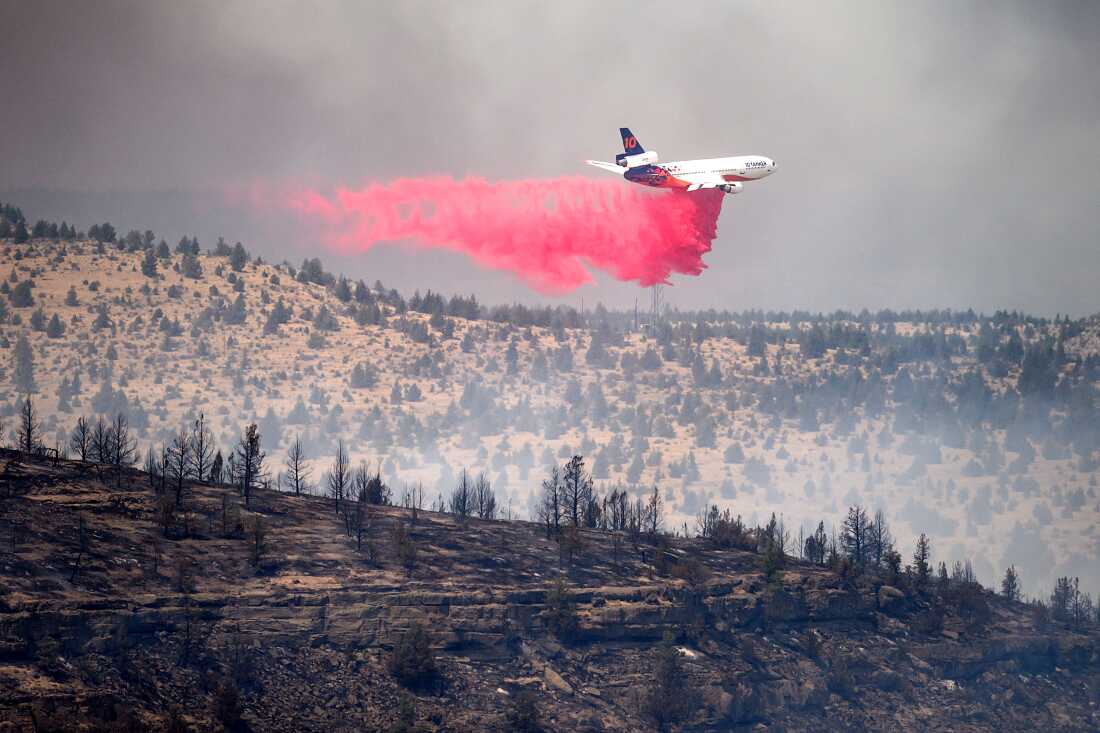
ONTARIO, Ore. – Over a million acres have burned in central and eastern Oregon. This is setting the stage for another intense wildfire season. Thirty-four major fires are currently active, mainly on public lands from Bend to the Idaho border. Dense smoke is covering the region, and air quality warnings are affecting the Boise, Idaho area, which houses over 700,000 residents.
Oregon officials urge public caution as the fire season is just beginning. Many fires are in lower altitudes, yet higher altitude forests remain vulnerable due to low snowpack last winter. “We’re holding our breath,” says Larry O’Neill, Oregon State University’s climatologist. Recent lightning storms sparked these fast-moving fires without much rain, and strong winds have worsened the situation.
Thousands have evacuated from small towns across Oregon. Ranchers are rushing to secure their cattle. Despite the remoteness, these fires threaten livelihoods. Smoke from the Second Flat Fire poses a risk to Burns, Oregon. Near the Coleman Creek Fire, thick smoke blankets the cattle ranching town of Harper. Local resident Mary Thompson is frustrated by the media’s portrayal of the fires. “It’s our livelihood,” she says, noting that many are helping to move cattle. “It’s hard,” she adds, worried about future grazing grounds and costly hay.
Local ranchers join fire brigades alongside state and federal teams. Many highways and Interstate 84 face closures as fires spread rapidly. Terry and Kara Barnes, trapped in Harper, reminisce about timber industry work. Concerns about public land management arise, with calls for quicker fire response.
Fire resources are stretched. Idaho’s National Interagency Fire Center is on high alert, signaling limited federal response if new fires ignite. Federal land agencies face funding and staffing cuts, with around 10,000 jobs affected by recent decisions. Additionally, climate change exacerbates conditions. “Warmer temperatures dry landscapes faster,” O’Neill states, noting similar issues across Western Europe.
Smoke advisories may continue as conditions worsen. Catherine Randall from Huntington, Oregon, evacuated due to the Tartar Fire. “I just grabbed my computer and a couple of other things,” she says. Despite challenges, Randall tries to stay positive, finding beauty in smoke-altered sunsets.
Leave a Reply