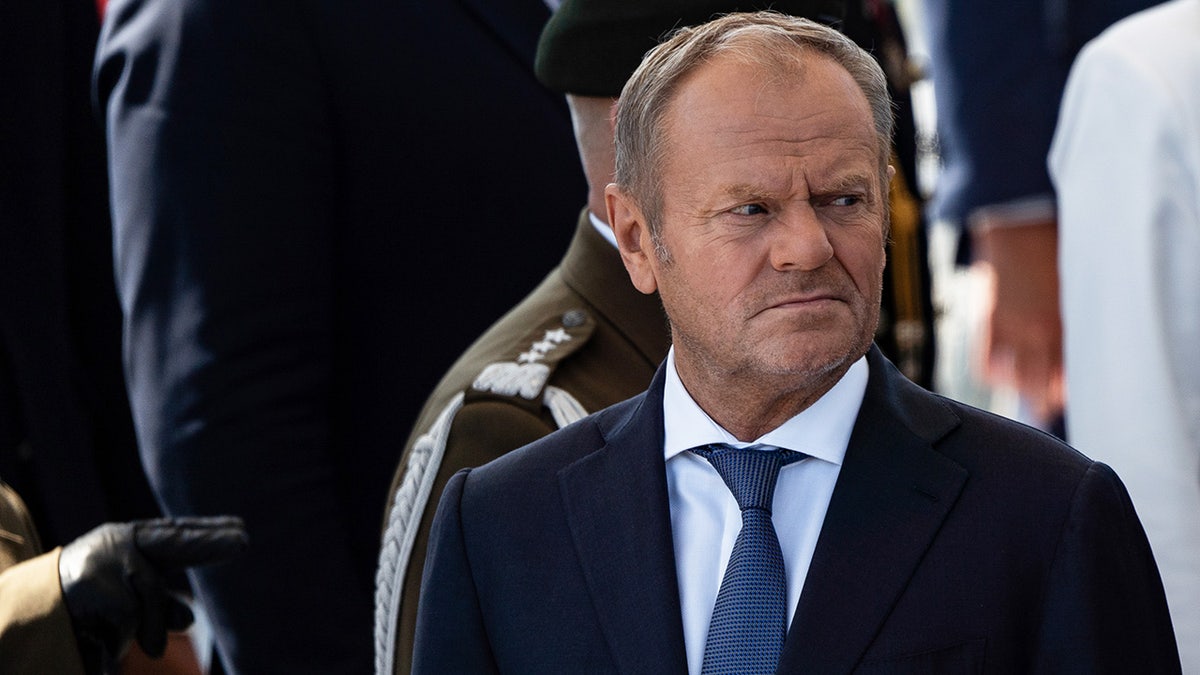
A tense situation unfolded at Poland’s Constitutional Tribunal on Friday night as riot police responded to protests that arose following a controversial suspension within the tribunal. The events have reignited debate over Prime Minister Donald Tusk’s actions, with some seeing it as a restoration of judicial independence, while others decry it as exceeding constitutional boundaries.
The controversy started when the tribunal suspended its president, Bogdan Święczkowski. Supporters of Tusk argue this move was essential for judicial independence, but critics label it an unconstitutional power grab. Marcin Przydacz, head of the International Policy Bureau in President Karol Nawrocki’s office, criticized Tusk’s actions on European TV, stating that there was no legal justification.
Diplomatic ramifications are unfolding as well, with multiple Polish ambassadors resigning in protest. Przydacz, a former member of the now-opposition Law and Justice party, highlighted the resignation of Krzysztof Szczerski, Poland’s representative to the U.N., and those of ambassadors to China and Romania over the weekend.
Simone Rodan‑Benzaquen from the Foundation for Defense of Democracies emphasized the long-standing issues within Poland’s Constitutional Tribunal, noting that the current crisis didn’t develop overnight but has been ongoing for more than a decade. She explained that the appointment of judges by parliament has been a major sticking point, contributing to the crisis.
Friday’s protest outside the tribunal led to clashes with police and several arrests. Presidential candidate Karol Nawrocki, supported by the Law and Justice party, had to cancel his trip due to the unrest. Rodan-Benzaquen argues that while the current standoff is troubling, the broader institutional conflict predates Tusk’s administration and includes legitimate questions about resolution.
The situation has stirred strong reactions. Critics of Tusk accuse him of orchestrating an attempted coup, as argued by Nile Gardner, a director at the Heritage Foundation. He compared the situation to actions typical under authoritarian regimes. In contrast, Boštjan Udovič from the University of Ljubljana interprets the dispute as an effort by Tusk to realign judicial processes with constitutional and European standards.
As the confrontation continues, Tusk defends his decisions as aligning with the constitution by demanding that the president recognize judges appointed by parliament. He criticized Nawrocki for opting for confrontational measures that could be detrimental to the rule of law in Poland.
The international community is also weighing in. The European Commission supports the Polish parliament’s authority in judicial appointments. However, some European leaders, like French opposition leader Marine Le Pen, criticize EU institutions for inconsistency in upholding democratic ideals.
U.S. Ambassador to Poland, Tom Rose, emphasized America’s support for Poland, urging calm and focusing on the nation’s stability and democratic future. As Poland heads towards parliamentary elections, the implications of this institutional crisis are profound and could surpass the current confrontation in importance.
Leave a Reply