Acting Attorney General Todd Blanche announced on Tuesday that President Donald Trump’s administration has abandoned plans to establish a $1.8 billion fund intended to compensate allies of the Republican president after facing political backlash and legal challenges. Blanche made the statement during a House committee hearing.
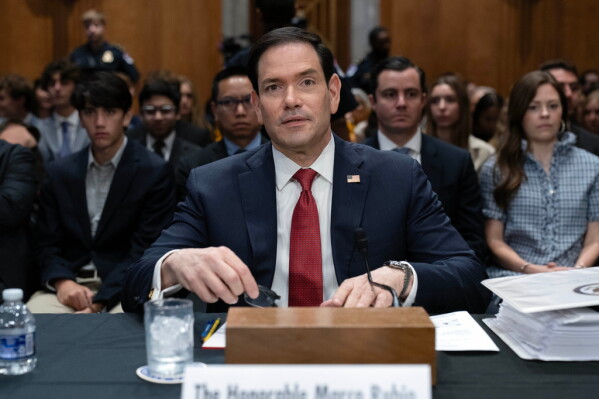
Secretary of State Marco Rubio was questioned about the administration’s shaky diplomatic efforts worldwide during consecutive hearings on Capitol Hill, marking the first such hearings since the Iran war began. President Trump named Federal Housing Finance Director Bill Pulte as the acting director of national intelligence to succeed Tulsi Gabbard. This announcement was made on Truth Social.
On an electoral note, voters are set to cast their ballots in several states, including California, Iowa, and Montana. Meanwhile, the U.S. military thwarted another attempted breach of its blockade of Iranian ports, marking the seventh such incident. U.S. Central Command reported that the Botswana-flagged merchant vessel M/T Lexie was stopped after warnings from U.S. forces went unheeded, resulting in U.S. aircraft firing a Hellfire missile into the vessel’s engine room.
The U.S. military has halted six commercial ships total and redirected another 122 ships.
Blaine confirmed that the Justice Department is not abandoning other aspects of Trump’s settlement with the IRS over the leak of his tax returns. While the anti-weaponization fund was repealed, the IRS will drop pending probes against Trump related to tax payments.
The scrapping of the $1.8 billion fund was met with surprise by some Democrats, and Republican pressure was cited by Blanche as a reason for backing down. Representative Rosa DeLauro branded the proposed fund as self-serving and corrupt.
Secretary of State Marco Rubio faced varied inquiries in day-long congressional hearings, including topics like the Iran war and U.S. support for Taiwan. Rubio handled questions about the U.S.’ unused stockpile of contraceptives—stored in Belgium—and stated they would not be distributed due to executive orders.
Acting Attorney General Todd Blanche faced questions regarding the fund intended for Trump’s allies who were involved in the January 2021 Capitol riot. A person familiar indicated Trump reconsidered the fund after resolving a lawsuit with the IRS.
In legislative news, Democrats introduced a bill to limit AI use in military operations, prohibiting its deployment for nuclear launches and tightening controls on autonomous weapons. Senator Marco Rubio stated China’s equipment in Iran has not affected operations yet.
Marco Rubio denied supporting Israeli Prime Minister Netanyahu’s plan to claim 70% of Gaza but emphasized that a non-Hamas governance plan for Gaza is preferred.
Democratic Senator Chris Murphy chastised DHS Secretary Mullin for his department’s news prominence and reckless spending. Mullin defended his stance, attributing increased officer threats to rhetoric.
Protests punctuated Rubio’s congressional hearings. Accusations centered on U.S. sanctions impacting Cuban children and calls to end support for Israel’s alleged aggression.
Homeland Security Secretary Markwayne Mullin is under scrutiny for funding issues and immigration enforcement ahead of the World Cup. Rubio testified regarding the State Department’s budget, addressing criticisms of U.S. operations in regions like Latin America and the Middle East.
Dr. Mehmet Oz, leading the Centers for Medicare and Medicaid Services, led a White House press briefing in place of Press Secretary Karoline Leavitt, showcasing a shift from his television career to administrative roles.
Republicans expressed skepticism over Trump’s national intelligence chief nominee, Bill Pulte, citing his lack of experience. Rubio stated Iran negotiations might yield nuclear program discussions, though not guaranteed.
Compensation from the Trump administration to TotalEnergies for offshore wind lease cancellation sparked legal battles, with New York leading the charge against the agreement favoring fossil fuel investment.
Iran’s Supreme Leader engagement in U.S. negotiations was noted by Rubio despite unclear leadership visibility. Rubio dismissed immediate sanctions relief in Hormuz Strait talks.
Senator Tim Kaine questioned U.S. targeting criteria for striking drug boats in Latin America, noting exclusions of narcotics in targeting. Rubio refuted claims made without evidence, defending U.S. decisions.
Senate Majority Leader John Thune suggested a challenging confirmation process for Bill Pulte if nominated for the intelligence chief role permanently. Democrats criticized Pulte’s selection, emphasizing security clearance importance.
Pope Leo XIV issued a manifesto on AI regulation, urging the Church to address contemporary challenges and reevaluating ‘just war’ ideology as outdated. The pontiff’s stance drew varied public reactions.
Marco Rubio outlined AI’s potential societal destabilization, stressing the importance of adapting economies to this innovation. Jeannie Shaheen queried Rubio on extending Russian oil sanctions waivers. He acknowledged the Treasury Department’s discretion based on current circumstances.
Rubio confirmed Iran’s negotiations concerning its nuclear program, noting prior refusals to discuss it. Further political talks between Israel and Lebanon occurred amid intensified regional conflict.
Leave a Reply