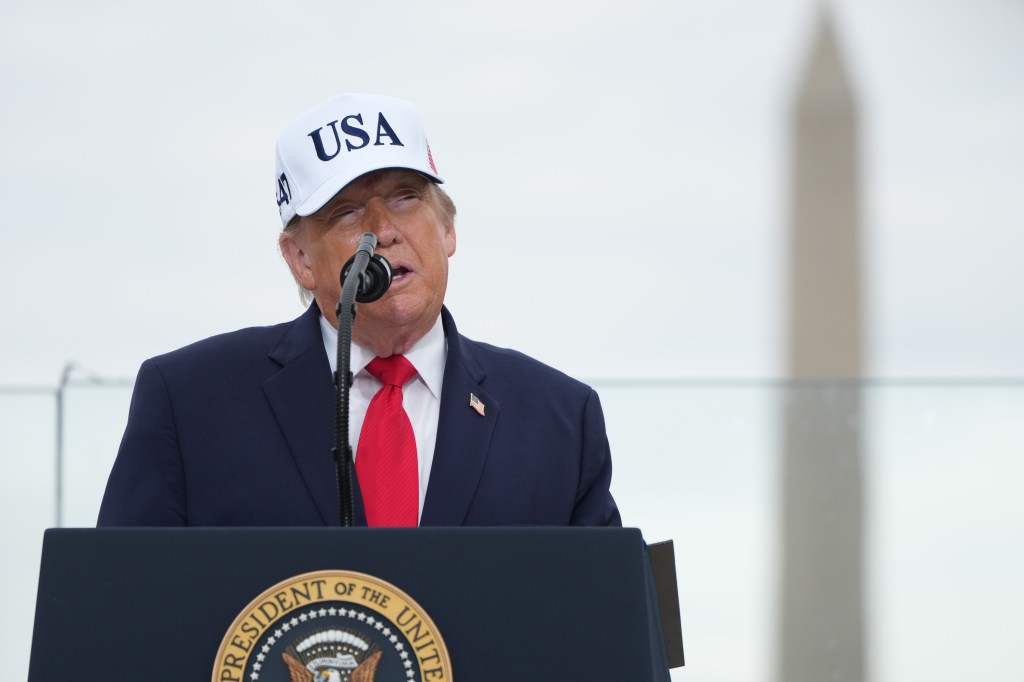
The aftermath of the US midterm elections offers President Trump a brief timeframe to initiate renewed military action against Iran before Congress potentially limits his war powers. Despite Trump’s push for negotiations, he has warned of decisive action if Iran fails to meet his demands. Experts suggest he has until January to act without significant congressional resistance, especially if Democrats gain control of the House.
Jonathan Schanzer from the Foundation for Defense of Democracies noted a window of 6-8 weeks for Trump to maintain freedom of action regarding Iran. This period is crucial as Iran, aware of the situation, is striving for diplomacy while heightening regional threats to buy time.
“The outcome of the US elections could make pursuing the war difficult come January, but not impossible,” Schanzer stated.
US Military Strategy Options
If diplomacy fails, Trump’s strategy could involve a short yet impactful bombing campaign to pressure Iran into negotiations. Mark Cancian from the Center for Strategic and International Studies described the possibility of a two-week campaign targeting military facilities and coastal bases. He cautioned that previous Iranian resilience against bombings might limit effectiveness.
Potential targets include Iran’s oil infrastructure and electrical grid, which Trump has previously threatened. Cancian also mentioned an option of employing bunker-buster bombs on suspected nuclear bases, although their depth challenges effectiveness. Such actions would signal a firm stance against Iran’s nuclear capabilities.
US Military Deployment and Capabilities
Currently, the US military presence in the Middle East includes two aircraft carriers, USS George HW Bush and USS George Washington, with USS Theodore Roosevelt en route to reinforce firepower. These carriers facilitate airstrikes using F/A-18 Super Hornets or F-35C Lightning IIs. Surrounding naval forces comprise 22 destroyers near the Arabian Gulf and a naval blockade around the Strait of Hormuz.
“America’s full military force in the region estimated at about 50,000 soldiers,” Cancian noted.
Additionally, defensive capabilities feature Patriot and THAAD missile systems across the region, bolstered by deployments to Israel.
Iran’s Anticipated Response
Any US attempt to strike Iran’s energy facilities would likely provoke extensive retaliation. Ria Reddy from the Institute for the Study of War highlighted Iran’s stance on widespread retaliation across the Middle East, targeting US bases specifically. Iran’s enhanced missile and drone systems pose increased threats.
Iran could disrupt international oil flow in the Strait of Hormuz and activate proxy groups in Gaza, Lebanon, and Yemen. Potential threats include cyberattacks or terror plots, raising concerns about regional stability.
Israel’s Impact and Role
Israel’s potential involvement remains uncertain amidst its complex political landscape. Prime Minister Netanyahu has expressed support for renewed strikes to weaken Iran’s regime but faces political challenges. Diplomatic resolutions could negatively impact his political standing. Israel’s opposition may struggle to influence the US for sustained military actions as previously shaped by Netanyahu’s administration.
Internal political dynamics create uncertainty around Israel’s next steps, with implications for regional alliances and the US stance on Iran.
Leave a Reply