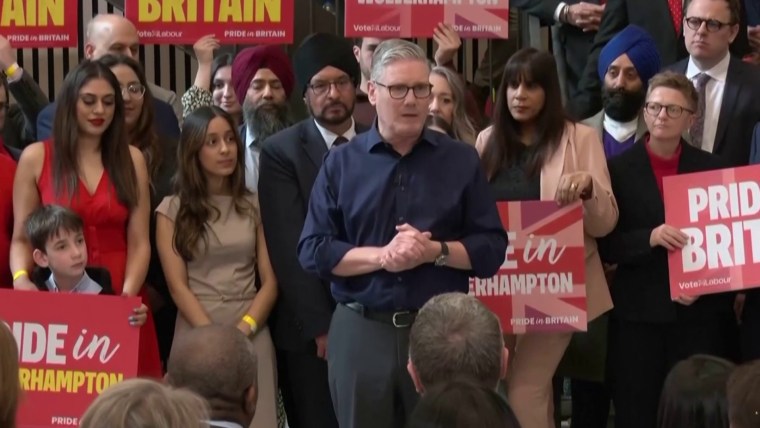
British Prime Minister Keir Starmer faces a challenge within the Labour Party after Health Secretary Wes Streeting’s resignation. This development could lead to a significant political clash concerning the future direction of the United Kingdom and its centre-left ruling party.
Starmer’s leadership faces opposition from within due to midterm election losses and scandals leading to the dismissal of key allies. Streeting, who resigned, stated, “Starmer will not lead the Labour Party into the next general election,” calling for bold new solutions and vision.
Potential Contenders
Wes Streeting
Wes Streeting, a prominent figure from the Labour Party’s centrist wing, is a strong communicator with leadership ambitions. Streeting, admired for his Blairite stance, poses a challenge due to differing views within the party. His relationship with Peter Mandelson, who faced legal issues, raised questions, but Streeting denied close ties.
Born into a poor family with teenage parents, Streeting, 43, has been a prominent advocate for the National Health Service but faced challenges with NHS staff strikes. His background as a centrist and his call for NHS modernization mark him as a contentious yet compelling candidate.
Andy Burnham
Andy Burnham, the popular mayor of Greater Manchester, offers a mix of progressive and centrist politics. His success in regional leadership and the Manchester Model, which boosts business-friendly growth, makes him a strong yet currently ineligible candidate due to not being an MP.
Burnham’s focus on local issues contrasts with Streeting’s national strategy. While popular, Burnham’s path to leadership faces challenges, including needing a special election to qualify as a candidate.
Angela Rayner
Angela Rayner, Starmer’s former deputy, is known for her direct approach and working-class background. Despite a tax scandal affecting her popularity, she remains a strong left-wing candidate.
Rayner’s appeal lies in her background and straightforward manner, offering a stark contrast to the party’s traditional leadership profiles.
Ed Miliband
Energy Secretary Ed Miliband, a leftist leader with a previous stint as Labour’s head, might seem an unusual choice. His leadership once resulted in election defeat, but his focus on Britain’s net-zero agenda keeps him relevant.
An attempt to return as leader would be a gamble, given past public perception and political history.
Starmer’s Position
Despite being viewed as unpopular, Keir Starmer holds power within the Labour Party. Party rules favor leadership continuity, controlling the process of instigating a leadership challenge.
Many Labour MPs back Starmer, acknowledging his stabilizing influence and international assertiveness. Stability concerns, amid global economic uncertainty, bolster arguments for maintaining current leadership.
People are worried about current conflicts and looming global crises. They expect their government to lead the country through, as the PM is doing. More instability is not in Britain’s interest. Our full focus now must be on dealing with immediate economic & security challenges.
Other Possible Candidates
Others, like Al Carns, Yvette Cooper, and Shabana Mahmood, are considered potential candidates, though less likely to emerge prominently in the current context.
Leadership Challenge Process
In the Labour Party, a leadership contest that could potentially unseat Starmer is a party-centric process. At least 20% of Labour MPs must endorse a challenger to initiate a contest. Starmer can stand for re-election if a contest occurs.
Approved candidates proceed to a vote among party members and union affiliates, culminating in the designation of the new leader, assuming the prime ministership.
Leave a Reply