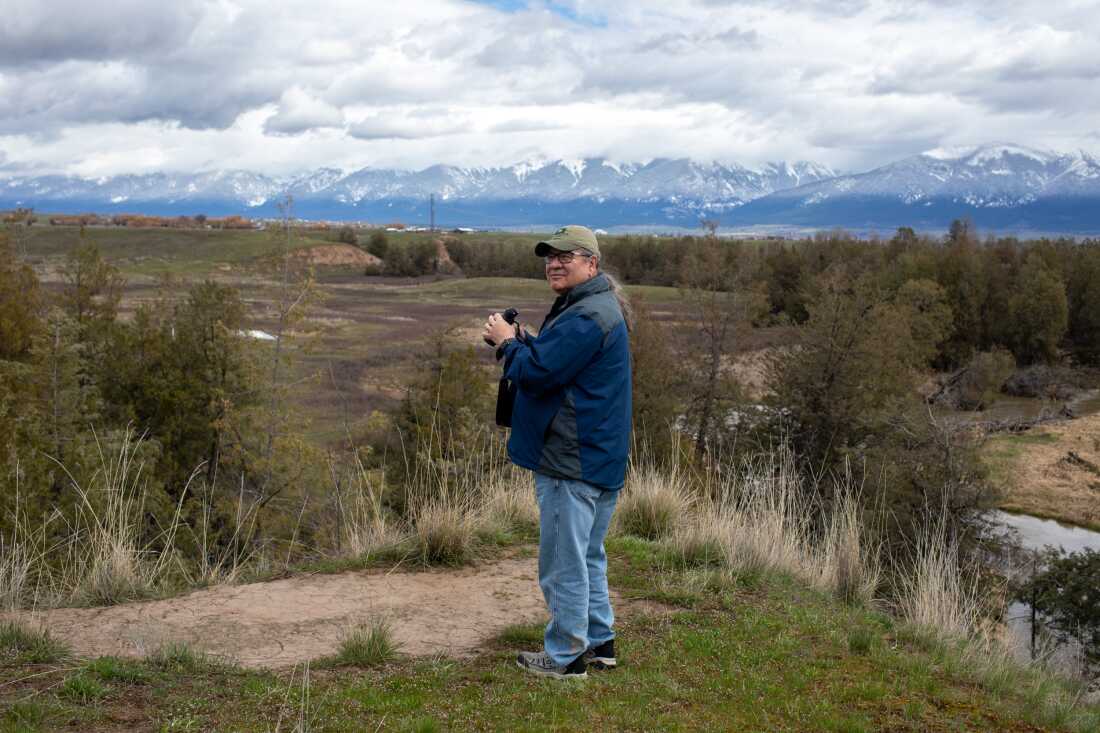
Mike Durglo Jr.: Committed to Climate Resilience
Mike Durglo Jr., serving as the climate change coordinator for the Confederated Salish and Kootenai Tribes, has long focused on preparing his home and community for the impact of climate change. Over 15 years ago, Durglo wrote one of the first tribal climate action plans in the United States.
Located on the expansive Flathead Indian Reservation in Ronan, Montana, he underscores the ancient whitebark pine tree, Ilawya, as a symbol of resilience. These trees, threatened by warmer temperatures, beetle outbreaks, and invasive fungus, face dwindling populations.
Restoration Efforts: Conservation and Hope
Whitebark pines are a beacon of hope for Durglo, evidenced by initiatives to harvest cones from healthy trees and propagate seedlings resistant to invasive threats. These efforts aim to maintain snowcover on the landscape and mitigate potential droughts and wildfires.
At the Confederated Salish and Kootenai Tribes Department of Forestry Nursery, the focus remains on cultivating these seedlings to restore the forest ecosystem.
Building Climate Resilience: Overcoming Funding Challenges
As tribes endeavor to build climate resilience, limited state and federal support can be challenging. Durglo obtained a $20 million grant from federal programs, though this was later canceled. Despite fluctuating funding, Durglo continues to gather resources from diverse sources, including state governments, nonprofits, and federal agencies.
Traditional Ecological Knowledge (TEK) is integral to every aspect of the tribe’s climate plan, which maps out strategies to navigate longer wildfire seasons, impending heatwaves, droughts, and shrinking snowpack.
Holistic Approach: Embracing Interconnection
Reflecting on priorities, Durglo states, “It’s all connected. You can’t say what’s most important, because everything depends on everything else.”
Efforts include wind energy projects, water conservation, and ecosystem restoration for enhanced resilience.
Bison Restoration: Reclaiming Balance
The initiative to revive the bison population on the reservation focuses on restoring the grassland ecosystem. Bison naturally promote plant diversity through their selective grazing.
Innovation in Air Quality: Adaptive Measures
Durglo implemented air quality sensors throughout the reservation as smoke from regional wildfires frequently impacts the community. Available data reveals that indoor air quality often mirrors the declining conditions outside.
Several buildings with adequate filtration systems serve as clean air centers, a project fueled by contributions from the Montana Department of Public Health and Human Services and local nonprofits.
Expanding Knowledge: Collaborating for Progress
Durglo collaborates with tribes across the West, advocating for shared strategies and funding approaches in the face of federal funding cuts. His work guides other tribes in developing climate plans, exemplified by his advisory role to the Blackfeet Nation.
Gerald Wagner, director of the Blackfeet Environmental Office, attributes newfound focus to Durglo’s counsel, incorporating elements like beaver introductions in their plan.
Looking Ahead: Tackling Uncertainty
Durglo remains dedicated to preparing for an uncertain future by sharing climate resilience strategies widely. His hope for future generations lies in the foundations he’s laying today.
“Knowledge, once learned, cannot be taken away,” asserts Wagner, emphasizing the importance of a continued path to protecting the environment.
Leave a Reply